


More news on this day
Lufthansa will resume nonstop flights between Frankfurt and Kuala Lumpur International Airport at the end of October 2026, marking Germany’s return to Malaysia’s main gateway and tightening air links between Kuala Lumpur and major European hubs in Germany, Italy, Switzerland, Austria and Belgium.
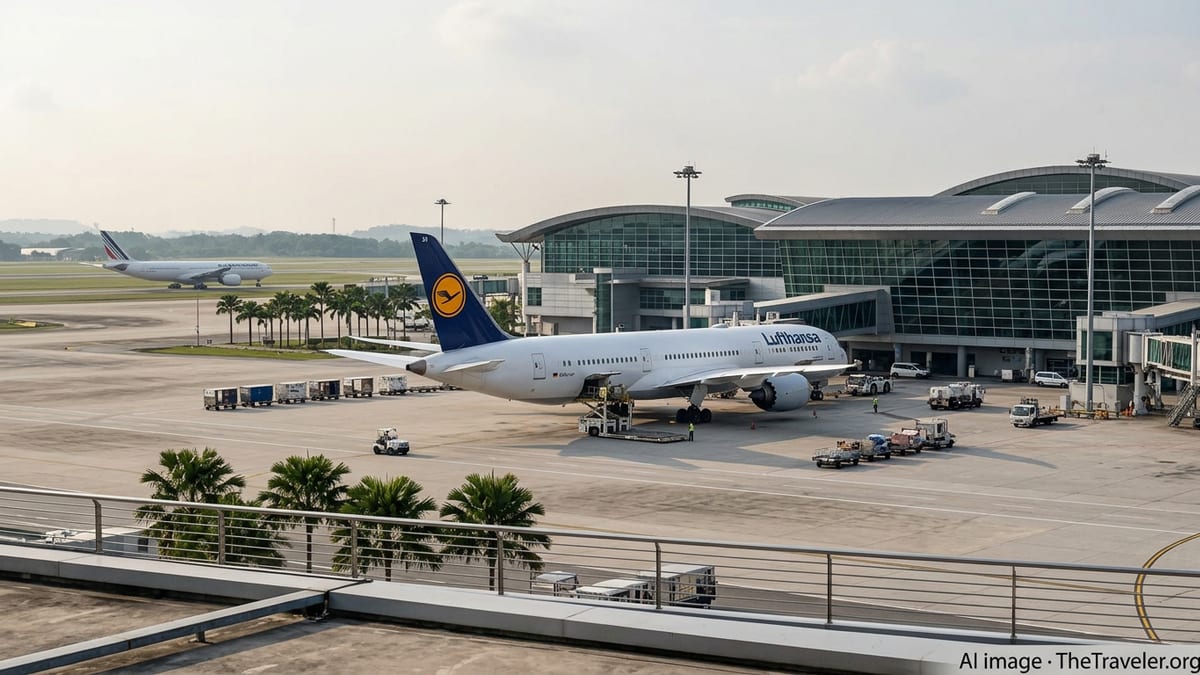
Germany Returns to Malaysia’s Main Gateway After Nearly a Decade
The relaunch of Lufthansa’s Frankfurt–Kuala Lumpur route restores a direct German connection to Kuala Lumpur International Airport for the first time since 2016, when the carrier last served Malaysia. The new nonstop flights, starting on October 25, 2026, will operate five times weekly and are timed to support both overnight departures from Europe and evening departures from Kuala Lumpur.
Lufthansa will serve the route with its new Boeing 787-9 aircraft equipped with the Allegris cabin, offering three classes of service and upgraded products aimed at long-haul business and premium leisure travellers. This represents one of the most modern aircraft types to be regularly scheduled into KLIA by a European network carrier.
For Malaysia Airports and the country’s tourism and trade authorities, the long-awaited return of a German flag carrier is being framed as a vote of confidence in Malaysia’s position as a regional hub. Officials highlight robust post-pandemic recovery and strong demand from both leisure and corporate segments as key factors in attracting Lufthansa back to the market.
The Frankfurt service also rebuilds historical ties, as Lufthansa was one of the earliest European carriers to link Germany and Malaysia. Its renewed presence complements the broader expansion of foreign long-haul airlines at KLIA as the airport targets higher-value traffic and more diverse source markets.
European Network Powerhouse Strengthens Malaysia’s Global Connectivity
By resuming flights to Kuala Lumpur, Lufthansa brings with it the full weight of the Lufthansa Group’s multi-hub network spanning Germany, Switzerland, Austria, Belgium and Italy. Passengers from cities served by Lufthansa, Swiss, Austrian Airlines, Brussels Airlines and ITA Airways will be able to connect via Frankfurt onto the Kuala Lumpur service with through-ticketing and coordinated schedules.
This structure means that, in practical terms, Germany now joins Italy, Switzerland, Austria and Belgium as launch points for one-stop access to Malaysia operated within a single airline group. For travellers in secondary European cities, the combination of short feeder flights into Frankfurt and a nonstop overnight leg to KLIA will significantly simplify journeys that previously required two or more connections.
Frankfurt’s role as a major intercontinental hub amplifies the impact for Malaysia’s connectivity. The city offers onward links to more than 150 European destinations as well as connections to North America, Africa and the Middle East, enabling Kuala Lumpur to slot more firmly into global corporate travel networks and multi-country leisure itineraries.
Industry analysts note that Lufthansa will be the only airline from its home markets in Germany, Austria, Switzerland, Belgium and Italy to offer nonstop service to Malaysia, giving the group a strategic advantage in capturing premium demand between Central Europe and Southeast Asia.
Tourism Surge and Trade Ties Drive Demand for Direct Flights
Malaysia’s strong tourism performance has been a key backdrop to the decision to return. The country welcomed more than 40 million international visitors in 2025, making it one of Southeast Asia’s most visited destinations, with Kuala Lumpur acting as the primary gateway to beach resorts, nature escapes and cultural circuits across the peninsula and Borneo.
For European visitors, the new nonstop link cuts travel time and removes the need to transit through third-country hubs in the Middle East or Asia. Tour operators expect this to make Malaysia more competitive against regional rivals for winter-sun holidays, multi-stop Southeast Asia tours and city-break packages that combine Kuala Lumpur with Bangkok, Singapore or Phuket.
On the business side, Germany is Malaysia’s largest trading partner within the European Union, and several hundred German companies maintain operations in the country, spanning sectors from automotive components to chemicals, machinery and renewable energy. Executives and technical staff travelling between headquarters in Europe and facilities in and around Kuala Lumpur stand to benefit from reduced journey times and smoother schedules.
Travel industry observers say that a strong mix of corporate, small and medium enterprise, and visiting friends and relatives traffic is likely to underpin the route year-round, giving Lufthansa a more balanced demand profile than purely leisure-driven services.
Competitive Landscape and New Options for Malaysian Travellers
Lufthansa’s move reshapes the competitive landscape at KLIA, where Gulf and Asian carriers have long dominated Europe-bound traffic with one-stop itineraries. While airlines such as Qatar Airways, Emirates and Turkish Airlines will continue to provide dense networks and flexible connections, the reintroduction of a nonstop link to Germany offers a compelling alternative for travellers who prioritise shorter journey times and a single long-haul leg.
For Malaysian passengers, the Frankfurt flight creates new options beyond the group’s existing Southeast Asia links to Bangkok, Singapore and Phuket. Leisure travellers can more easily reach popular European destinations such as Rome, Milan, Zurich, Vienna or Brussels with just one transfer, while students and expatriates in smaller European cities gain a more seamless route back to Malaysia.
The use of the Boeing 787-9 with the Allegris configuration is also being closely watched by frequent flyers in the region. Features such as updated business-class seats, improved premium economy and refreshed in-flight entertainment are expected to appeal to high-yield customers who had shifted loyalty to Middle Eastern or Asian competitors during Lufthansa’s absence from KLIA.
Airline executives have indicated that the five-weekly schedule could be increased if demand proves robust, leaving open the possibility of daily operations in future seasons as travel patterns stabilise and aircraft availability improves.
Strategic Boost for KLIA as a Regional Hub
For Kuala Lumpur International Airport, Lufthansa’s return is strategically significant in efforts to regain and surpass its pre-pandemic long-haul footprint. The airport has been courting more European and Middle Eastern carriers, positioning itself as a cost-effective and well-connected alternative to larger hubs for both passenger and cargo traffic.
The new Frankfurt route is expected to support Malaysia’s ambitions to attract more high-spending visitors, international conferences and regional headquarters operations. Direct access to a major European financial and logistics hub is seen as a selling point when pitching Malaysia to multinational corporations evaluating investment destinations in Southeast Asia.
Airport planners also foresee positive spillover effects for regional connectivity. With additional long-haul arrivals feeding into KLIA, domestic and short-haul operators stand to gain from increased demand for onward flights to destinations such as Penang, Langkawi, Kota Kinabalu and Kuching, reinforcing Kuala Lumpur’s role as a central distribution point within Malaysia.
As ticket sales ramp up ahead of the October 2026 launch, all eyes will be on booking patterns from Germany and across Lufthansa Group’s European markets. Strong early uptake would likely encourage further capacity and strengthen the case for Kuala Lumpur as a key Southeast Asian node in Europe’s largest airline network.