


More news on this day
Escalating military confrontation between the United States and Iran has forced Emirates to cancel all flights to and from Dubai International Airport, triggering fresh travel chaos across one of the world’s busiest aviation hubs and leaving tens of thousands of passengers stranded worldwide.
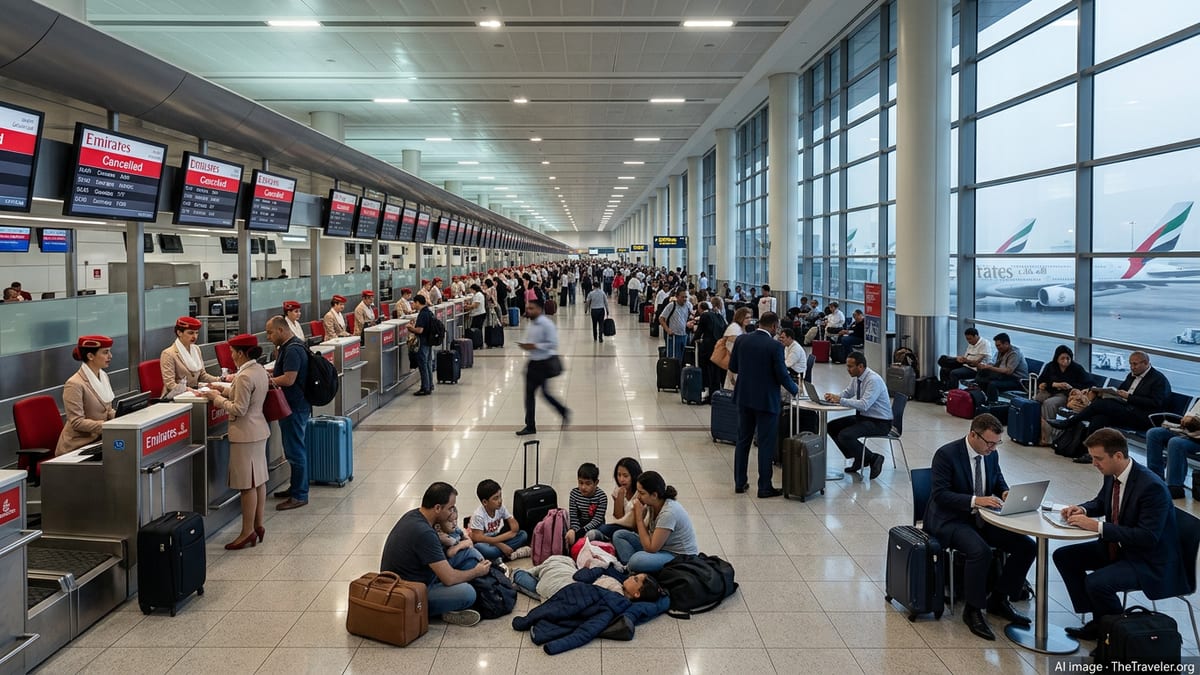
Full Emirates Shutdown at Dubai Airport
Dubai’s flagship carrier Emirates confirmed on Saturday that it has suspended its entire scheduled network at Dubai International Airport until further notice, citing regional airspace closures and security concerns linked to the intensifying US–Iran conflict. The abrupt shutdown affects all departures and arrivals, including long-haul connections that typically link Europe and the Americas with Asia, Africa and Australasia via the airline’s vast hub.
The decision came after authorities temporarily halted operations at Dubai International following incoming threats detected over the Gulf and the interception of hostile projectiles targeting the wider United Arab Emirates. Flight tracking data showed a sudden disappearance of Emirates movements over Dubai, replaced by diversions to alternate airports and a growing backlog of grounded widebody aircraft parked on remote stands.
Emirates has advised passengers not to travel to the airport while regular operations remain frozen. Customers with tickets for travel over the coming weeks are being offered rebooking options and, in many cases, full refunds or the ability to postpone journeys without penalty, although precise rules vary by fare and route.
The carrier, which normally operates hundreds of flights a day through Dubai, had only recently begun rebuilding capacity after earlier disruptions tied to missile exchanges across the region. The latest shutdown represents the most sweeping halt in operations since the early months of the pandemic, underlining how quickly conflict in the Gulf can paralyze global aviation.
Knock-On Effects Across Global Flight Networks
The Emirates cancellation order has sent shockwaves through international flight schedules, as airlines worldwide rely on Dubai as a crucial bridge between continents. With all Emirates departures from its home hub grounded, thousands of connecting itineraries have collapsed, forcing mass rebookings via Europe, Central Asia or southern routes that avoid contested airspace over Iran, Iraq and neighboring states.
Other Gulf carriers, including Etihad Airways and budget operator FlyDubai, have also faced severe disruption, oscillating between partial suspensions and limited evacuation-style flights as airspace availability changes hour by hour. Qatar Airways has kept many services grounded out of Doha at various points during the crisis, adding further strain to already stretched long-haul networks between Asia and Europe.
Airlines in Europe, India and Southeast Asia are scrambling to reroute or cancel services that would typically overfly Iranian or Gulf airspace. Some have pushed flights north through Turkey and the Caucasus or south over the Arabian Sea and Red Sea, adding several hours of flying time and significantly increasing fuel burn and crew costs.
Aviation analytics firms estimate that many thousands of flights across the wider Middle East and adjacent corridors have been cancelled or heavily delayed since the latest escalation began in late February, with Dubai accounting for a disproportionate share of the impact because of its role as a mega-hub. Industry experts warn that if the Emirates shutdown extends for more than a few days, global capacity constraints will start to pinch peak-season travel plans far beyond the region.
Passengers Stranded and Scrambling for Alternatives
For travelers, the sudden grounding of all Emirates flights at Dubai has translated into packed terminals, hastily arranged hotel stays and long lines at airline service desks. Many passengers who were already in the air when the latest shutdown was announced found their flights diverted to secondary airports in the UAE or onward to hubs such as Istanbul, Riyadh or Mumbai, where they joined queues of travelers seeking scarce onward seats.
Dubai’s status as a key transit point has magnified the disruption. Tourists returning from Indian Ocean resorts, business travelers en route between Europe and East Asia, and migrant workers heading to and from the Gulf have all been affected. With many alternative routings also constrained by airspace closures and capacity limits, some stranded travelers have been told to expect days-long delays before they can be rebooked.
Emirates has activated its disruption playbook, arranging hotel accommodation for eligible passengers, issuing meal vouchers and waiving change fees in many cases. Still, reports from the airport and surrounding hotels indicate that demand is outstripping supply, with rooms in Dubai and nearby emirates filling quickly as airlines, consulates and companies all compete to house their nationals and staff.
Travel insurers and consular officials are fielding a surge in calls from worried passengers and families. Governments including the United States, European Union members and several Asian states have reiterated earlier advisories urging citizens to avoid non-essential travel through the region and, where possible, to use any available commercial options to depart.
Economic and Tourism Fallout for Dubai and Beyond
The sudden halt to Emirates operations threatens to dent Dubai’s economy at a time when the city has been positioning itself as a resilient global tourism and business hub. Emirates is not only one of the world’s largest long-haul airlines but also a central pillar of the emirate’s strategy to attract visitors, investors and events, feeding passengers directly into Dubai’s hotels, malls, exhibitions and free zones.
With planes grounded, hotel occupancy patterns are shifting rapidly. Some city-center and beach properties report cancellations from high-spending tourists, while airport and business hotels see a spike in emergency bookings from stranded travelers and airline crew. Retailers at Dubai International, who depend heavily on duty-free spending by transit passengers, face a sudden collapse in footfall.
The disruption is being felt well beyond the Gulf. Popular winter-sun destinations in the Indian Ocean and East Africa, which rely on Emirates for much of their international connectivity, are already reporting cancellations and postponements. Tourism boards in destinations such as the Maldives, Zanzibar and Sri Lanka are closely monitoring developments, wary that a prolonged shutdown could drag on bookings for weeks or months.
Air cargo is also taking a hit. Emirates SkyCargo, a major player in global freight, moves high-value goods ranging from pharmaceuticals to electronics through Dubai. With flights suspended, shippers are scrambling to secure alternative capacity, risking delays in supply chains that had only just stabilized after earlier geopolitical shocks.
What Travelers Should Do Now
Travel and consular authorities are urging passengers affected by the Emirates shutdown to avoid heading to the airport without a confirmed new itinerary. Instead, travelers are being told to monitor airline apps and email notifications for automatic rebooking options, and to use official customer service channels rather than social media when seeking assistance.
Emirates has pledged flexible options for those with tickets during the suspension window, typically allowing free changes for travel on later dates or rerouting on available services once operations resume. Passengers who no longer wish to travel may be able to request refunds, but are advised to wait until their flight is officially cancelled to preserve their rights under airline and local regulations.
Travelers with imminent trips that rely on transiting Dubai are being encouraged to consider postponing journeys or, where essential, to explore alternative routings via Europe or Asia that do not depend on Gulf hubs. However, aviation analysts caution that spare seats on these routes are limited and often command premium fares during periods of disruption.
For now, the resumption of regular Emirates services at Dubai depends on security assessments and the reopening of key airspace corridors. Until those conditions change, the grounding of all flights from the airline’s flagship hub stands as one of the most visible symbols of how rapidly the US–Iran conflict has spilled over into the lives and plans of ordinary travelers around the world.