


More news on this day
Austin-Bergstrom International Airport is experiencing fresh travel disruption, with publicly available data showing at least 85 delayed flights and 11 cancellations affecting American Airlines, Envoy Air, Southwest and other carriers across domestic and international routes.
Get the latest news straight to your inbox!
Morning Operations Snarl Into Widespread Delays
Flight-tracking dashboards and airport status pages on June 7 indicate that operations at Austin-Bergstrom began the day under strain, with early departures pushed back and knock-on delays building across the schedule. General arrival and departure information from federal aviation sources shows ground and airborne delays near 15 minutes for many flights, but individual services are facing significantly longer waits.
American Airlines appears among the hardest hit, with multiple mainline and regional departures showing lengthy holds. One American service from Austin to Chicago, for example, was rescheduled to depart nearly five hours later than planned, underscoring how quickly a single delay can cascade across an airline’s network. Flights operated by American’s regional affiliates, including Envoy Air, also show revised departure times as aircraft and crews fall out of sequence.
Southwest Airlines, the airport’s largest carrier by seat share, is also navigating a series of schedule changes, although most publicly visible disruptions at midday appear to be delays rather than wholesale cancellations. Other large U.S. airlines, along with a handful of international codeshare partners serving Austin, are reporting scattered time changes as the morning disruptions ripple outward.
While the airport’s overall status remains officially listed as open and operating, the combination of minor systemwide congestion and a cluster of severe outliers is adding up to a difficult travel day for passengers trying to depart or connect through Austin.
Cancellations Ripple Through American and Envoy Networks
Alongside the elevated number of delays, at least 11 flights linked to Austin-Bergstrom are listed as canceled across major tracking platforms, with American and its regional feeder Envoy Air accounting for a notable share. Publicly available route and departure boards show select American services to key hubs scrubbed from the schedule, forcing rebookings and crowding later flights.
Envoy-operated connections, which funnel travelers from Austin to American’s larger hubs, appear particularly vulnerable when weather or congestion hits those hub airports. Recent storms and operational challenges around Dallas Fort Worth have triggered diversions into Austin and have contributed to short-notice cancellations as aircraft and crew positions are reshuffled. That pattern is visible again in today’s data, where certain regional links are absent or converted to extended delays.
The picture at Southwest contrasts somewhat with American’s experience. Published data for Southwest out of Austin shows numerous delayed departures but comparatively fewer outright cancellations during the latest disruption. For travelers, the practical impact can still be significant, as rolling delays of 30 to 60 minutes or more lead to missed connections downline, even when the original flight ultimately operates.
Other carriers with smaller Austin footprints, including select international airlines and codeshare partners, are reporting isolated cancellations tied to the broader slowdown. With Austin acting as a weather and diversion relief point for larger hubs, some of these cancellations originate elsewhere but are now affecting itineraries that begin or end in Central Texas.
Weather, Diversions and Congested Hubs Drive the Turmoil
Although Austin itself is not under severe weather this morning, published coverage and recent data point to storm activity and ground holds at major hubs such as Dallas Fort Worth as a key driver of disruption. Earlier in the week, severe thunderstorms over North Texas forced multiple diversions into Austin, including widebody international services that would not typically appear on the local arrivals board. That surge in unplanned traffic consumed gates, extended taxi times and pushed local crews and ground operations to their limits.
Those earlier events left airlines with aircraft and employees out of position, and today’s elevated delay levels suggest the system has not fully rebounded. When hubs like Dallas Fort Worth and other key connection points struggle with convective weather, lightning, or temporary runway constraints, regional spokes such as Austin often experience secondary effects in the form of rolling delays and selective cancellations.
Air traffic management advisories show that, on June 7, Austin is dealing with modest general delays, but these averages mask larger individual problems for certain flights. A small number of services, particularly on American and its affiliates, are registering departure pushes measured in hours, while nearby flights on competing airlines continue to depart closer to schedule.
Operational analysts note that such patterns typically reflect a mix of weather recovery, crew duty-time limitations and aircraft scheduling challenges. Once an early-morning rotation is significantly delayed or canceled, it can set off a chain reaction that affects multiple later flights across the same aircraft and crew pairing, both at Austin and at downline stations.
Impact on Travelers Across the United States and Beyond
The concentrated disruption at Austin-Bergstrom is reverberating across the United States and into select international markets. American and Envoy cancellations affecting hub-bound flights are stranding some passengers mid-journey, particularly those relying on connections through Dallas Fort Worth or other large nodes in the network. Social media posts and traveler forums describe long waits, missed onward flights and crowded rebooking lines as customers compete for limited remaining seats.
Southwest customers are facing their own challenges, with many Austin departures leaving late and compressing already tight connection windows at other airports. Even when cancellations are limited, delays of 30 to 90 minutes can force travelers to rework itineraries, overnight unexpectedly, or reroute through secondary cities. Similar patterns are visible among a handful of other domestic carriers that serve Austin with relatively low daily frequencies, where the loss or delay of a single flight can eliminate an entire day’s connectivity on a given route.
The international knock-on effects are subtler but still visible. Code-share flights that begin at Austin and continue onward under foreign airline flight numbers are showing revised times or irregular operations in booking systems. For travelers connecting from Austin to destinations in Canada, Mexico or beyond via U.S. hubs, today’s disruptions may translate into missed international departures and additional overnight stays.
Travel industry observers note that Austin’s rapid growth as an air travel market has left airlines and the airport continually balancing strong demand with finite gates and infrastructure. On high-volume days, especially when nearby hubs are struggling, that balance can tilt quickly toward congestion, amplifying the effects of each delay or cancellation throughout domestic and international networks.
What Passengers Can Expect for the Remainder of the Day
Given the scale of early disruptions, published operations data suggest that Austin travelers should plan for lingering irregularities through the afternoon and evening. Even if weather stabilizes at key hubs and air traffic control programs ease, airlines will be working to reposition aircraft and crews while accommodating passengers from the 11 canceled flights and the dozens of delayed departures already recorded.
Public advisories and airline communications emphasize that schedules remain fluid, and travelers are being encouraged through official channels and travel industry reporting to monitor flight status frequently. Same-day rebooking options appear available on many affected routes, but seat inventory is tightening as more passengers seek alternatives.
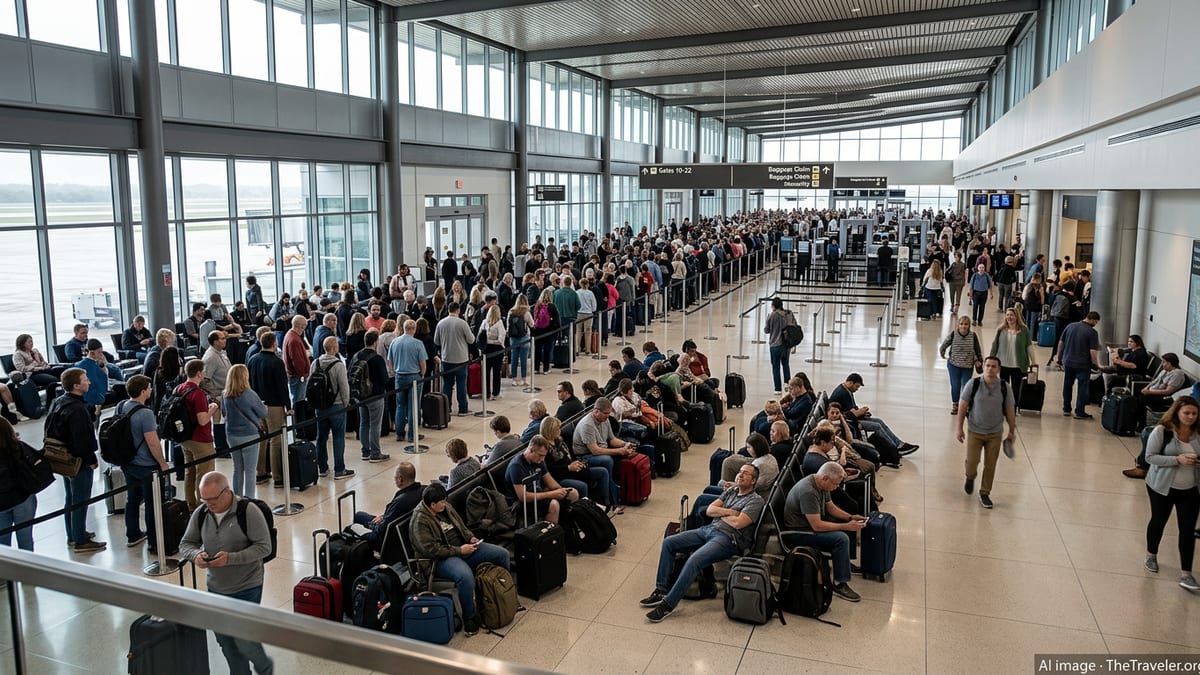
At the airport, local reporting and traveler accounts indicate that security lines and check-in areas are fluctuating between normal and heavy volumes as waves of delayed departures push passengers into later banks of flights. Concession areas and seating near the gates are also busier than usual as customers wait out extended holds and rolling time changes.
With Austin-Bergstrom continuing to grow as a key Texas gateway for both domestic and international travel, today’s turmoil underscores the vulnerability of even mid-sized hubs to disruptions originating hundreds of miles away. As airlines adjust schedules and refine contingency plans for the busy summer season, travelers using Austin are likely to see more emphasis on early-morning departures, backup crew planning and communication tools designed to manage days when delays and cancellations spike across the network.