


More news on this day
A motorist escaped serious injury after a train collided with a vehicle at a busy South Florida grade crossing this week, a near miss that is drawing renewed attention to safety at rail intersections and the responsibilities of both drivers and rail operators.
Get the latest news straight to your inbox!
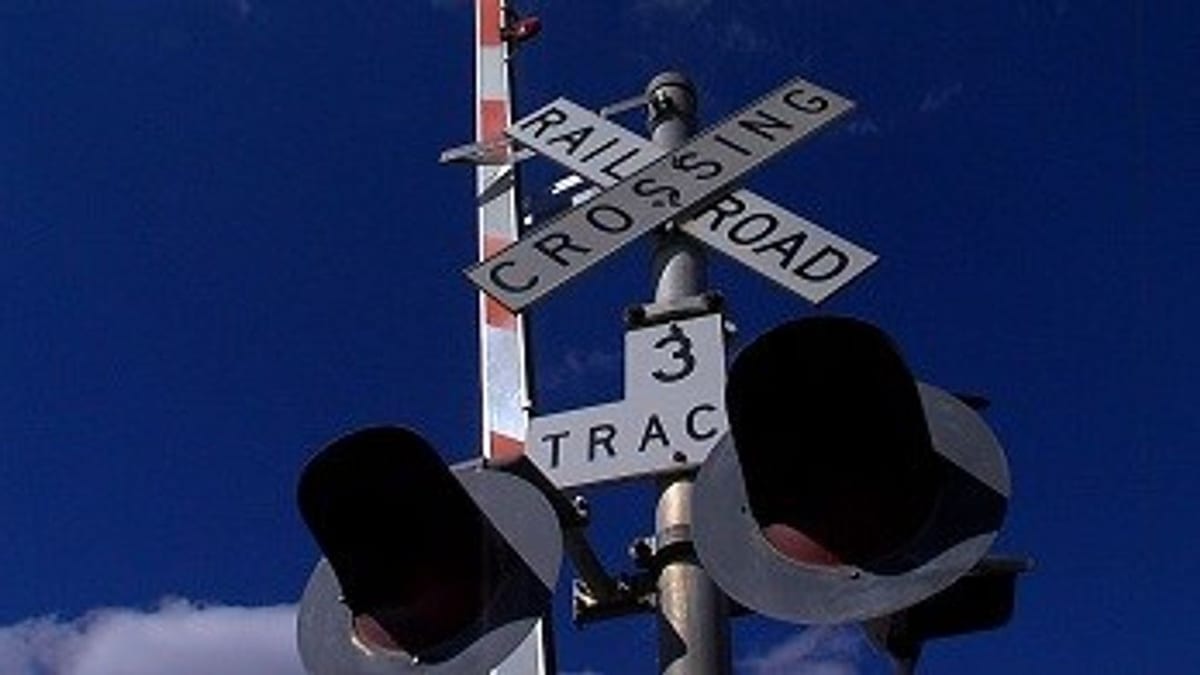
Collision at Busy Rail Crossing Highlights Everyday Risks
According to publicly available coverage from South Florida outlets, a recent collision between a train and a vehicle near a Hallandale Beach rail crossing resulted in the driver being taken to hospital with injuries described as non life threatening. Reports indicate the incident occurred close to a major arterial road where intercity passenger trains share space with local traffic, leading to significant delays for both rail passengers and motorists.
Initial descriptions of the event suggest the vehicle was on or near the tracks when a southbound train approached the crossing. Barriers and warning systems in the area are designed to activate in advance of any passing service, but investigators are still working to clarify the precise sequence of events, including vehicle movements in the moments before impact.
While the driver avoided critical injuries, images and video from the scene show visible damage to the vehicle and backed up traffic in several directions. Publicly available information shows that rail services resumed after safety checks, but residual delays stretched into the afternoon as crews cleared debris and inspected equipment.
Travelers in the area, including those heading to nearby beaches and airports, faced detours and schedule changes as the crossing remained partially blocked. The incident underscored how even a single crash at a key intersection can ripple through local transport networks and disrupt both everyday commuting and leisure travel plans.
Near Misses and Surviving High Impact Collisions
The Florida crash is one of several recent incidents worldwide in which a person or motorist survived a collision with a train that could easily have been fatal. In late June, regional coverage from Hollywood, Florida, described a freight train striking a car on the tracks while a family was inside; those occupants also escaped without serious injury. In another June case near Walnut Creek, California, a person struck by a Bay Area Rapid Transit train was reported to have avoided major injuries despite contact with a moving train.
Publicly available reports from Halifax, Canada, in June noted that a woman hit by a train in a suburban area was hospitalized but escaped the kind of life threatening trauma often associated with rail incidents. In each instance, rail and medical specialists pointed to a combination of train speed, angle of impact, emergency response and, in some cases, sheer luck as factors that limited the severity of injuries.
Rail safety summaries consistently show that collisions between trains and vehicles or pedestrians are far more likely to result in serious or fatal injuries than typical road crashes. Trains are significantly heavier than automobiles and cannot stop quickly, so even low speed contact can transfer large amounts of energy to a person or vehicle.
When a motorist survives such an incident with only minor or moderate injuries, investigators often look closely at the physical layout of the crossing, the condition of the vehicle and any evasive actions taken in the final seconds before impact. These details can provide insight into how similar outcomes might be replicated through engineering changes or targeted public education.
Rail Crossings Under Scrutiny as Traffic Grows
From Florida to California and beyond, rail crossings are facing heightened scrutiny as passenger and freight services expand and road traffic grows around transit corridors. In South Florida, the expansion of higher speed intercity services has increased the number of trains passing through dense urban areas where roads, housing and commercial development press in tightly on existing tracks.
Publicly available safety bulletins from rail regulators highlight grade crossings as a persistent point of conflict between trains and road users. As more travelers choose rail to avoid congestion on highways, the number of daily train movements through certain crossings rises, increasing the chances of an encounter with a distracted or impatient driver.
Communities along busy rail lines are weighing a mix of solutions, including upgraded barrier systems, clearer signage, adjusted traffic signal timing near tracks and, in some cases, full grade separation that carries either the road or the tracks above or below the other. These projects, however, are complex and costly, and often take years to plan and complete.
In the meantime, local campaigns in several regions are focusing on public education, reminding motorists that trains frequently travel faster than they appear and cannot swerve to avoid obstacles. The South Florida collision, in which a driver survived an event that might have been far worse, is being cited in local commentary as a stark illustration of how quickly a routine drive can intersect with heavy rail operations.
Impacts on Travelers and Local Mobility
For travelers, rail vehicle collisions translate immediately into delays, diversions and uncertainty. After the Hallandale Beach incident, publicly available information shows that trains were held while crews inspected tracks and rolling stock, while drivers were rerouted around blocked intersections. Ride hailing services reported heavier demand in nearby neighborhoods as passengers sought alternative ways to reach appointments and flights.
Similar patterns have been observed in other recent train vehicle collisions, including an Amtrak freight truck crash in Texas earlier this year where there were no serious injuries but schedules were disrupted while emergency teams cleared the scene. Even when passengers and motorists avoid life threatening harm, the operational impact can extend across dozens of miles of rail and road corridors.
Local businesses near busy crossings sometimes experience a sudden drop or spike in customers during such incidents, depending on whether detours direct traffic away from or past their front doors. For tourism dependent communities, any event that delays visitors, clogs beach access roads or interrupts intercity rail links can have a short term effect on revenue, especially during high season.
In South Florida, where visitors often rely on a blend of rental cars, rideshares and train services to move between airports, cruise terminals and coastal resorts, the reliability of level crossings plays a quiet but crucial role in keeping itineraries on track. A single crash can upend the journeys of hundreds of people, even if most only experience it as unexplained congestion or a late arriving train.
Safety Lessons for Drivers and Rail Users
Safety advocates point out that the latest near miss in Florida offers several reminders to motorists. First, warning lights and gates at level crossings should be treated as non negotiable signals to stop and wait, even if a train is not yet visible. Attempting to drive around lowered barriers or accelerate through flashing lights can compress the margin of error to nearly zero.
Second, motorists caught between gates at a crossing are advised by safety campaigns to continue driving forward and clear the tracks, even if that requires breaking through a barrier arm. Crossing devices are designed to yield to this kind of emergency maneuver, while a stopped vehicle on the rails presents a far greater risk to life.
Rail passengers and pedestrians also play a role. Staying behind posted lines on platforms, obeying pedestrian crossing signals and avoiding shortcuts over tracks can reduce the chances of train person incidents that require emergency braking or lead to contact with a moving train. Several recent cases in North America and Europe in which people survived contact with trains have been cited in public reports as instances in which a few extra steps of caution might have prevented injuries altogether.
The South Florida collision, in which a motorist survived an impact that could easily have ended in tragedy, adds to a catalogue of cases showing that outcomes at rail crossings are not predetermined. A mix of engineering, enforcement and everyday decisions by drivers and pedestrians will continue to shape whether such intersection points remain routine parts of the travel landscape or scenes of preventable disaster.