


More news on this day
Record-breaking traffic at Athens International Airport is colliding with long-standing air traffic control constraints this summer, creating mounting delays just as Greece enters the height of its tourism season.
Get the latest news straight to your inbox!
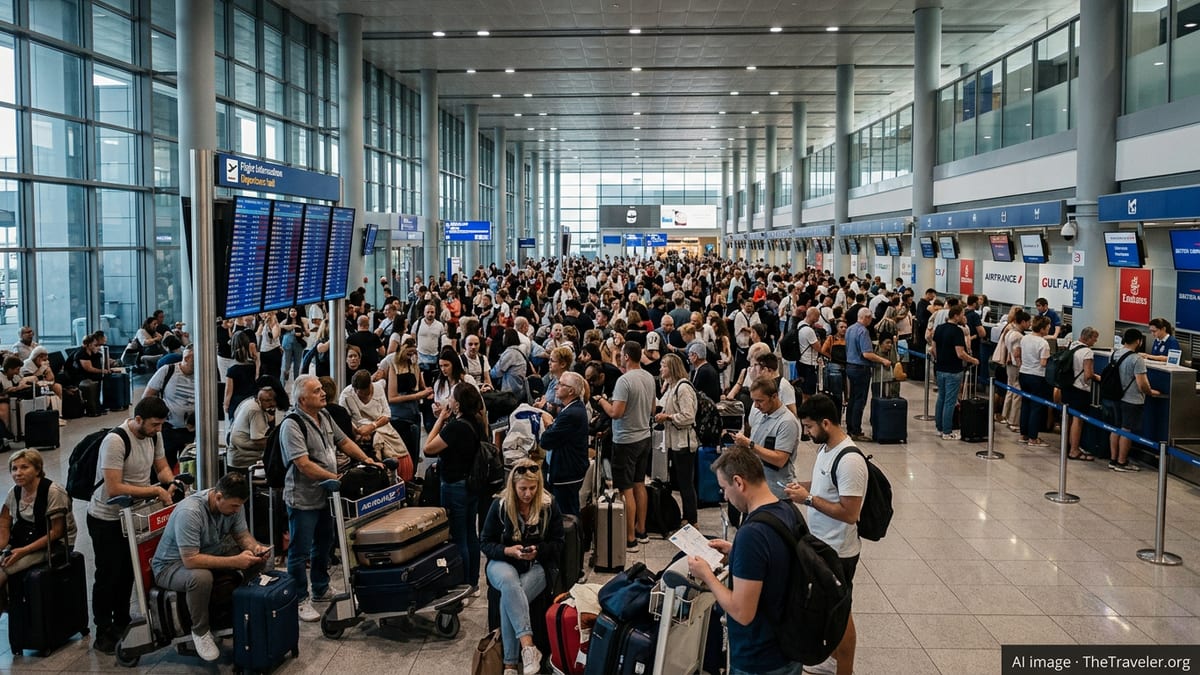
Passenger numbers hit new highs in 2026
Publicly available figures from Athens International Airport indicate that 2026 is shaping up to be another record year for passenger traffic. The airport reported more than 15.7 million passengers in the first six months of the year, surpassing the equivalent 2025 period and building on last year’s full-year total of nearly 34 million travelers.
Greek public broadcaster coverage of traffic statistics highlights a similar trend, noting that over 12.2 million passengers passed through the airport in the first five months alone, about 5 percent higher than a year earlier. The growth is driven both by continued strength in international tourism to Greece and by a steady rise in domestic travel linking Athens with the islands and regional cities.
Industry reports also point to a record wave of flights over Greek airspace. Data compiled by flight disruption services and European air navigation authorities describe mid-July days in which the Athens Flight Information Region has handled more than 5,000 flights, setting new daily records for the country’s air traffic network.
This surge is part of a broader European rebound in air travel, but the concentration of flights into Athens, Greece’s primary international gateway, is testing the airport system’s ability to absorb high volumes without disruptive knock-on effects.
Mounting delays despite some month-on-month improvement
While Greek aviation authorities have pointed to an improvement in average delay minutes compared with last year, travelers this summer are still facing lengthy waits. Recent summaries from the Hellenic Civil Aviation Authority show that average air traffic delays per flight at Athens airport in June were lower than in June 2025, yet delays have remained well above pre-pandemic norms during peak travel periods.
European network data from Eurocontrol place Greece among the notable contributors to air traffic management delays in the region, with the Athens area control center consistently highlighted as a hotspot. Capacity limits and staffing constraints mean that modest disruptions can quickly cascade into significant schedule slippage when traffic is near its operational ceiling.
Local media coverage in Greece describes a pattern of congestion that has intensified over the past several weeks. Reports from late June and early July outline days when departures and arrivals at Athens experienced extended holding times, with subsequent delays rippling across domestic and international routes.
Passenger advocacy organizations have echoed these accounts, pointing to a sharp rise in complaints related to missed connections and late arrivals at the capital’s airport compared with earlier in the summer. Many of these disruptions are tied to air traffic management restrictions rather than airline-specific issues, complicating travelers’ ability to claim compensation under European passenger rights rules.
Equipment incidents and structural bottlenecks
The pressure of record traffic has been compounded by recent technical issues and long-recognized structural bottlenecks in Greece’s aviation system. Greek press reports detailed a radar failure near Athens in late June that temporarily reduced the capacity for handling arrivals, forcing air traffic controllers to space aircraft further apart and leading to multi-hour delays for some flights.
An earlier episode in June, highlighted in a statement from Greek carrier SKY express, linked extensive delays at Athens to short-notice inspection work on the airport’s instrument landing systems. The airline’s public communication argued that limited advance coordination for the maintenance activity had left operators little room to adapt schedules, exposing passengers to avoidable disruption.
Beyond individual incidents, sector analyses point to chronic shortages of air traffic controllers, aging navigation infrastructure and the complexity of managing dense traffic flows through Greek airspace. As the main hub, Athens bears the brunt of these weaknesses, particularly when demand peaks in late June, July and August.
Eurocontrol briefings for the current summer season describe Athens as operating with constrained arrival capacity relative to demand during busy hours. When that capacity is further restricted by equipment checks, weather or staffing issues, airlines have limited flexibility to reroute, making prolonged queues and airborne holding patterns more likely.
Airport status changes and capacity management measures
In response to rising traffic and recurring congestion, Athens International Airport has pursued formal changes to how capacity is managed. Company presentations for investors note that the airport has been designated a “schedule facilitated” facility for recent summer seasons, an intermediate status that allows for tighter coordination of planned movements at peak times.
The same material indicates that the operator has applied for full “coordinated airport” status for the winter 2026 to 2027 period, a designation that would align Athens with Europe’s slot-controlled hubs. Such a move aims to smooth operations during runway upgrade works and to prevent excessive clustering of flights that could overwhelm air traffic control and ground handling resources.
Greek media coverage of these steps emphasizes that airlines are pressing for more predictable allocation of slots and stricter adherence to agreed flight distributions. Carriers have argued that deviations from planned distribution, combined with non-scheduled traffic such as charters and business aviation, have sometimes pushed the system beyond its intended limits.
Airport and government communications highlight ongoing investment in infrastructure and systems as part of a long-term capacity expansion plan. However, with demand rising faster than physical upgrades can be delivered, short- and medium-term management tools such as slot coordination and operational caps during peak hours are likely to remain central to keeping delays in check.
What summer travelers through Athens can expect
For travelers heading through Athens in the coming weeks, publicly available information from aviation authorities and passenger-rights organizations suggests a mixed picture. On typical days, average delays may be modestly lower than last year, but the risk of significant disruption during peak hours, adverse weather or technical inspections remains elevated.
Flight statistics show that pressure is highest during late-morning and early-evening banks of departures and arrivals, when international and domestic traffic converges. When air traffic flow restrictions are applied to keep movements within safe limits, flights at the edges of these banks may be pushed back, with knock-on effects for island connections and onward European services.
Consumer advocates recommend that passengers traveling through Athens build in extra connection time, particularly when transferring from long-haul to domestic flights, and monitor airline communications closely on the day of travel. Because many of the current delays are associated with air traffic management capacity rather than airline-specific causes, rebooking assistance and care obligations may be available even when direct financial compensation is not.
With the busiest weeks of the Greek summer still ahead, the performance of Athens International Airport will be closely watched by airlines and tourism stakeholders. The airport’s ability to handle record flight numbers while containing delays will shape not only traveler experience this season but also perceptions of Greece’s capacity to sustain its tourism-driven recovery in the years to come.