


More news on this day
The United States has issued a worldwide caution for its citizens abroad, urging heightened vigilance as the conflict with Iran and rising tensions across the Middle East raise the risk of security incidents and travel disruptions far beyond the region.
Get the latest news straight to your inbox!
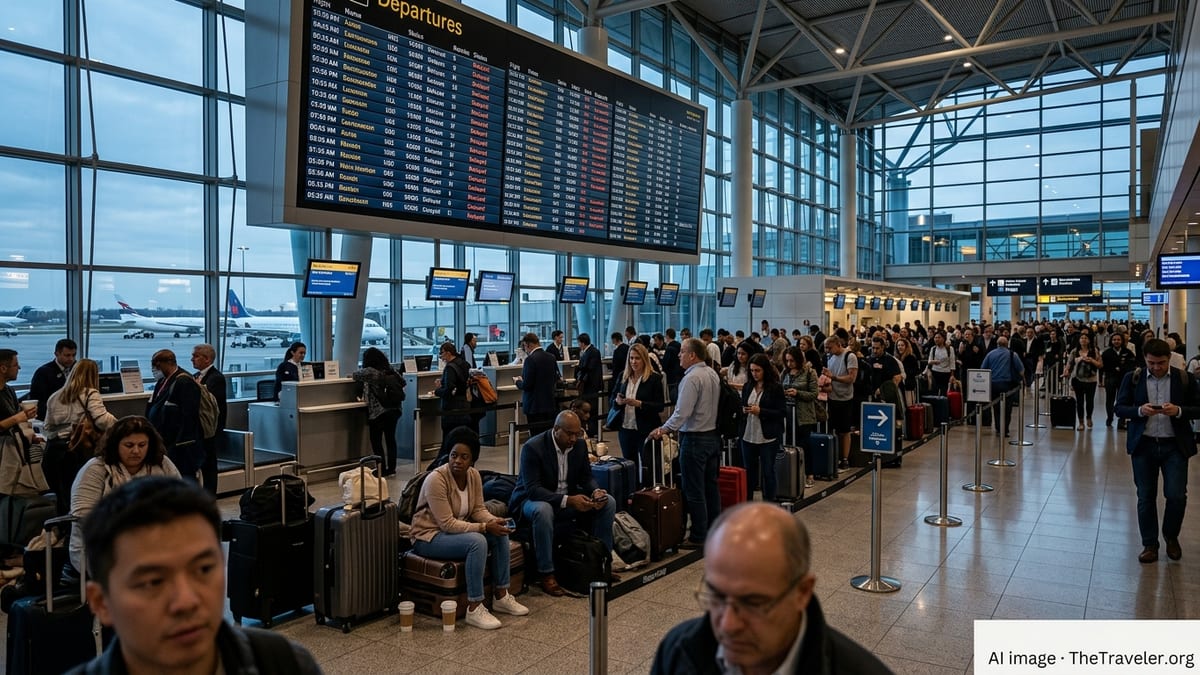
Global alert tied to escalating Iran conflict
According to publicly available information on the State Department’s travel website, the worldwide caution was updated in recent days in response to what officials describe as a complex and volatile security environment. The advisory cites the conflict with Iran and activity by groups supportive of Iran as key factors driving concern for Americans overseas.
Published coverage in outlets such as UPI and regional broadcasters indicates that the alert warns of the potential for unforeseen escalation, including the possibility that Iran or affiliated groups could target US interests or locations associated with Americans in multiple parts of the world, not only in the Middle East. The message is framed as a broad security reminder rather than a ban on international travel.
The advisory comes on top of existing country specific travel notices that already classify several destinations in the region as Level 3, meaning travelers are urged to reconsider travel, or Level 4, meaning do not travel. Countries including Iran, Iraq, Lebanon, Syria, Gaza and Yemen remain in the highest risk category, while much of the rest of the Middle East is flagged for increased caution or reconsider travel guidance.
Heightened risks for Americans in and beyond the Middle East
Recent State Department materials and media reports describe a range of possible risks for US citizens, from targeted attacks and unrest to disruptions affecting civil aviation and overflight routes. Notices highlight the threat of drone and missile activity linked to the Iran conflict and warn that airports and airspace in the wider region may periodically close, with knock on effects for connecting flights and long haul itineraries.
Travel industry coverage notes that the alert specifically urges Americans already in the Middle East to maintain a high level of situational awareness, monitor local news and follow the instructions of local authorities. Travelers are advised to be prepared for sudden changes to flight schedules, including cancellations or diversions, and to keep contingency plans in mind in case commercial options become limited.
Security analysts quoted in open source commentary point out that while previous worldwide cautions have often focused on terrorism or broad geopolitical uncertainty, the current notice is closely tied to a single theater of conflict that has quickly generated ripple effects across borders. This has raised particular concern for Americans transiting regional hubs in the Gulf, the Levant and neighboring areas that serve as major connectors between North America, Europe, Africa and Asia.
Existing travel advisories for key Middle East destinations
Destination specific advisories published by the State Department illustrate how the broader worldwide caution intersects with long standing warnings for certain Middle Eastern countries. Iran, for example, carries a Level 4 do not travel designation due to risks that include unrest, the potential for wrongful detention and the absence of direct US consular support.
Other countries in the region, such as Saudi Arabia and the United Arab Emirates, have seen their advisories tightened over recent months as hostilities with Iran escalated. Publicly available notices describe the ordered departure of some non emergency US government personnel and their families, citing the threat of armed conflict and the possibility of drone and missile attacks that could affect populated areas and critical infrastructure.
Several popular destinations for business and leisure travel, including Bahrain, Israel, the West Bank, Jordan, Kuwait, Oman, Qatar, Saudi Arabia and the United Arab Emirates, are currently listed at Level 3, meaning travelers are urged to reconsider non essential visits. Even in countries that remain open to tourism, the combination of political tensions, airspace restrictions and occasional demonstrations has pushed officials to stress careful planning and flexibility.
What the worldwide caution means for upcoming travel
Travel experts and industry publications interpreting the new alert emphasize that a worldwide caution does not automatically require Americans to cancel trips, but it does signal that risk levels are elevated and potentially fluid. Airlines may continue to operate most routes as scheduled, yet travelers can expect route adjustments, longer flight times due to altered flight paths and the possibility of last minute changes as security conditions evolve.
Publicly available guidance encourages Americans who choose to travel to enroll in the State Department’s traveler registration program, review destination specific advisories before departure and maintain updated contact information so they can receive security alerts while abroad. Travelers are also urged to keep copies of key documents, share itineraries with family or friends in the United States and ensure that their mobile devices can receive local emergency notifications.
For those with plans that route through Middle Eastern hubs, recent analysis suggests building in longer connection times, confirming tickets and schedules frequently, and considering alternative routings that avoid the most affected air corridors when possible. Travel insurers and corporate travel departments are also reassessing coverage terms and duty of care obligations in light of the latest advisory language.
Travel industry and traveler response
Early reaction from the travel sector, reflected in trade publications and airline communications, has focused on operational resilience rather than large scale cancellations. Carriers that serve the Middle East and nearby regions are reviewing contingency plans, including the use of alternative airports and flight paths, but most have continued operations while monitoring security updates.
Travel advisors report that some leisure travelers are postponing or rerouting trips that involve extended stays in the Middle East, especially to countries with Level 3 or Level 4 advisories. At the same time, bookings for other regions have, so far, shown only limited impact, suggesting that many Americans are adjusting their destinations instead of abandoning international travel altogether.
Analysts observe that the worldwide caution underscores a broader trend in which geopolitical events can quickly reshape perceived risk maps for travelers. For Americans planning trips in the coming weeks, the message from publicly available guidance is to stay informed, remain flexible and be prepared for a more unpredictable travel environment as tensions centred on the Middle East continue to reverberate worldwide.