


More news on this day
Boston Logan International Airport is contending with a fresh wave of operational disruption, as publicly available tracking data shows at least four flight cancellations and more than 70 delays affecting major carriers and key routes across the United States, Canada, and Europe.
Get the latest news straight to your inbox!
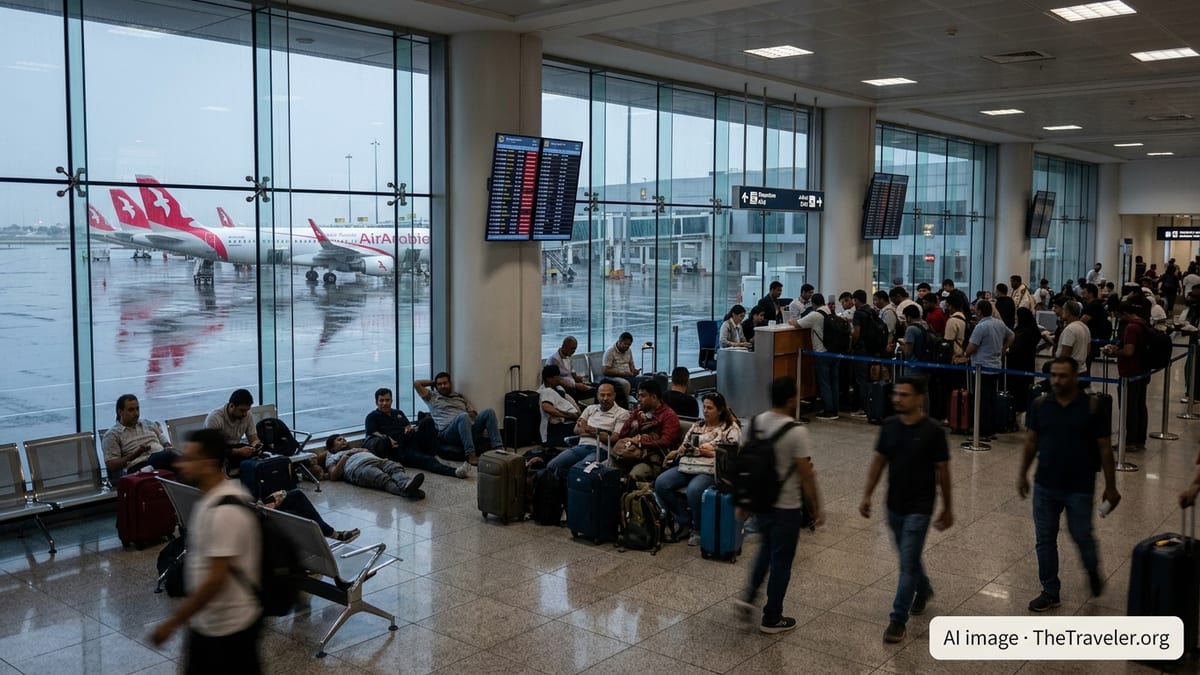
Weather and Congestion Trigger Another Difficult Day at BOS
Real-time airport monitoring platforms indicate that Boston Logan is again under strain on June 9, with ground delays and traffic management initiatives slowing departures and arrivals. While the number of outright cancellations remains relatively low compared with some previous disruption events, the accumulation of delayed flights is creating a challenging travel day for passengers.
Operational data shows that American Airlines, Delta Air Lines, JetBlue, Southwest Airlines, and United Airlines are all experiencing delayed departures out of Boston, with some knock-on effects on arriving flights. The majority of these disruptions are being attributed to a combination of regional weather, airspace congestion, and tight aircraft and crew rotations during a peak travel period.
Industry reports on recent performance suggest that, nationally, delays have been driven not only by storms but also by systemic pressures within the national aviation system, including air traffic volume and late-arriving aircraft. Boston Logan, a key New England hub with heavy domestic and transatlantic traffic, is particularly sensitive to such network stresses.
Although conditions at Logan are not described as a total shutdown, the scale of delays is significant enough that travelers are being advised through public channels and airline alerts to monitor flight status closely and anticipate missed connections or rebookings.
Major Airlines See Schedules Slipping Off Track
Across Boston Logan’s terminals, the five largest carriers on the field are absorbing the brunt of Monday’s disruptions. Tracking boards show a patchwork of late departures for American, Delta, JetBlue, Southwest, and United, with a small cluster of flights cancelled outright and dozens more operating well behind schedule.
Historical performance data compiled by transportation regulators illustrates how quickly delays can cascade once operations begin to slip. When aircraft and crews arrive late from earlier segments, later flights are pushed back as well, even when local weather is not severe. Public data for the big U.S. airlines highlights late-arriving aircraft and air carrier delays as recurring contributors to schedule problems, a pattern now playing out at Boston.
For JetBlue, Logan is one of the most important bases in its network, and even modest disruption can reverberate across its East Coast and transatlantic routes. Delta and American, meanwhile, rely on Boston for competitive service to key business markets. Southwest and United, though operating a smaller presence than at their main hubs, also face challenges as delays in Boston interfere with tight turnarounds elsewhere in their systems.
On a day when the overall number of cancellations appears contained, the more immediate story for passengers is the slow erosion of on-time performance. For many travelers, a flight that operates two hours late may be as disruptive as a cancellation if it leads to missed onward connections or late-night arrivals.
Transatlantic Routes to Europe and the Middle East Affected
The disruption at Logan is not confined to short-haul flying. Data from flight-tracking platforms shows that long-haul services from Boston to major European and Middle Eastern gateways, including London, Amsterdam, Rome, Tel Aviv, and Zurich, have also encountered schedule pressures.
These routes are among the airport’s most strategically important, connecting New England’s business and academic communities with financial centers and tourism destinations overseas. Even relatively small departure delays can cause complications once aircraft enter congested North Atlantic tracks or arrive late into slot-controlled airports in Europe and Israel, where strict operating windows can compound lateness.
Publicly available flight status snapshots indicate that some transatlantic departures from Logan are pushing back later than scheduled, with airlines adjusting estimated arrival times accordingly. In certain cases, aircraft are departing after extended ground waits linked to broader traffic management measures along the East Coast.
Because transatlantic operations often require carefully coordinated crew duty times and aircraft rotations, today’s schedule slippage out of Boston may echo through overnight and next-day operations. Passengers with onward connections in European hubs are being encouraged through airline communication channels to keep a close eye on rebooking options and minimum connection times.
North American Links to Toronto, Los Angeles, and Chicago Slow Down
Within North America, key routes from Boston to cities such as Toronto, Los Angeles, and Chicago are also feeling the impact of the day’s disruptions. These flights are often heavily utilized by both business and leisure travelers, making any deterioration in punctuality particularly visible.
Flights to Toronto connect Boston with one of Canada’s busiest hubs, providing onward links across the country and to international destinations. Delays on this corridor can quickly spill over into missed regional connections, especially during busy afternoon and evening banks.
Long-haul domestic services to Los Angeles are similarly exposed. Any late departure from Logan shortens the margin for on-time arrivals in California, potentially forcing crews up against duty time limits and disrupting aircraft rotations on the West Coast. With summer schedules already dense, recovery options, such as spare aircraft or crews, may be limited.
Chicago, a major connecting point for multiple U.S. airlines, is another pressure point. When Boston departures to Chicago run late, passengers may miss onward flights to the Midwest, Mountain West, and West Coast, amplifying the impact of what initially appears to be a localized problem at Logan into a multi-hub challenge across several time zones.
Passengers Face Long Lines and Limited Alternatives
For travelers on the ground at Boston Logan, the operational picture translates into longer queues at check-in counters, security lanes, and customer service desks. Published coverage and social media posts from recent disruption events at major U.S. hubs suggest that when delays reach this scale, lines for rebooking assistance and same-day standby lists can stretch for hours.
Compounding the frustration, many flights leaving Boston on June 9 are already operating close to full, leaving limited room to re-accommodate passengers from cancelled or heavily delayed services. With the summer travel season ramping up, spare seats on alternative flights to cities like Los Angeles, Chicago, and Toronto can be scarce.
Travel advisers often recommend that passengers build more buffer time into their itineraries during peak seasons and closely track airline notifications. On days like this at Logan, even travelers with nonstop itineraries may find themselves dealing with late-night arrivals, missed events, or the need to secure unexpected overnight accommodation.
While today’s disruption at Boston Logan does not yet match the scale of the most severe nationwide meltdowns seen in recent years, it underscores how quickly a mix of weather, congestion, and tight scheduling can tip a busy airport into widespread delay. With summer travel volumes continuing to rise, industry observers caution that similar episodes could become more frequent unless capacity and resiliency improve across the broader U.S. air travel system.