


More news on this day
Airports across the United Arab Emirates remain open and busy even as foreign governments tighten travel advisories for the Gulf region and new guidance highlights security awareness for hotels, shopping destinations and tourists.
Get the latest news straight to your inbox!
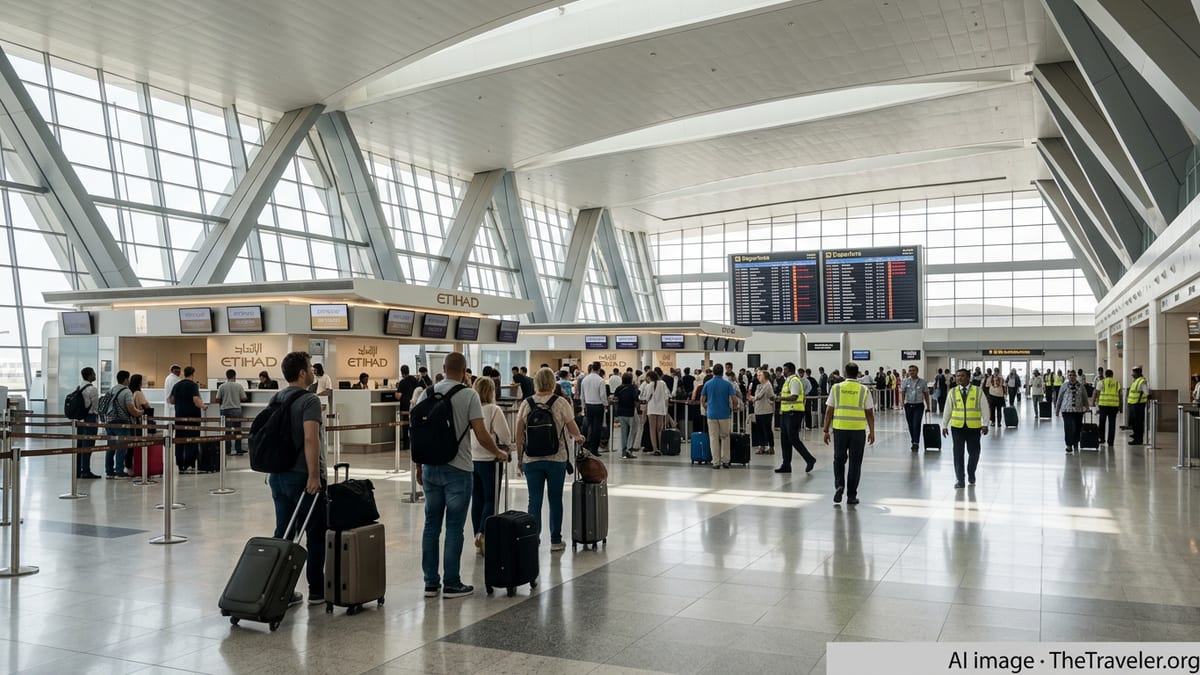
Air Travel Holds Steady Despite Regional Tensions
Dubai International and other major airports in the United Arab Emirates are maintaining operations as regional tensions continue to disrupt wider Gulf airspace. Published coverage from regional and international outlets shows that Dubai is operating near full capacity in late July, with hub carrier services close to pre-crisis schedules even as some foreign airlines remain cautious.
Airport management statements cited in regional business media describe passenger flows as busy, supported by rerouted traffic from other parts of the Middle East where airspace or schedules have been curtailed. While the number of individual airlines serving Dubai has fallen compared with earlier in the year, reports indicate that local carriers have added capacity on key routes to keep overall seat supply high.
Industry analyses of the conflict’s aviation impact note that Gulf hubs, including Dubai and Abu Dhabi, temporarily lost significant capacity during the heaviest phase of airspace closures in March. Since then, air corridors have gradually reopened and flight operations have been rebuilt, allowing UAE airports to retain their role as major connecting points between Europe, Asia and Africa.
Operational updates from aviation authorities and airport operators emphasize that terminals, runways and supporting infrastructure are functioning, even though they remain under heightened monitoring in light of missile and drone incidents earlier in the year. Travelers using UAE hubs are being urged by airlines to check flight status closely because schedules can still change at short notice.
Foreign Governments Raise Travel Advisories for the UAE
While airports stay open, a series of updated foreign travel advisories reflect growing caution around trips to the United Arab Emirates and the wider Gulf. Government travel pages from countries including the United States, the United Kingdom, Canada, Germany and Australia now warn that the security situation in the region is volatile, pointing to missile strikes, drone activity and cross-border hostilities since late February.
The United States has advised its citizens to reconsider travel to the UAE due to the threat of armed conflict and has highlighted the possibility of attacks on transportation hubs, hotels and other public venues. The advisory also draws attention to aviation safety notices that recommend extra care for flights operating across Middle Eastern airspace.
The United Kingdom, Canada and Australia have issued similar notices in recent days and weeks, warning their nationals that airspace closures, sudden flight cancellations and delays remain possible. These advisories stress that conditions can deteriorate rapidly and that travelers should be prepared for extended layovers, route changes or the need to shelter in place if hostilities escalate.
European travel guidance echoes these concerns and underscores that even though the UAE has not been the primary theater of the fighting, it has been affected by missile and drone attacks on civilian infrastructure in the Gulf. Governments are encouraging citizens to register their travel plans, monitor official updates and maintain flexible itineraries when transiting through or staying in the Emirates.
Hotel and Tourism Sector Adapts Security Messaging
Alongside airport operations, the UAE’s hospitality sector is adjusting to the new security landscape. Publicly available information from the country’s tourism authorities states that hotels, resorts and shopping centers continue to operate in line with approved regulatory frameworks, including risk assessments and emergency procedures that have been reviewed in light of recent regional events.
Industry digests on the Middle East crisis report that global insurers and corporate travel managers are taking a more conservative view of stays in the Gulf, prompting some companies to postpone conferences and large-scale meetings in the UAE. Analysts say this has weighed on business travel and pushed down average hotel occupancy, particularly in major urban markets that previously relied on corporate demand.
At the same time, security awareness campaigns aimed at hotel operators emphasize measures such as access control, surveillance coverage, coordination with local emergency services and clear communication with guests about any alerts. These efforts are intended to reassure visitors while aligning properties with international best practices for sites located near high-profile transportation and commercial hubs.
Commentary from regional tourism observers suggests that leisure guests are still arriving, especially from markets whose airlines continue to operate regular flights into the UAE. However, shorter booking windows and a greater focus on cancellation flexibility indicate that travelers are closely weighing security information and monitoring advisories throughout their stay.
Travelers Weigh Open Airports Against Heightened Risk Guidance
The contrast between fully functioning airports and increasingly restrictive foreign travel advisories is creating a complex environment for passengers. Reports from travel forums and consumer outlets show that some visitors are proceeding with long-planned trips, reassured by the continued operation of major hubs and the perception of strong on-the-ground security in the Emirates.
Others are choosing to cancel or postpone journeys, citing concerns about insurance coverage and the possibility that routes could be suspended with little warning. Insurers and corporate travel policies in several countries link coverage to official advisory levels, meaning that higher-risk ratings can restrict business travel and make it harder for leisure travelers to be reimbursed if plans fall through.
Airlines serving the UAE are responding by adjusting schedules and deploying larger aircraft on core routes where demand remains resilient. In some cases, carriers from neighboring countries have halted services temporarily, while UAE-based airlines have filled part of the gap by adding flights or increasing frequency to key destinations in Asia, Europe and Africa.
Travel specialists note that passengers connecting through the UAE should build in extra time for potential delays, verify visa and transit requirements, and stay informed about both regional security developments and airline notices. Although airports and hotels remain open, the rise in Gulf travel advisories and the emergence of more explicit hotel security messaging underline that the risk environment for visitors is still evolving.