


More news on this day
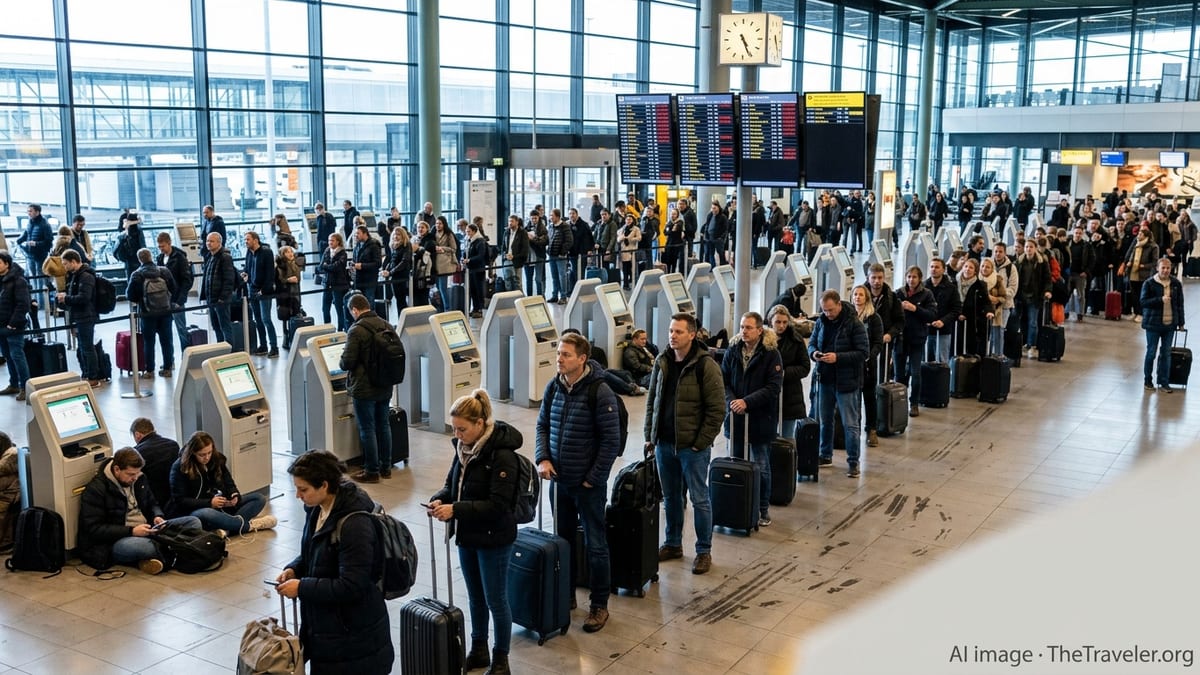
Hundreds of travelers faced long waits, missed connections, and overnight stays at Amsterdam Schiphol Airport as more than 250 flights were delayed and around 20 were canceled, disrupting major routes across Europe and North America.
Get the latest news straight to your inbox!
Heavy Disruption Across a Key European Hub
Operational data and published coverage for Amsterdam Schiphol show a sharp spike in disruption, with roughly 255 flights delayed and 20 canceled in a single day. The imbalance between a high number of delays and a smaller, but still significant, cluster of cancellations turned one of Europe’s busiest hubs into a difficult environment for travelers attempting to make onward connections.
Reports indicate that the disruption rippled through both short haul and long haul networks, affecting services on KLM, Delta Air Lines, British Airways, Lufthansa and other carriers that use Schiphol as a key transfer point. Flights to and from major cities including London, New York, Paris and Dubai were among those impacted, complicating travel plans not only for origin and destination passengers but also for those using Amsterdam as a connecting hub.
Publicly available flight tracking information pointed to long sequences of delayed departures and arrivals throughout the day, with some flights repeatedly pushed back before finally departing. For many passengers this meant extended periods in departure halls, queues at service counters and a scramble to secure remaining seats on alternative services.
Knock-on Effects for International Routes
The wave of delays at Schiphol had a pronounced effect on international routes that depend on tightly timed connections. Travelers booked on KLM and Delta joint transatlantic services to New York and other United States gateways reported missed connections after feeder flights from across Europe arrived late into Amsterdam.
Similarly, services operated by KLM, British Airways and Lufthansa on key corridors to London and Frankfurt experienced schedule pressure, with delayed arrivals from Amsterdam feeding into already busy late afternoon and evening waves at those airports. Routes to Paris and other European capitals were also affected as aircraft and crews arrived out of position, narrowing the options for same day rebooking.
Coverage of the disruption describes passengers being rebooked onto flights many hours later or pushed to travel the following day when immediate alternatives were unavailable. The hub and spoke nature of Schiphol’s operation meant that a single delayed inbound flight could affect multiple onward departures, multiplying the inconvenience for travelers far beyond the original disruption point.
Scenes at the Terminal as Passengers Seek Alternatives
Accounts from social media and travel forums depict crowded terminals, with long lines forming at airline service desks and transfer counters as passengers sought new itineraries. Many turned to airline mobile apps and websites, though some reported that digital tools struggled under the weight of simultaneous rebooking requests during the peak of the disruption.
In some cases, travelers heading to London, Paris, New York and Dubai opted to accept rerouting via other European hubs, extending journey times but improving the chance of reaching their destination the same day. Others faced overnight stays in Amsterdam when remaining seats on later departures were exhausted.
Publicly available information shows that baggage handling also came under strain as missed connections forced ground teams to retrieve, retag and re-route bags at short notice. For some travelers, luggage failed to travel on the same flight, creating an additional layer of stress once they finally reached their destination.
What Passenger Rights May Apply
Public guidance on European air passenger rights indicates that travelers departing from Amsterdam Schiphol may be protected under EU and UK regulations when flights are significantly delayed or canceled. Depending on the precise cause of the disruption and the length of the delay, affected passengers can in some circumstances be entitled to assistance such as meals, refreshments and accommodation, as well as, in certain cases, financial compensation.
Consumer advice platforms stress that eligibility depends on factors including the airline operating the flight, the length of the delay at arrival, and whether the underlying cause is considered within the airline’s control. Travelers are often encouraged to retain boarding passes, booking confirmations and receipts for essential expenses, as these documents may be required when submitting claims.
Publicly available information from major airlines at Schiphol, including KLM and its partners, notes that passengers whose flights are canceled are typically rebooked on the next available service, with options in some cases to request refunds or travel vouchers. However, during busy travel periods and widespread disruption, limited spare capacity can mean longer waits before a suitable alternative becomes available.
Advice for Upcoming Travelers Using Schiphol
In light of the latest disruption, travel advisories emphasize the importance of monitoring flight status closely before setting out for the airport and again while in transit. Airlines and Schiphol itself provide real time updates through apps and information screens, and departure times can change repeatedly during periods of operational stress.
Passengers connecting through Amsterdam are being encouraged by widely shared guidance to allow generous connection times, particularly when traveling on separate tickets or to long haul destinations such as New York or Dubai. Building in extra time between flights can reduce the risk that an initial delay results in a missed onward connection.
Travel experts also suggest that passengers consider carrying essential items, including medications, chargers and a change of clothes, in cabin baggage in case checked luggage is delayed. While the current wave of disruption at Schiphol is not unprecedented, it highlights once again how quickly a concentration of delays and cancellations can leave hundreds of travelers stranded and facing difficult choices about how to complete their journeys.