


More news on this day
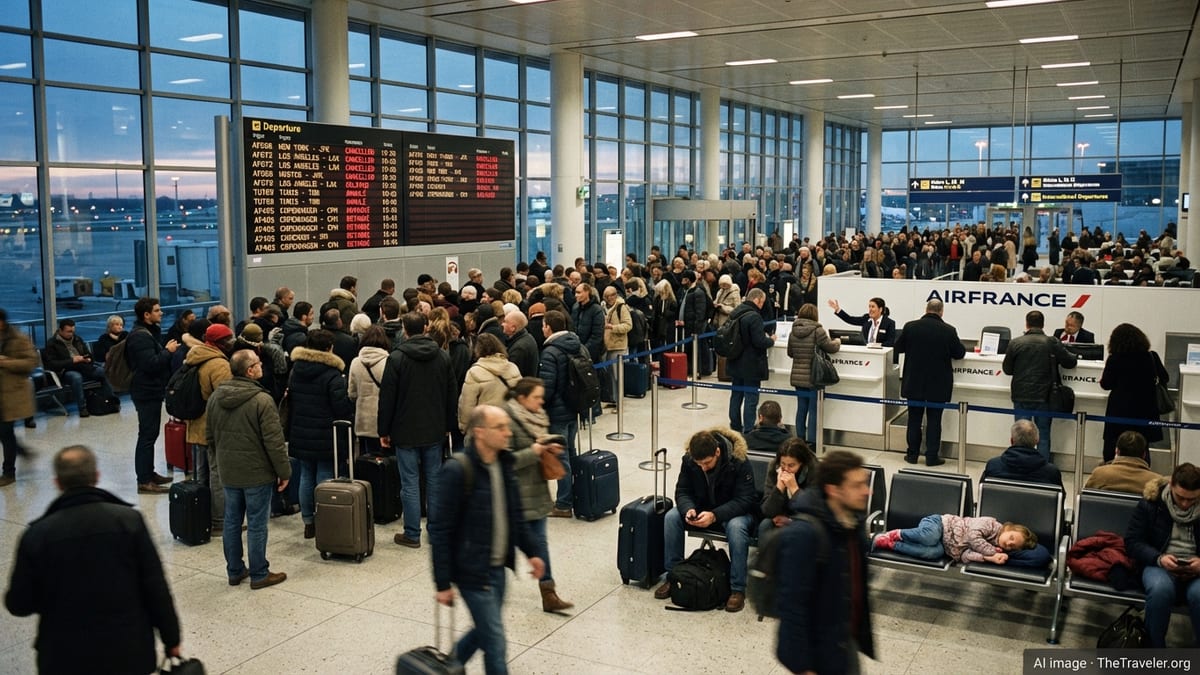
Operations at Paris Charles de Gaulle Airport were heavily disrupted on June 8, with publicly available data showing three flight cancellations and at least 161 delays affecting services operated by or codeshared with Air France, Air India, Brussels Airlines, Air Baltic, Delta Air Lines and other major carriers.
Get the latest news straight to your inbox!
Wide Network Impact Across Major Airlines
Data compiled from real time flight tracking and disruption monitoring platforms indicates that Charles de Gaulle Airport experienced another day of difficult operations, with delays rippling across short haul European services and long haul intercontinental routes. The disruption involved flights operated by French, European and intercontinental airlines, including Air France and its SkyTeam partners as well as carriers such as Air India, Brussels Airlines, Air Baltic and Delta Air Lines.
The three cancellations recorded at the airport were spread across different airlines and destinations, but the dominant feature of the day was the high volume of delayed services. With at least 161 flights departing or arriving behind schedule, passengers on both morning and evening waves of traffic faced missed connections, rebookings and extended time in terminals already operating close to capacity.
As Charles de Gaulle is the principal hub for Air France and a key European gateway for partner airlines, delays on a cluster of departures can quickly generate wider disruption. When an early rotation departs late from Paris, the same aircraft and crew may then carry the delay into subsequent legs, creating reactionary knock on effects in other airports across Europe, the Middle East and North America.
Airlines with codeshare arrangements were particularly exposed, as a single delayed Air France operated flight can affect passengers ticketed with multiple marketing carriers, including Delta Air Lines, Aeromexico and others sharing the same aircraft. This structure magnifies the number of travelers feeling the impact of each late departure or arrival.
Passengers Stranded As Rotations Fall Out Of Sync
Reports from passenger forums and flight status boards show that travelers at Charles de Gaulle encountered long lines at check in, security and transfer desks as delays accumulated. For those connecting through Paris, even modest delays of 45 to 90 minutes were enough to break carefully planned itineraries, leaving travelers stranded in the hub while airlines worked to find new routings.
Because Charles de Gaulle handles a large proportion of connecting traffic, especially via Terminal 2 for Air France and its partners, the airport is particularly vulnerable when rotations fall out of sync. A delayed arrival into Paris can mean insufficient time to clear passport control or move between concourses, forcing passengers onto later departures where seats may already be scarce at peak times.
Publicly available information from recent disruption episodes at Paris airports also underlines how quickly a localized issue can evolve into system wide congestion. Earlier in June, combined statistics for Paris airports showed hundreds of delays and a smaller number of cancellations in a single day, illustrating that even when cancellations remain limited, punctuality can deteriorate sharply once schedules begin slipping.
For some travelers during the latest episode, overnight stays in or near the airport became unavoidable when onward connections were no longer available the same day. In these cases, rebooked flights often departed the following morning, extending journeys by 12 hours or more.
Multiple Factors Behind Ongoing Schedule Pressure
While precise causes for each delayed or canceled flight differ, aviation analysts consistently highlight a combination of weather, air traffic control restrictions, operational bottlenecks and congested airspace as the main drivers of recent disruption at major European hubs. Charles de Gaulle, one of Europe’s busiest airports by passenger volume and number of airlines served, is especially exposed to those pressures.
Strong summer demand has pushed load factors higher across many European and long haul routes, leaving airlines with limited spare capacity to absorb irregular operations. If an aircraft or crew is out of position after a late inbound, finding a replacement can be challenging, particularly on long haul sectors where aircraft utilization and crew duty time limits are tightly planned.
Across the broader European network, airlines have also been dealing with recurring capacity limitations linked to air traffic control staffing and weather related flow restrictions. When flight levels or routings are constrained, delays often build progressively through the day. For a dense hub such as Paris Charles de Gaulle, relatively small slowdowns in departure or arrival rates can translate into lengthy queues for takeoff and landing slots.
In addition, some carriers at Charles de Gaulle have been managing the tail end of previous disruption cycles, where earlier days of cancellations and rerouted aircraft leave schedules fragile. This can mean that even on days without extreme weather or industrial action, on time performance remains vulnerable.
What Travelers Can Do If Their Flight Is Affected
Consumer advocacy groups and travel rights organizations consistently advise passengers flying through congested hubs such as Charles de Gaulle to monitor flight status closely on the day of departure and to build extra time into itineraries where possible, especially for self booked connections across separate tickets. Checking both the operating carrier and any codeshare partner’s applications or websites can provide early warning of schedule changes.
When a flight is canceled, European Union rules generally require airlines to offer either a refund or alternative transport to the final destination, even if that means rebooking on a later date. For long delays, duty of care obligations may include meals and, where an overnight stay is necessary, hotel accommodation and transport between the terminal and lodging, although specific arrangements vary by airline and circumstances.
Passengers whose flights are significantly delayed or canceled for reasons within the airline’s control can, in many cases, seek financial compensation under EU Regulation 261/2004, depending on the length of delay, distance of the journey and cause of disruption. Travelers are typically advised to retain boarding passes, booking confirmations and any written notifications about the disruption to support later claims.
For those still planning upcoming trips through Paris, experts suggest favoring longer official connection times, avoiding tight layovers where possible, and considering travel insurance that explicitly covers missed connections and delays. With schedules under continuing pressure at key European hubs, a more cautious approach to routing can help reduce the risk of extended unplanned stays in transit.
CDG’s Strategic Role Keeps Pressure High
The latest wave of delays and cancellations underscores the central role of Charles de Gaulle in Europe’s aviation system. As the primary hub for Air France and a critical node for global alliances, the airport’s performance has an outsized effect on connectivity between Europe, the Americas, Africa and Asia.
Because many long haul journeys rely on a single connection in Paris, disruption at Charles de Gaulle can affect travelers far beyond France, from North American passengers connecting to secondary European cities to Indian or African travelers reaching North American and Scandinavian destinations via the hub. Each delayed or canceled rotation in Paris therefore feeds into a much larger web of schedules.
Industry observers note that without additional resilience in staffing, air traffic management and infrastructure across the wider European system, periods of heavy disruption at hubs like Charles de Gaulle are likely to remain a recurring feature, particularly during peak holiday seasons. For travelers, the latest events in Paris serve as another reminder that even a relatively small number of cancellations, when combined with extensive delays, can quickly strand large numbers of people on the road.