


More news on this day
The United States Embassy in Iraq is urging American citizens to prepare for sudden air travel disruptions, including flight cancellations and airspace closures, as regional tensions continue to create a volatile operating environment for airlines and airports serving the country.
Get the latest news straight to your inbox!
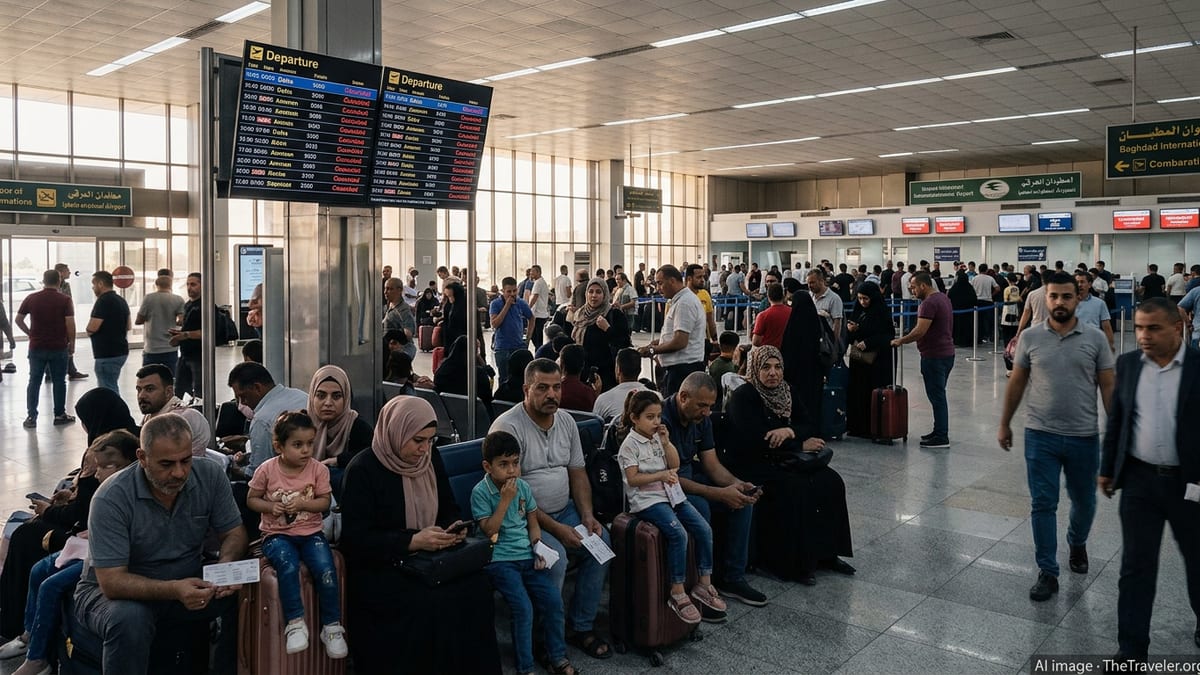
Heightened Security Alerts Amid Ongoing Regional Tensions
Recent security alerts directed at Americans in the Middle East highlight a rapidly changing risk landscape for international aviation, with Iraq again at the center of concern. Publicly available State Department guidance notes that Americans in the region should be prepared for periodic airspace closures, potential airport disruptions and short-notice flight cancellations as the security environment shifts.
Country-specific information for Iraq continues to carry the highest Level 4 “Do Not Travel” advisory, reflecting terrorism, armed conflict, civil unrest and the limited ability of US government personnel to respond outside restricted movement zones. Travel.state.gov material on Iraq underscores that US government staff face limits on use of Baghdad International Airport, signaling the degree of caution around civil aviation in and out of the capital.
Published coverage from regional outlets in Baghdad reports that the US Embassy has repeatedly reminded citizens that security incidents, including rocket and drone activity and clashes near airports, can lead to abrupt changes in airport status. These alerts emphasize that any apparent return to normal operations can be temporary and subject to reversal with little advance warning.
Travel risk assessments compiled by foreign ministries and international organizations similarly warn that the broader Middle East remains vulnerable to spillover from conflicts and political crises, with Iraq’s airspace often affected by military activity and overflight restrictions. For Americans in the country, the embassy’s message is that air travel is possible at times, but is never guaranteed and can be interrupted with minimal notice.
Flight Cancellations, Airspace Closures and Limited Options
Guidance disseminated through US government channels describes a pattern of intermittent airport closures and schedule disruptions affecting travelers in and around Iraq. Advisories note that airspace can close temporarily in response to military operations or security incidents, prompting airlines either to cancel flights outright or reroute around Iraqi territory.
Regional media and travel industry monitoring point to past episodes in which Baghdad and Erbil airports have temporarily halted operations or reduced capacity, only to reopen under tighter controls. In each case, passengers have faced backlogs, missed onward connections and difficulty rebooking as airlines worked through new restrictions and altered routing.
The current embassy messaging urges US citizens to closely follow communications from their airlines, as carriers are often the first to adjust schedules when airspace status changes. Travelers may also encounter reduced frequencies, last-minute aircraft swaps and extended layovers when airlines consolidate operations in response to security-related constraints.
Observers who track airline operations in conflict-affected regions note that even when scheduled flights continue, carriers commonly adopt conservative policies on crew rest, alternate airports and diversion thresholds. This cautious stance can translate into more frequent cancellations or delays for routes involving Iraq than for comparable flights elsewhere.
Consular Services Under Strain as Non-Essential Staff Depart
Official travel advisory updates earlier this year recorded that non-emergency US government employees were ordered to depart Iraq, reflecting heightened concern about the security situation. Publicly accessible alerts linked to that decision indicated that consular services may be restricted, delayed or reprioritized around emergencies.
Reports from international law and immigration briefings describe a wider pattern of US posts across the Middle East reducing or temporarily suspending routine visa interviews and citizen services during spikes in regional tension. Embassy operations in Baghdad and the US Consulate General in Erbil have previously shifted into emergency-focused modes, concentrating on critical assistance while postponing non-urgent appointments.
For American travelers, this means that support for issues such as lost passports, routine notarial services or documentation for onward travel may take longer to obtain than under normal conditions. Public guidance encourages citizens to travel with up-to-date documents, maintain digital and paper copies, and avoid assuming that in-person consular help will be readily available during a fast-moving crisis.
Security analysts emphasize that shrinking the footprint of non-essential staff is intended to reduce exposure while preserving core capabilities. Nonetheless, reduced staffing and movement restrictions on diplomatic personnel can limit the ability of US missions in Iraq to provide on-the-ground assistance if commercial travel options suddenly contract.
Practical Steps Recommended for Americans in Iraq
Across its global advisories, US government travel guidance repeatedly stresses preparation for unexpected disruption, and the Iraq-specific messaging aligns closely with that theme. Citizens are urged to maintain contingency plans for departure, verify that their travel and medical insurance covers evacuation and trip interruption, and set aside funds to purchase new tickets should existing itineraries collapse.
Public information also highlights the importance of registering contact details so that security alerts and logistical updates can reach Americans quickly. Travelers and residents are encouraged to monitor news reports and airline notices, stay informed about any changes to airport opening hours, and factor in the possibility that safe overland alternatives may be extremely limited or inadvisable.
Travel risk advisories from allied governments reinforce similar recommendations for their nationals in Iraq, advising that individuals keep essential supplies, maintain charged communication devices and understand where they might shelter if airports close or movement is temporarily unsafe. Such guidance reflects a consensus that personal preparedness is critical in an environment where official assistance and transport capacity can be constrained.
For Americans who still choose to be in Iraq despite the Level 4 advisory, the embassy’s warnings about travel disruptions function as a reminder that routine air connectivity cannot be taken for granted. Planning for contingencies, keeping flexible schedules and closely following security developments are increasingly presented as non-negotiable elements of any trip involving the country.
Broader Impact on Travel Patterns to and from Iraq
Industry observers note that repeated security alerts and a prolonged “Do Not Travel” warning are influencing broader travel patterns involving Iraq. International carriers have periodically reduced exposure by trimming frequencies, rerouting overflights or shifting capacity to markets perceived as more stable, which in turn reduces choices for the passengers who still need to reach Iraqi destinations.
Some regional airlines continue to connect Baghdad and other Iraqi cities to major hubs, but schedule data and news coverage indicate that the network remains more limited and volatile than before recent surges in regional conflict. Even when official restrictions ease, commercial operators may take additional time to restore full schedules, preferring to watch local conditions and adjust cautiously.
Travel experts point out that the embassy’s urging for Americans to prepare for disruptions is consistent with a wider reassessment of risk in the aviation sector. Iraq’s geography means that its airspace is often implicated when tensions rise elsewhere in the Middle East, magnifying the impact of distant events on local departure boards.
For now, the message reaching US citizens is that trips involving Iraq require unusual flexibility and risk tolerance. With official guidance warning of potential airspace closures and sudden flight cancellations, travelers are being encouraged to view confirmed tickets as plans that may need to change quickly rather than guarantees of smooth passage.