


More news on this day
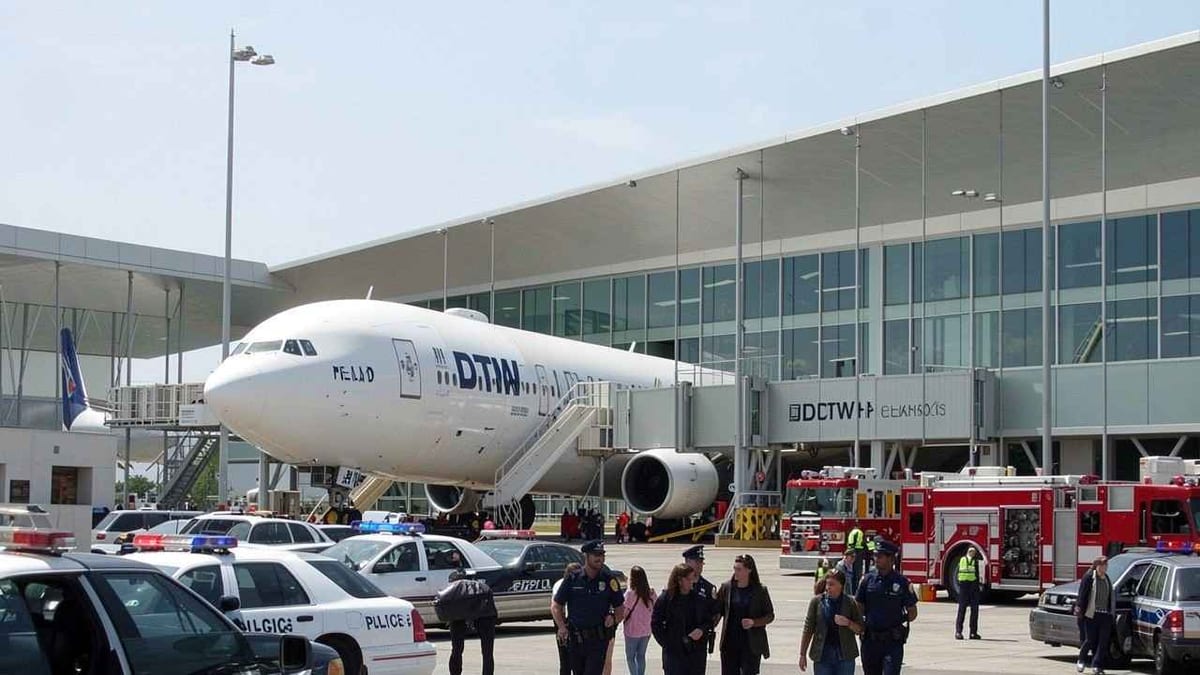
Passengers on a Delta Air Lines service operating as Flight DL845 faced unexpected disruption when the aircraft diverted to Milwaukee, compounding what was already a difficult travel day across multiple U.S. airports.
Get the latest news straight to your inbox!
Unscheduled diversion adds pressure to an already strained network
Publicly available flight-tracking information and social media posts indicate that the aircraft operating as Delta Flight DL845 abandoned its planned routing and diverted to Milwaukee, touching down after reporting operational difficulties en route. While the precise technical cause had not been clearly identified in early reports, data suggest the decision was made quickly, placing the aircraft into Milwaukee General Mitchell International Airport rather than its intended destination.
The diversion unfolded against a backdrop of significant congestion in the national air system, with weather reroutes, scattered ground stops, and rolling delays creating bottlenecks from the Upper Midwest to the East Coast. Aviation tracking dashboards showed a growing number of flights holding, diverting, or arriving behind schedule, suggesting that the impact on passengers extended well beyond a single aircraft.
The arrival of an unexpected mainline jet into Milwaukee added fresh operational complexity for ground handlers and airport planners already working through a heavy midseason travel schedule. Gate availability, fueling, catering and crew duty-time limits all became immediate considerations once the diversion was confirmed.
For travelers, the abrupt change of airport meant a rapid shift from routine flight to logistical problem-solving, as those on board weighed missed connections, hotel needs and alternative routing options from a city that, for many, was never supposed to feature in their journey.
Knock-on delays, missed connections and a scramble to rebook
Information published by airport boards and flight-tracking platforms showed mounting disruption across hubs linked to the affected route, with arrival and departure banks experiencing extended departure queues and late inbound aircraft. When an aircraft diverts, it effectively vanishes from its planned sequence at the destination, often leaving an empty gate and a missing aircraft for later legs that depend on that equipment.
Once the diverted jet reached Milwaukee, airline operations teams were required to decide whether to continue the aircraft onward after checks or to terminate the flight and reassign passengers. In either scenario, knock-on effects were likely for subsequent segments, particularly if the aircraft had been scheduled to operate multiple legs later in the day.
Passengers connecting to international departures or last flights of the night faced the highest stakes. Based on comparable recent diversion patterns at U.S. hubs, travelers in these situations often confront rebookings onto next-day services, with limited availability during peak travel periods. Crowded rebooking counters and extended waits for itinerary changes are common in such cascading disruption events.
Travel advisories shared through airline apps and public flight-status tools urged travelers throughout the affected network to verify departure times before heading to the airport, underlining how a single unscheduled diversion can ripple outward and unsettle far more journeys than those on the original flight.
Wider backdrop of weather, congestion and operational strain
The DL845 diversion coincided with a broader spell of operational strain across the U.S. air system. Recent days have seen multiple flights diverted from major hubs due to severe weather, temporary runway closures, and isolated technical or onboard issues, feeding into a pattern in which contingency plans are being activated more frequently than usual.
Recent examples include diversions of Detroit bound flights to secondary airports during storm activity and emergency re-routings prompted by in-flight technical alerts. These events, while typically resolved without injuries, add to cumulative stress on airlines’ schedules and on passengers already contending with tight connections and crowded airports.
Industry analysis points to a complex interplay of factors: heavy seasonal demand, constrained airspace during convective weather, crew duty-time rules, and the limited slack built into tightly optimized schedules. When one element falters, such as a diversion or extended ground hold, the recovery window can be narrow, and secondary effects can stretch late into the operating day.
Milwaukee’s role as a diversion point illustrates how midsize airports increasingly serve as pressure valves for major hubs during irregular operations. While these airports often have capacity to accept additional traffic, they can face resource constraints if several unplanned arrivals occur in rapid succession.
Passenger experience: stranded in an unexpected city
Accounts circulating on social platforms soon after the Milwaukee diversion described passengers dealing with abrupt itinerary changes and limited information as the situation unfolded. In irregular operations, updates often arrive first through flight-tracking apps and airport displays, leaving those on board to interpret changing estimated arrival times and new airport codes in real time.
Once on the ground in an unscheduled city, travelers typically confront immediate decisions about whether to wait for a potential continuation of their original flight, accept rebooking on alternative routes, or secure overnight accommodation if onward options are limited. For families, elderly passengers or those with tight time-sensitive commitments, the uncertainty can be particularly challenging.
Standard practice during disruption events involves using airline apps, self-service kiosks and customer service channels to secure new itineraries as quickly as possible. Travel commentators frequently advise passengers to act early, as rebooking inventory can disappear rapidly once a major disruption begins affecting multiple flights and hubs.
Some travelers also weigh ground transport alternatives, including rail or car rental, especially for medium distance routes within the Midwest where overland connections may sometimes beat heavily delayed air services. However, such options can become scarce when large numbers of passengers are suddenly funneled into the same alternatives.
What travelers can expect as operations recover
Based on patterns from similar events, operational recovery from the DL845 diversion and related disruptions is likely to be staggered rather than instantaneous. Early flights on subsequent days may depart on time, while later banks could still be affected by aircraft and crew repositioning.
Travel experts commonly recommend that passengers with upcoming trips keep a close eye on their flight status in the 24 hours before departure, enabling them to spot early signs of rolling delays or aircraft swaps. Those with flexible plans may benefit from voluntarily shifting to less congested departure times or routings, reducing the risk of being caught in the heart of a disruption cycle.
For the broader industry, the incident underscores how a single diverted flight can become a flashpoint that reveals the fragility of high-utilization schedules during peak demand. As airlines continue to calibrate capacity and staffing, even routine technical issues or sharp turns in the weather can have outsized effects on travelers.
In the case of Delta Flight DL845, the diversion to Milwaukee turned an ordinary journey into an unplanned detour through a busy Midwestern gateway, vividly illustrating how quickly air travel can be reshaped by events far beyond passengers’ control.