


More news on this day
Massive flight cancellations and rolling delays at Charleston International Airport are rippling across the United States, severing regional connections and leaving passengers stranded from the Southeast to major coastal hubs at the height of the summer travel season.
Get the latest news straight to your inbox!
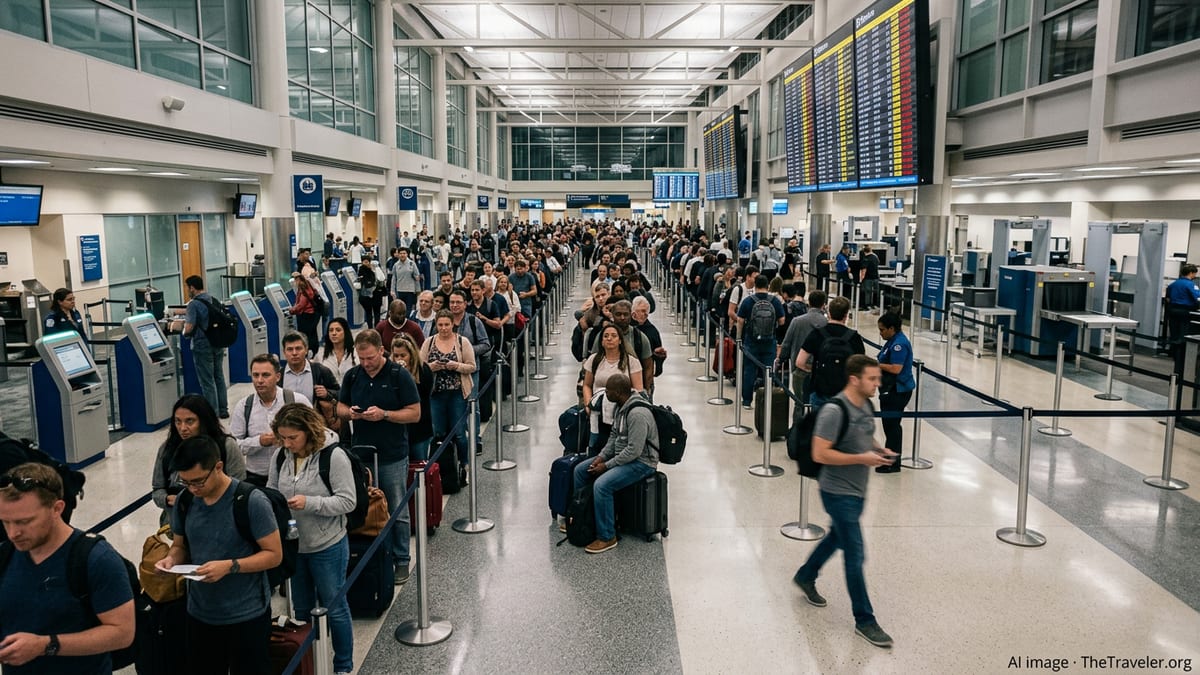
Operational Meltdown Hits a Growing Southern Gateway
Charleston International Airport, a rapidly growing gateway for both leisure and business travel, has in recent years added new carriers, routes and passenger facilities. Publicly available planning documents and airport data highlight record volumes and an aggressive expansion program designed to handle millions more travelers each year. Against that backdrop of growth, the latest disruption has hit at a particularly sensitive moment, as airlines operate near capacity and schedules leave little margin for error.
Reports compiled from live flight-status boards and tracking services indicate that a wave of cancellations and multi-hour delays has cascaded through Charleston’s departures and arrivals, particularly on regional and short-haul routes feeding larger hubs. Domestic connections to cities such as Atlanta, Charlotte, Washington and New York have been among those most heavily affected, cutting off onward links for passengers attempting to reach smaller communities across the country.
Travelers caught in the gridlock are facing missed connections, unplanned overnight stays and limited rebooking options. Because Charleston relies heavily on regional partners to funnel passengers into the networks of major carriers, cancellations at this single airport are having an outsized effect on travelers from nearby states who depend on one- or two-stop itineraries to reach their final destinations.
Publicly available federal data and consumer reports for the broader US system already show elevated levels of delays and cancellations this year, particularly among regional subsidiaries. The sudden deterioration of operations at Charleston has quickly become a vivid example of how fragile the network can be when a mid-sized airport experiences concentrated disruption.
Regional Feed Severed as Cancellations Spread Across the Network
The most immediate impact has been felt on regional connections linking Charleston with major hubs. Flight schedules show a dense pattern of short segments operated by affiliate carriers on behalf of the large US airlines. When these smaller jets are pulled from service or crews are not available, the knock-on effects extend far beyond South Carolina.
In recent days, a separate series of operational problems at one large regional airline has already forced the cancellation of hundreds of flights across the United States. Travel-industry coverage and airline statements indicate that crew-scheduling issues and system outages at that carrier have sharply reduced its ability to operate its normal timetable. Many of its flights are marketed by a major US airline but flown on regional aircraft that serve cities like Charleston with high-frequency, short-haul service.
As those regional flights into and out of Charleston disappear from boards, passengers who planned to connect through hubs such as Charlotte, Washington or Dallas are finding their itineraries unraveling mid-journey. Travelers originating in small and mid-sized US cities can be left without workable same-day alternatives when regional feeders are abruptly cut, particularly during already-busy weekend and evening bank periods.
The loss of these connections also affects inbound visitors heading to the Charleston area for cruises, conferences and vacations along the South Carolina coast. With limited same-day rebooking options, many are being routed on multi-stop detours through other hubs or told to return on later dates, compounding crowding and pressure on already constrained networks.
Passengers Stranded and Options Limited Across the United States
Accounts shared on social platforms and traveler forums describe passengers stranded not only in Charleston but also at far-flung hubs where their onward flights to South Carolina have been canceled with little advance notice. Some report being rebooked on itineraries involving two or three connections, while others are being advised that the next available seat to the region may be days away.
The situation is particularly acute for travelers attempting to reach smaller regional airports that rely on one or two daily connections through Charleston. When one leg of the journey is canceled, the entire itinerary can collapse. With aircraft and crews out of position, airlines have limited flexibility to add extra sections or upgauge planes at short notice, especially during the peak summer period when load factors are already high.
Publicly available information from consumer advocates and legal resources emphasizes that passengers affected by cancellations in the United States have varying rights depending on the reason provided by the airline. Weather-related disruptions typically result in fewer entitlements than cancellations linked to controllable operational factors such as staffing or scheduling failures. The cause classifications used by airlines at Charleston will therefore play a critical role in determining what compensation, if any, stranded travelers may receive.
Many passengers are turning to third-party travel insurance, credit card trip-interruption protections and online tools that track refund and compensation eligibility. As Charleston’s disruption feeds into national statistics, analysts will likely examine how many of the canceled flights are ultimately labeled as weather-related versus operational, a distinction that has been the subject of growing scrutiny from consumer groups.
Weather Pressures, Infrastructure Limits and a Strained Summer System
The turbulence at Charleston is occurring against a wider backdrop of operational stress across the US aviation system. Live air-traffic tools and airline advisories this week show repeated thunderstorms and convective weather patterns along key East Coast corridors. Several major carriers have issued travel waivers for affected regions, allowing ticketed passengers more flexibility to adjust plans without additional fees.
Charleston, like many southern airports, can be particularly vulnerable when strong storm lines or coastal weather systems move through the region. Local infrastructure and de-icing or diversion capacity are not always comparable to those at larger northern hubs, which can make it harder to maintain normal schedules during rapid weather changes or extended ground stops. Published discussions among frequent flyers and local travelers often highlight how quickly operations can seize up when aircraft and crews become trapped out of position.
At the same time, Charleston’s ongoing expansion program is designed to prepare the airport for continued passenger growth, with new concourses, gates and terminal improvements scheduled through the second half of this decade. Planning documents emphasize increased capacity and better passenger flow, but those projects remain in progress and are not yet available to cushion the immediate pressures of this disruption.
Industry analysts also point to the growing reliance on complex regional feed systems and tight aircraft utilization as a structural weakness in the US network. When an airport such as Charleston experiences a spike in cancellations, the lack of spare capacity or flexible routing options can quickly turn a localized problem into a multi-state disruption.
What Travelers Can Do as Charleston Disruption Continues
With the situation at Charleston evolving hour by hour, travel experts recommend that passengers monitor their flight status continuously rather than relying solely on original confirmation emails or boarding passes. Airline apps, airport displays and independent tracking sites are being used in tandem by many travelers to verify information and identify alternative options as they appear.
Passengers already en route or stranded at intermediate hubs are increasingly advised, in public guidance from consumer advocates, to explore rebooking through alternate airports within driving distance of Charleston when feasible. Nearby regional airports in South Carolina, Georgia and North Carolina may offer limited seats that can preserve at least part of an itinerary, although rental car availability and overnight accommodation can quickly become constrained during widespread disruptions.
Experts also stress the importance of documenting cancellations, delays and out-of-pocket expenses in real time. Receipts for hotels, meals, ground transport and replacement tickets can be critical when seeking reimbursement from airlines, travel insurers or credit card issuers. Given the scale of the disruption and the potential for disputes over whether cancellations were controllable or weather-related, clear records may prove essential in the weeks ahead.
For now, the situation at Charleston International Airport serves as a stark reminder of how quickly a regional node in the US air network can become a chokepoint. As airlines work to restore normal operations and reposition aircraft and crew, thousands of travelers across the country remain in limbo, underscoring the vulnerability of a system operating at the edge of its resilience.