


More news on this day
United States travel guidance for the Middle East is being recalibrated as rising security risks from the Iran war, renewed missile exchanges, and periodic airspace closures continue to disrupt global flight networks and complicate itineraries for American travelers.
Get the latest news straight to your inbox!
Advisory Levels Shift Across a Fragmented Security Landscape
Publicly available State Department data shows that much of the Middle East remains under elevated advisory levels, with Iran, Iraq, Lebanon, Syria, Gaza, and Yemen categorized at the most severe end of the scale as “Do Not Travel.” Nearby Gulf and Levant destinations including Bahrain, Israel, the West Bank, Jordan, Kuwait, Oman, Qatar, Saudi Arabia, and the United Arab Emirates are generally listed under “Reconsider Travel,” reflecting heightened but varied risk profiles across the region.
Recent advisory updates for individual countries emphasize a mix of threats, including conflict-related rocket and missile fire, terrorism, civil unrest, kidnapping, and the potential for wrongful detention. The Iran war that began in late February 2026 has widened the danger zone beyond traditional hotspots, with guidance noting that groups aligned with Iran and other non-state actors may seek to target locations associated with the United States and its partners.
For Israel and the Palestinian territories, the advisory framework has been tightened further by the authorization of departure for nonemergency US government personnel earlier this year, a step that signals a more volatile security environment. Similar measures have been reported at posts in parts of the Gulf, where staffing levels and operating conditions have been adjusted in response to missile and drone activity linked to the broader conflict.
Regional summaries published by risk consultancies describe a patchwork of localized curfews, security cordons around airports and government facilities, and intermittent disruptions to ground transport in urban centers such as Tel Aviv, Beirut, Baghdad, and select Gulf cities. This backdrop is feeding into the State Department’s broader reassessment of relative risk from country to country, even as overall warning levels remain high.
Worldwide Caution Underscores Broader Spillover Fears
The Middle East advisories are being issued alongside a renewed Worldwide Caution notice that urges Americans to exercise increased vigilance when traveling internationally. Official bulletins highlight the risk of opportunistic attacks on locations associated with the United States, including diplomatic facilities, tourist sites, transportation hubs, hotels, and public gatherings.
According to these notices, particular concern centers on the possibility that the Iran conflict and related missile exchanges with Israel could inspire plots or lone actor attacks well beyond the immediate theater of war. Security services in multiple regions are reported to be on heightened alert, and travelers are being advised to monitor local media, review emergency procedures, and maintain a lower profile in crowded or symbolic locations.
The Worldwide Caution also points to the practical impacts of elevated security postures, including more frequent checkpoints, sudden road closures near sensitive sites, and additional screening measures at airports and land borders. While such steps are intended to mitigate risk, they can introduce unexpected delays that affect connections and onward travel plans.
Travel industry analysts note that this combination of region-specific advisories and a global cautionary message is unusual in its breadth, reflecting both the intensity of the Iran conflict and uncertainty about the trajectory of events in the coming months.
Airspace Restrictions and Airline Cancellations Reshape Routes
Aviation regulators and airlines have responded to the conflict with extensive changes to routings and schedules. Guidance from European and international safety agencies recommends that carriers avoid large portions of Middle Eastern airspace, particularly around Iran, Iraq, Israel, and adjacent maritime corridors. These advisories cite persistent risks to civil aviation from long-range missiles, drones, and potential misidentification of commercial aircraft.
Reports from industry publications indicate that major European and Asian airlines have suspended or sharply curtailed flights to Tel Aviv and some Gulf and Levant destinations, while others are operating with rerouted paths that add time and fuel costs. Some carriers continue to suspend operations at regional hubs such as Dubai, Doha, and Abu Dhabi for certain routes, complicating long-planned itineraries that rely on these airports as connection points between Europe, Asia, Africa, and the Americas.
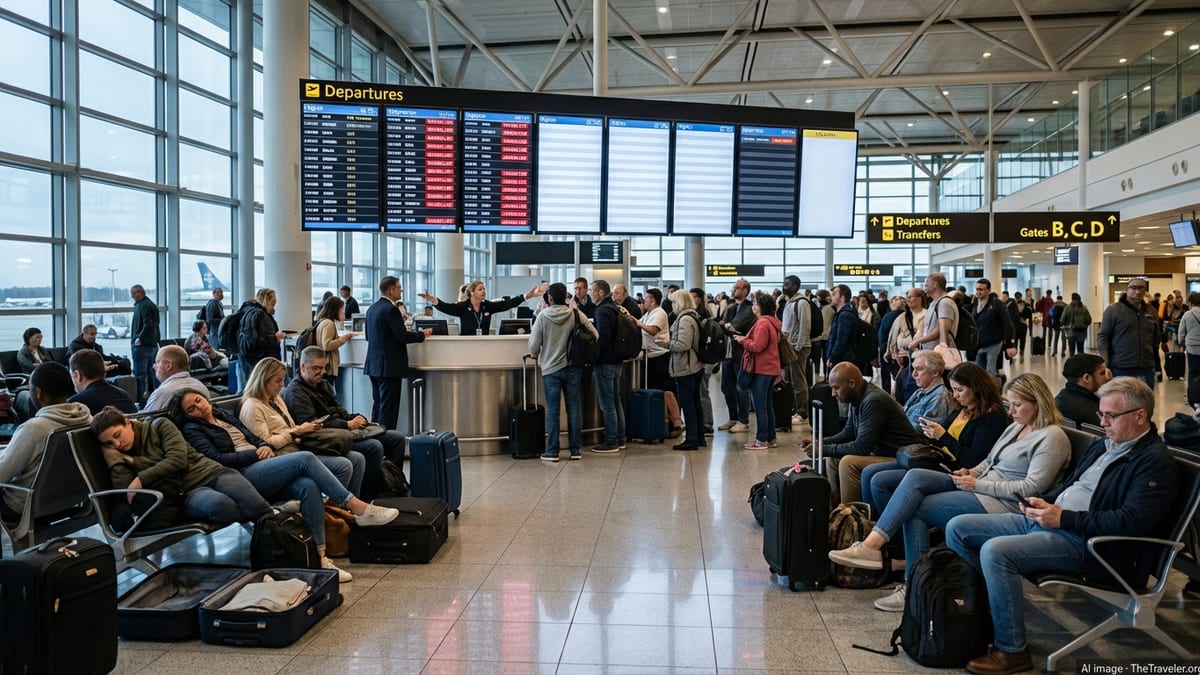
Consumer advocacy platforms tracking disruptions state that, as of mid May and into June, more than 30 airlines have been canceling or diverting flights touching key Middle Eastern cities including Tel Aviv, Dubai, Doha, Riyadh, and Beirut. The impact reaches far beyond travelers whose final destination is in the region, since many itineraries from North America to South or Southeast Asia, East Africa, and Oceania traditionally connect via Gulf hubs.
Operational summaries from port and transport advisories suggest that some airports on the Arabian Peninsula and in Jordan remain open but subject to reduced frequencies, last minute schedule changes, and ad hoc security measures. For passengers, this means that a flight may technically operate but still be vulnerable to sudden cancellation or lengthy delay if regional tensions spike or nearby airspace is briefly closed.
Travelers Confront Complex Risk Calculus and Planning Hurdles
For US travelers considering journeys to, through, or near the Middle East, the evolving advisory picture presents a complex risk calculus. Travel advisories are not binding prohibitions, but they carry significant practical implications, including potential effects on travel insurance coverage, corporate duty of care policies, and the availability of consular services during crises.
Many travel insurance policies limit or exclude coverage for war, civil unrest, terrorism, and trips taken contrary to official government guidance. Legal and insurance commentary suggests that attempting discretionary travel to a destination under a “Do Not Travel” or “Reconsider Travel” advisory may narrow options for reimbursement if disruptions occur. Travelers with essential reasons to be in the region are being encouraged by industry experts to examine policy language closely and consider specialized coverage tailored to high risk destinations.
Corporate travel managers are also recalibrating internal approval processes for itineraries that transit Middle Eastern hubs. Some multinational companies are temporarily prohibiting nonessential business travel through certain airports, while others are routing staff via alternative connection points in Europe, Central Asia, or North Africa even when this adds cost and complexity. These private sector decisions, taken together, are reinforcing the shift in global traffic flows away from conflict-affected skies.
Independent travelers, meanwhile, are contending with rapidly moving information. Advisory levels can change with limited notice, and flight status may shift multiple times in the days leading up to departure. Industry trackers advise monitoring airline apps and alerts closely, verifying routing details 24 to 48 hours before each leg, and having contingency plans in place such as flexible tickets or backup routings that do not rely on a single regional hub.
What the Reassessment Means for Near Term Travel
The current reassessment of Middle East travel warnings is unlikely to yield a swift return to pre conflict norms. Analysts following regional risk expect advisory levels for Iran and neighboring high intensity areas to remain at the most restrictive tiers for the foreseeable future, even if ceasefire talks gain traction. For nearby states, modest adjustments to language or subregional guidance may occur, but the overarching message of caution is expected to persist.
Global carriers are anticipated to maintain conservative routing policies until there is sustained evidence of reduced missile and drone threats to civil aviation. This could prolong travel times on certain intercontinental routes and maintain pressure on alternative hubs in Europe and parts of Asia that are now absorbing traffic once routed through the Gulf.
For leisure travelers based in the United States, the practical effect is a need to plan farther ahead and build greater flexibility into international trips scheduled for late 2026. Itineraries that previously involved convenient one stop connections via Middle Eastern hubs may now require additional segments or different carriers, and seat availability on some alternate routes may be constrained during peak seasons.
Observers note that the advisory reassessment also carries implications for regional tourism economies that have invested heavily in attracting visitors from North America and Europe. While some destinations on the periphery of the conflict zone remain open and operational, the combination of higher perceived risk and continued flight disruptions is likely to dampen demand from risk sensitive markets until geopolitical tensions recede.