


More news on this day
A Delta Air Lines flight operating from Chicago to Atlanta diverted to Chattanooga Metropolitan Airport on August 6 after conditions en route to the carrier’s main hub in Georgia made continuation of the planned service impractical, according to publicly available flight tracking information and local reports.
Get the latest news straight to your inbox!
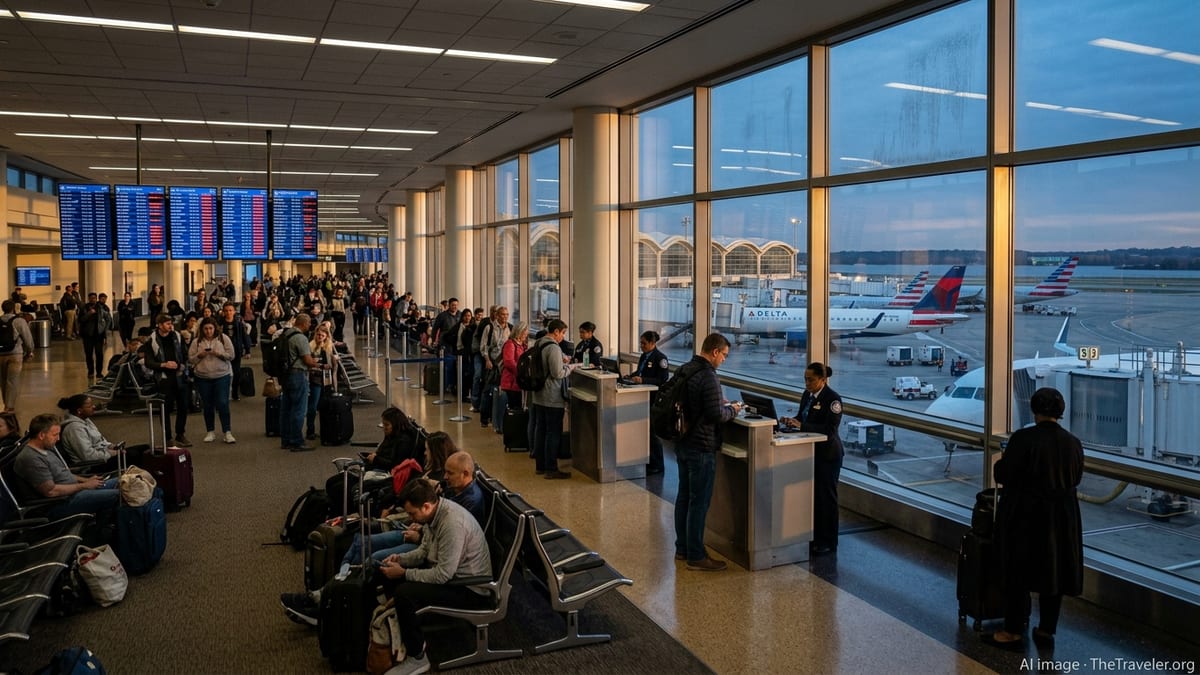
Unscheduled Stop for Chicago to Atlanta Service
Delta Air Lines Flight DAL1728 was operating an Airbus A320-212 on the busy Chicago to Atlanta corridor when the flight altered course and landed at Chattanooga instead of its scheduled destination on August 6. Flight-tracking logs show the aircraft departing Chicago and routing toward northern Georgia before diverting southeast to Chattanooga Metropolitan Airport, a facility that frequently handles unscheduled arrivals during periods of disruption in Atlanta.
Information accessible through aviation tracking platforms indicates that the diversion occurred during the latter phase of the flight, with the aircraft already relatively close to the Atlanta area. The unscheduled landing added time to the journey for passengers expecting a direct arrival into the carrier’s primary hub at Hartsfield–Jackson Atlanta International Airport.
Available operational data does not point to a single definitive cause, but the timing of the diversion corresponds with reports of challenging conditions and congestion affecting arrivals into Atlanta around that period. In similar cases, airlines often choose alternate airports when weather patterns, traffic management initiatives, or other operational constraints make continued approaches into a major hub less predictable.
Delta’s A320-212 aircraft typically seat around 150 passengers in a mix of cabins, meaning the diversion would have affected a substantial number of travelers, many of whom likely held onward connections from Atlanta. The situation illustrates how quickly a routine domestic sector can be reshaped when conditions deteriorate along the final portion of the route.
Why Chattanooga Often Receives Diverted Flights
Chattanooga Metropolitan Airport, also known by its code CHA, has become a familiar alternate for flights bound to or from Atlanta during periods of disruption. Publicly available airport and traffic data describe Chattanooga as a small-hub facility with regular service from major carriers, including Delta, and a runway infrastructure capable of handling narrowbody mainline jets that operate on domestic trunk routes.
The airport lies roughly 100 miles northwest of Atlanta and offers comparatively uncongested airspace, making it an attractive option when Atlanta’s arrival stream is saturated by storms or traffic management programs. Aviation discussion forums frequently reference diversions into Chattanooga during episodes of severe weather or operational strain in Atlanta, underscoring its role as a relief valve for the nation’s busiest hub airport.
Recent discussions on public aviation and travel platforms have noted multiple diversions into Chattanooga from various origins when storms form over northern Georgia or when extended holding becomes impractical. In these situations, airlines often weigh fuel considerations, crew duty time limits, and the potential for lengthy ground delays before opting for an alternate airport where passengers and crews can wait for conditions to improve.
For local travelers in the Chattanooga area, diversions occasionally present an unexpected convenience when their end destination is closer to CHA than Atlanta. For most passengers, however, an unplanned stop requires recoordination of ground transport and connecting itineraries once the airline is able to reposition the aircraft or rebook travelers onward.
Operational Considerations Behind the Diversion
The decision to divert a flight like DAL1728 typically involves a series of real-time assessments by the flight crew and the airline’s operations center. Publicly accessible aviation safety and operational guidance notes that factors such as deteriorating weather near the destination, air traffic control flow programs, runway availability, and onboard fuel reserves all enter into the calculation.
If prolonged holding near Atlanta appears likely, crews must determine whether remaining in the air is compatible with fuel reserves and regulatory requirements. Alternates such as Chattanooga provide the opportunity to land, refuel if necessary, and await improved conditions while staying within duty-time limits and safety margins. In some circumstances, a diversion can actually reduce total disruption for passengers versus extended holding followed by a late arrival or cancellation.
Industry commentary often emphasizes that diversions, while inconvenient, are a normal part of safe commercial aviation operations. Airlines maintain contingency plans for rerouting aircraft, arranging ground handling at alternates, and communicating with passengers about revised arrival times and connections. Public travel reports from similar events describe scenarios in which passengers are either kept onboard during a relatively short ground stop or deplaned so they can wait inside the terminal while the carrier updates onward plans.
In the case of DAL1728, available tracking data suggests the aircraft completed a standard arrival into Chattanooga without indication of an emergency in progress. That profile aligns more closely with an operational or weather-driven diversion than with a technical failure or in-flight incident requiring immediate landing.
Impact on Passengers and Downstream Schedules
For travelers on the Chicago to Atlanta service, the diversion to Chattanooga likely resulted in missed connections and adjustments to same-day plans. Atlanta functions as one of Delta’s largest connecting hubs, and many passengers boarding from Chicago are typically scheduled to continue onward to other domestic or international destinations.
When flights divert away from a hub, airlines frequently resort to a combination of solutions. Publicly shared passenger experiences from recent diversion events describe rebooking onto later services, rerouting through different hubs, and, in some cases, providing hotel or meal support when delays stretch into an overnight. The specifics can vary based on the length of delay, the underlying cause of the disruption, and each traveler’s final destination.
Downstream, a diverted aircraft can ripple through an airline’s network. The A320 scheduled to arrive in Atlanta as DAL1728 may have been planned to operate a subsequent leg later in the day. An unscheduled stop in Chattanooga can require swapping aircraft or crews, slightly adjusting departure times on later flights, or consolidating services if demand and timing allow.
Operational data and scheduling references show that Delta, like other large carriers, typically builds some flexibility into its daily rotations to recover from irregular operations. Nonetheless, a mid-route diversion in a tightly timed network underscores how interlinked modern airline schedules are, especially at major hubs where a single aircraft may touch several cities over the course of a day.
Broader Context for Diversions into Alternate Airports
The DAL1728 diversion on August 6 fits into a broader pattern of U.S. domestic flights occasionally altering course to nearby airports during periods of weather volatility and heavy summer traffic. Travel reports covering the current season have highlighted clusters of diversions in regions affected by convective storms, including the busy southeastern corridor anchored by Atlanta.
For airports such as Chattanooga, Knoxville, and others situated within a short flying distance of major hubs, this trend translates into periodic spikes in arrivals, often involving aircraft types that do not normally appear on the local schedule. Public documentation on Chattanooga’s operations notes that the field has historically supported a range of aircraft sizes, including narrowbody jets similar to the Airbus A320 involved in the DAL1728 service.
Aviation analysts frequently point out that diversions are more visible today because of the widespread use of flight-tracking apps and social media, which allow travelers and observers to follow individual flights in real time. Episodes that once might have gone largely unnoticed beyond those onboard are now quickly discussed, compared, and analyzed among frequent flyers and aviation enthusiasts.
While Delta Flight DAL1728 ultimately arrived at a different airport than planned, the available information surrounding the August 6 event illustrates the routine but complex decision-making that underpins modern commercial flying. For passengers, the episode is a reminder that even straightforward domestic routes can involve last-minute changes, and for regional airports such as Chattanooga, it underscores an ongoing role as a strategic backup in the nation’s dense southeastern air network.