


More news on this day
Travelers booked on Delta Air Lines’ Lagos–Atlanta service this week faced prolonged delays and unexpected overnights after back-to-back disruptions linked to mechanical checks, crew availability and wider operational pressures left many stranded between Nigeria and the United States.
Get the latest news straight to your inbox!
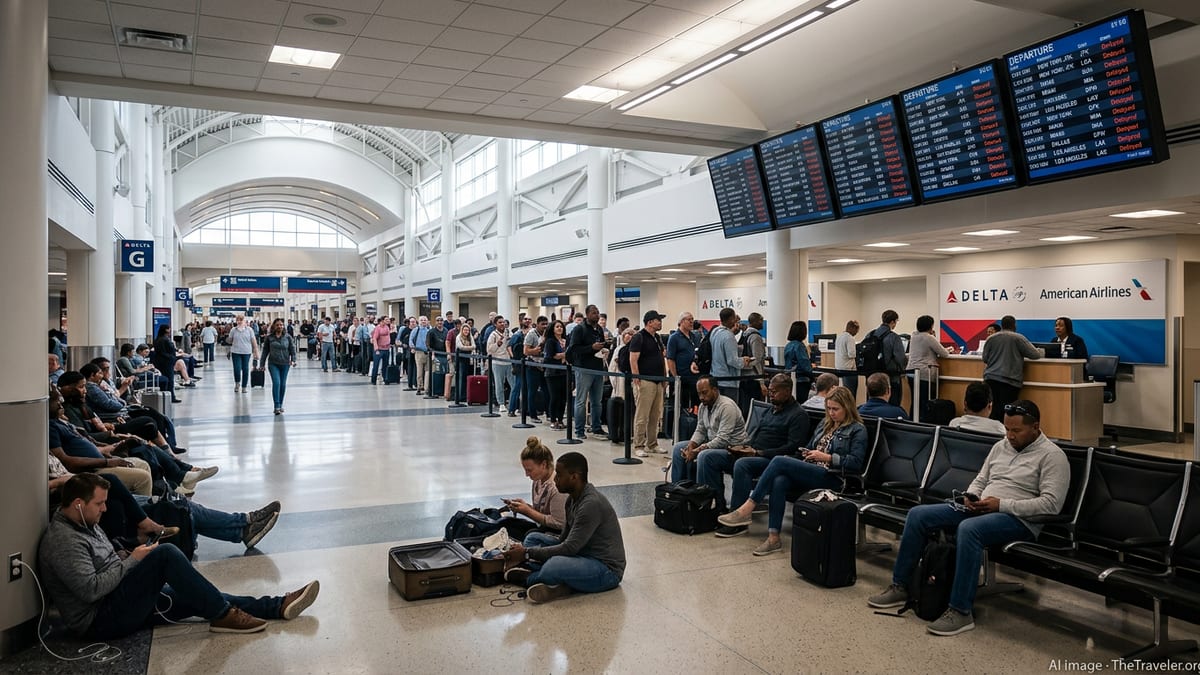
Back-to-back disruptions hit key Nigeria–US link
Reports from Nigerian media and affected travelers indicate that a Delta Air Lines flight from Lagos to Atlanta, initially scheduled for Sunday, August 23, 2026, failed to depart as planned after a series of operational challenges. The service, part of Delta’s long-running non-stop link between Murtala Muhammed International Airport in Lagos and Hartsfield-Jackson Atlanta International Airport, was reportedly delayed, rescheduled and then further disrupted, stranding passengers in Lagos for extended periods.
According to published coverage, the airline cited a combination of mechanical, crew and operational issues across successive days. The disruptions affected passengers who had already experienced schedule changes earlier in the week, effectively compounding delays for some travelers and complicating onward connections to destinations across the United States.
The Lagos–Atlanta route, typically operated under flight number DL55, is one of Nigeria’s most important long-haul links, connecting West Africa directly with a major U.S. hub. Publicly available flight-history data show Delta operating this corridor throughout the summer season with Airbus widebody aircraft, underscoring the significance of the service for business, diaspora and leisure traffic between the two countries.
For affected travelers, however, this latest disruption translated into nights in hotels, missed commitments and uncertainty about when they would finally depart. Social media posts and local reporting describe passengers shuttling between the airport and accommodation while awaiting updated departure times.
Mechanical checks and crew limits drive cascading delays
Operational information published by Delta and third-party trackers shows the airline routinely adjusting departure and arrival times on intercontinental services when maintenance checks or technical inspections are required. In the Lagos–Atlanta case, Nigerian news reports state that an initial mechanical concern led to the aircraft being held on the ground, triggering a chain reaction of timing and crew-related constraints.
Airlines are bound by strict safety and crew-duty regulations, which limit how long pilots and cabin crew can legally operate before mandatory rest periods. Industry guidance notes that when an aircraft is delayed on the ground for mechanical work, scheduled crews can “time out,” forcing carriers to find replacements or cancel flights if alternates are not available. Recent U.S. transportation analyses of major operational disruptions at Delta have similarly highlighted crew-availability bottlenecks as a critical factor when irregular operations spread across a network.
In this instance, publicly available commentary on the Lagos disruption indicates that once the mechanical issues were addressed, the original crew had exceeded their allowable duty time, making departure impossible without a replacement team. With Delta operating a limited number of long-haul rotations from Lagos, sourcing and positioning another qualified crew appears to have taken additional time, overlapping with broader operational strains around Atlanta and other U.S. hubs during the busy August travel period.
These layered constraints meant that travelers saw multiple schedule revisions within a short window. Some passengers reported being informed of new departure times only to face further delays as operational requirements continued to shift.
Stranded passengers navigate hotels, rebooking and visa limits
For those on the ground in Lagos, the immediate concern was accommodation, meals and communication while waiting for a confirmed flight. Nigerian consumer-protection guidance and international aviation practices generally state that passengers stranded overnight because of airline-controlled operational issues may be entitled to assistance such as hotel rooms, meals and airport transfers, depending on the jurisdiction and the carrier’s conditions of carriage.
Coverage from Nigerian outlets notes that some Delta passengers were transported to local hotels while they awaited updates. Travelers also highlighted practical challenges that are specific to long-haul international disruptions, including the validity of transit visas for onward U.S. travel, rebooking constraints on already full summer flights, and the need to rearrange domestic connections beyond Atlanta.
Customer accounts shared online in recent months about other Delta long-haul disruptions, including flights that returned to Atlanta mid-route or were canceled after extended ground holds, show similar patterns of difficulty. Travelers often describe long queues at service counters, limited availability of alternative flights for several days, and uncertainty about reimbursement for out-of-pocket expenses when hotels or meals are not directly arranged by the airline.
In Nigeria, where the Lagos–Atlanta service is a key link for students, medical travelers and diaspora communities, prolonged disruptions can have outsized knock-on effects. Missed appointments, rescheduled university reporting dates and delayed medical consultations are among the impacts frequently cited when long-haul flights encounter multi-day operational issues.
Spotlight on Delta’s reliability amid broader operational pressures
The Lagos events come at a time when Delta’s overall operational performance has been under scrutiny following several high-profile disruption episodes in recent years. A major 2024 network-wide breakdown tied to global IT outages drew attention from regulators and consumer advocates to the airline’s handling of stranded passengers, including those connecting through Atlanta, the carrier’s largest hub and one of the world’s busiest airports.
Analyses of that and subsequent disruption periods have pointed to the complexity of restarting a tightly banked hub-and-spoke system after large-scale delays. When weather or technical issues ripple through a hub, aircraft and crews can quickly end up in the wrong place, creating knock-on cancellations even after the original cause has been resolved. International routes such as Lagos–Atlanta, which require specialized long-haul aircraft and crews with specific qualifications, can be especially vulnerable to these network imbalances.
Operational data and schedule publications indicate that Delta has continued to operate near-peak summer capacity on transatlantic routes in 2025 and 2026, including West African services. While high load factors underscore strong demand, they also leave less slack to absorb irregular operations. When a single daily Lagos–Atlanta rotation is disrupted for several days, the volume of displaced passengers quickly outstrips the number of available seats on subsequent flights.
Industry observers note that the Lagos disruption fits into a broader pattern of airlines worldwide balancing aggressive post-pandemic growth with infrastructure, staffing and maintenance constraints. In many cases, passengers now expect clearer communication, faster rebooking and more consistent care when flights are delayed for reasons within an airline’s control.
What passengers can check when long-haul flights go off schedule
For travelers booked on long-haul services such as Lagos–Atlanta, publicly available guidance from aviation regulators and consumer organizations suggests a few key steps when faced with extended delays or cancellations. First, passengers are encouraged to confirm whether the disruption is classified as weather-related or attributable to airline operations, since that distinction often shapes eligibility for hotel rooms, meal vouchers or cash reimbursements.
Second, travelers can review the airline’s conditions of carriage and any applicable passenger-rights frameworks in the departure or arrival country. In some jurisdictions, rules set minimum standards for care and compensation during long delays that are not caused by extraordinary circumstances. In others, the airline’s published policies serve as the main reference, and travelers may need to keep detailed receipts for later claims.
Finally, schedule and flight-status tools offered by airlines and independent trackers can help passengers anticipate potential connection issues. Historical data for Delta’s DL55 Lagos–Atlanta service, for example, show variations in departure and arrival times across the summer period, reflecting the realities of operating a long over-water route into a busy U.S. hub. While such tools cannot prevent disruptions, they may assist travelers in planning longer connection windows or securing flexible booking options.
As operations normalize after the latest Lagos disruptions, attention is likely to remain on how quickly affected passengers are rerouted and how thoroughly their claims for support are addressed. The episode adds to an ongoing conversation about reliability and customer care on high-demand long-haul routes linking Africa and North America.
Delta Lagos–Atlanta passengers stranded after back-to-back disruptions – TheNigeriaLawyer
Delta Air Lines DL55 Lagos–Atlanta schedule overview
Overview of Delta’s 2024 operational disruption and passenger impact