


More news on this day
Delta Air Lines is managing a wave of delays and cancellations at its busiest hub airports after a global technology outage linked to a third-party software update triggered a system-wide disruption during one of the peak travel weekends of the summer.
Get the latest news straight to your inbox!
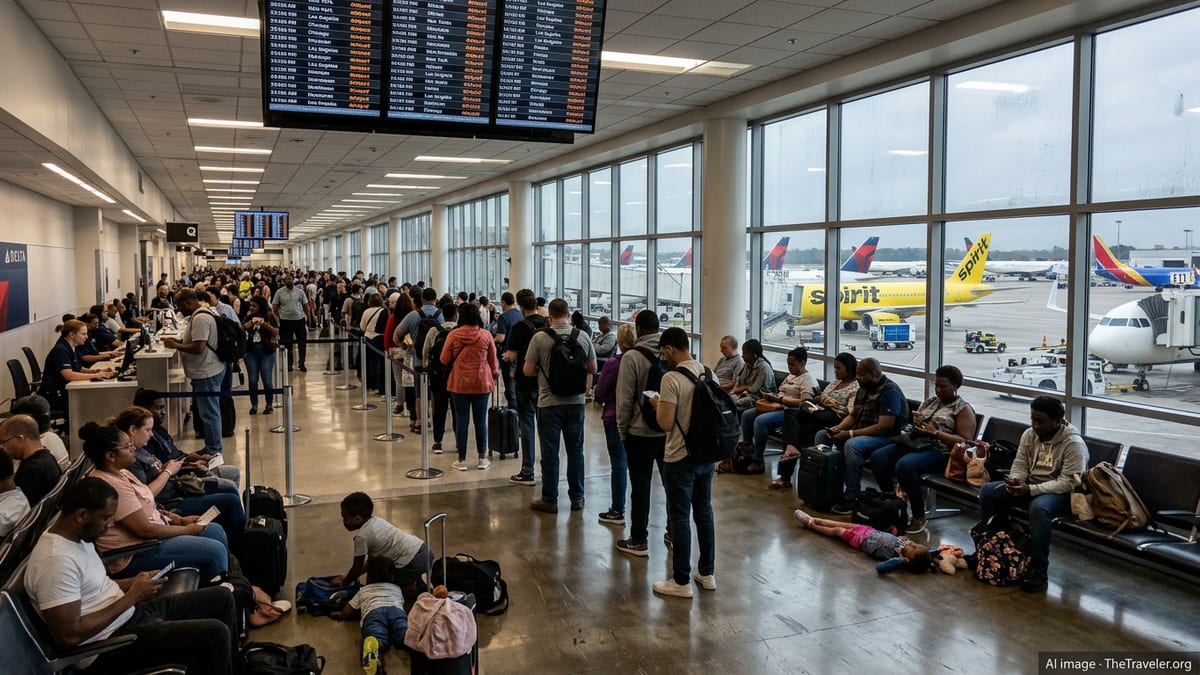
Outage Hits Delta on Peak Summer Travel Day
Publicly available data shows that the disruption began on July 19, 2024, when a faulty update from cybersecurity firm CrowdStrike caused widespread failures on Windows systems used across the aviation industry. The issue affected airline operational and customer-facing tools, including systems used for check-in, crew management, and communications, and led to extensive flight delays and ground stops across multiple carriers.
According to published coverage and industry reporting, Delta Air Lines was among the hardest-hit carriers, with the outage coinciding with one of the busiest travel days of the season. Flight-tracking data cited in multiple outlets indicated that departures and arrivals at Delta’s largest hubs, including Hartsfield-Jackson Atlanta International Airport, saw unusually high rates of delays and cancellations as the carrier worked to restore normal operations.
Reports indicate that U.S. air traffic authorities temporarily approved ground stops requested by major airlines as they responded to the technology failure. While other carriers began to stabilize more quickly, Delta’s operational challenges persisted for several days, reflecting the scale of its network and its reliance on automated systems at hub airports.
Available transportation analyses note that the timing of the outage, at the height of the Northern Hemisphere summer peak, left many flights already close to full. This limited options to rebook disrupted customers and added to crowding and congestion at already busy terminals.
Atlanta at the Center of the Disruption
Hartsfield-Jackson Atlanta International Airport, Delta’s primary hub and the world’s busiest airport by passenger traffic, became a focal point of the outage’s impact. Flight-status data compiled in news reports showed that on July 19 a large share of scheduled departures from Atlanta were either significantly delayed or cancelled as Delta’s systems struggled to come back online.
Coverage by aviation and technology outlets highlighted how the outage rippled through Delta’s hub-and-spoke network. With so many aircraft and crew members out of position, Delta’s schedule at Atlanta and other key hubs such as Detroit, Minneapolis–St. Paul, New York, and Salt Lake City experienced rolling disruptions that extended beyond the initial day of the incident.
Images and accounts shared in published reports described crowded concourses at Atlanta, with travelers lining up at service counters and departure boards showing long lists of delayed and canceled flights. Because of the scale of Delta’s presence at the airport, operational irregularities at its hub quickly cascaded into missed connections across the domestic and international network.
Analysts quoted in broader coverage of the outage noted that Atlanta’s role as a central connecting point magnified the effect of any large-scale failure. A disruption in the flow of aircraft and passengers through the hub can cause schedule knock-on effects for days, even after underlying technology issues are corrected.
System-Wide Effects and Multi-Day Recovery
According to transportation policy briefings and airline performance data, the immediate shutdown of critical applications forced Delta to cancel or delay thousands of flights across several days. The disruption was not confined to the first 24 hours; recovery extended through the following weekend as crews and aircraft were repositioned and backlogs of stranded travelers were cleared.
Reports on on-time performance in July 2024 show a notable decline for Delta and several major hub airports compared with prior months. One analysis of airline punctuality indicated that Atlanta’s on-time departure rate dropped by double digits month over month, with the outage cited as a major contributing factor.
In a public message to customers published several days after the incident, Delta’s leadership acknowledged that one of the airline’s crew-tracking systems had been unable to handle the volume of changes triggered by the outage. The airline outlined efforts to provide meal, hotel, and ground-transportation accommodations for affected passengers while it worked to restore normal operations.
Regulatory documents and news stories also note that federal transportation officials later classified Delta’s resulting delays and cancellations as a controllable event from the airline’s perspective, a designation that has implications for passenger rights, refunds, and compensation under evolving U.S. consumer protection policy.
Technology Vendor Failure Exposes Airline Vulnerabilities
The CrowdStrike-related outage has attracted wide attention as a case study in how dependent airlines have become on complex third-party technology stacks. According to technical analyses, a single faulty update propagated to systems running Windows was enough to bring down tools used by airlines, airports, financial institutions, and healthcare organizations around the world.
In Delta’s case, publicly available information indicates that a range of mission-critical systems were affected, from airport check-in kiosks and gate monitors to back-end crew scheduling applications. As these tools failed or required manual workarounds, staff were forced to revert to slower processes, increasing wait times and reducing the number of flights the airline could operate in a given period.
Industry reporting suggests that carriers with more diversified or resilient technology architectures recovered more quickly, while those with heavier dependence on the affected software experienced longer disruptions. For Delta, the combination of a large global network, centralized hubs, and heavy reliance on automated crew and passenger systems contributed to the length and severity of the outage’s operational impact.
Commentary from aviation analysts in post-event coverage points to a growing recognition that cybersecurity and IT redundancy have become as critical to airline reliability as traditional factors such as weather or air traffic control constraints. The Delta incident is being cited in discussions about regulatory oversight, vendor accountability, and minimum standards for resilience in airline IT infrastructure.
What Travelers Can Expect After the Outage
In the weeks following the outage, Delta issued travel waivers, adjusted schedules, and continued working through customer recovery, according to the airline’s published updates. Travelers whose flights were canceled or significantly delayed were offered options to rebook or seek refunds, consistent with the carrier’s contractual obligations and federal guidance.
Travel-industry reporting emphasizes that residual effects from such a large-scale disruption can linger even after systems are restored. Aircraft and crews may remain out of position, leading to isolated delays, while high summer load factors reduce flexibility to accommodate customers on alternate flights.
For passengers planning trips through Delta’s busiest hubs, especially Atlanta, experts cited in coverage recommend monitoring flight status closely, allowing extra time at the airport, and keeping confirmation numbers and contact details readily available in case of further schedule adjustments. Many sources also highlight the value of enrolling in flight-alert tools and airline mobile apps to receive rapid updates when irregular operations occur.
As investigations and policy reviews continue, the Delta outage is likely to inform debates over passenger protections and the responsibilities of airlines and technology vendors during major IT failures. For travelers, the event underscores how a behind-the-scenes software problem at a single vendor can quickly become a system-wide issue at some of the world’s busiest airports.
https://news.delta.com/update-delta-customers-ceo-ed-bastian-july-24
https://en.wikipedia.org/wiki/2024_Delta_Air_Lines_disruption
https://www.wired.com/story/crowdstrike-windows-outage-airport-travel-delays/