


More news on this day
Ukraine has issued a formal safety notification to the International Civil Aviation Organization (ICAO) highlighting elevated risks to civil aviation in Russian airspace, following a new wave of drone-related disruptions that temporarily halted flights at major Moscow airports.
Get the latest news straight to your inbox!
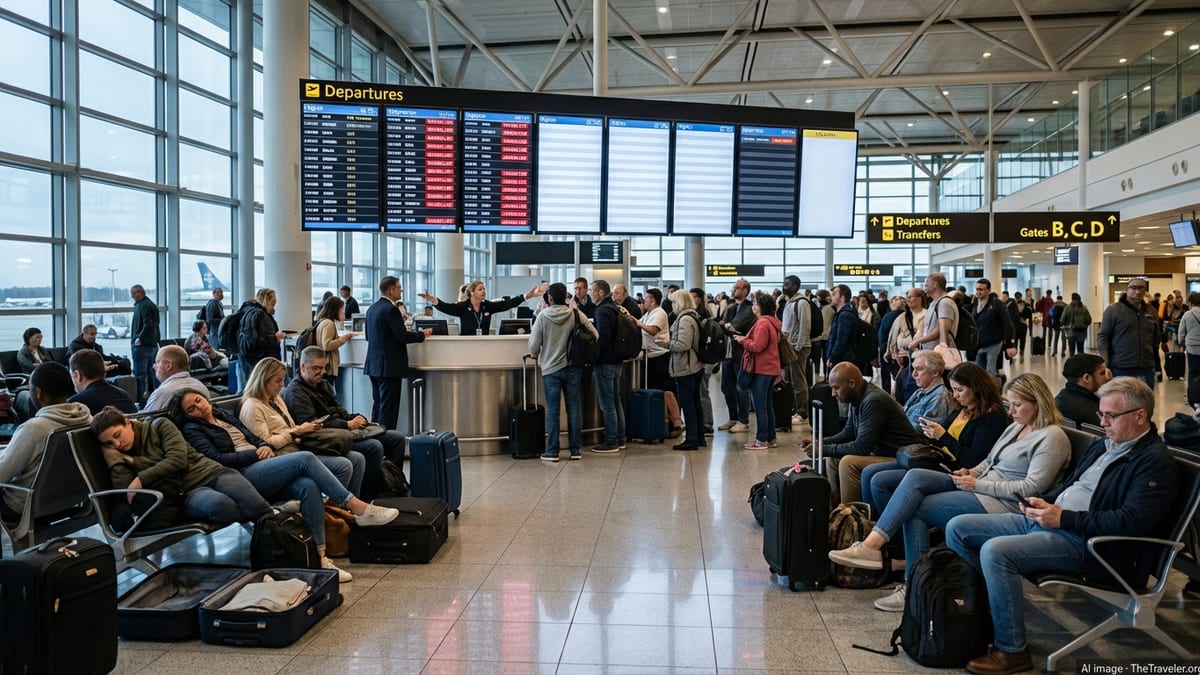
Formal Notification to ICAO Puts Russian Airspace Under Scrutiny
According to publicly available information from Ukrainian aviation authorities and international media, Kyiv submitted a safety notice to ICAO in early September after drone activity and air defense responses repeatedly affected operations at Moscow’s Sheremetyevo and Vnukovo airports. The notification warns that intensifying military use of Russian skies, alongside long-range drone strikes and air defense activity, is increasing the likelihood of incidental harm to civil aircraft.
Published coverage indicates that the alert places particular emphasis on the risk of misidentification and debris hazards in Russian-controlled flight information regions, especially where long-range drones and countermeasures may operate at altitudes used by commercial traffic. The move builds on earlier steps taken by Ukraine to close its own airspace to civil traffic in 2022 and to draw attention at ICAO to the wider aviation implications of the conflict.
Reports also note that the notification urges all parties involved in international aviation to factor the evolving threat environment into route planning and risk assessments, even for flights that do not land in Russia but transit its airspace. This reflects growing concern that the conflict’s air dimension now extends far beyond front-line regions and into hubs that serve as major transit points between Europe, Asia, and the Middle East.
Drone Disruptions at Moscow Airports Highlight Operational Risks
Recent incidents at Moscow-area airports are presented in the notification and related analyses as practical examples of the risks. Open-source tracking and media reporting describe multiple episodes where suspected Ukrainian drones prompted temporary flight suspensions, diversions, or delays at Sheremetyevo, Vnukovo, and other facilities, as air defenses engaged aerial targets near or within the approach corridors.
Accounts from aviation risk consultancies and specialist platforms describe a pattern of near-daily long-range drone launches toward targets inside Russia, with activity periodically recorded in the wider Moscow region. When drones are detected, airspace restrictions and ground stops are often imposed as a precaution while military and security services respond, disrupting airline schedules and creating congestion across the network.
Travel-focused coverage of the latest wave of disruptions notes that some carriers temporarily canceled or rerouted services connecting Turkey and Russia during the night of 1 to 2 September, citing operational considerations linked to the situation. While many of these interruptions have been short-lived, analysts indicate they signal a fragile operating environment where routine passenger flights share airspace with active military operations.
Existing International Warnings on Russian Airspace
Ukraine’s new filing arrives against a backdrop of existing international advisories that already classify large portions of Russian airspace as high risk for civil aviation. Safety platforms that aggregate state notices list multiple restrictions issued by European regulators, including guidance from the European Union Aviation Safety Agency (EASA) cautioning against operations in western Russia and near the border with Ukraine due to the threat of anti-aircraft fire and air defense activity.
Information compiled by one such platform shows that states including France and Italy have directed their operators to avoid Russian airspace within specified distances of the conflict zone, or to exercise heightened caution in the Moscow and Rostov flight information regions. These documents highlight the danger posed by surface-to-air missile systems capable of operating at cruising altitudes used by passenger jets, especially in complex civil-military environments.
Ukraine’s warning to ICAO also echoes earlier concerns about global navigation satellite system interference, which has been documented by several aviation and regulatory bodies in areas surrounding the conflict. For airlines and pilots, the combined effects of potential misidentification, falling debris, and degraded navigation signals translate into a more demanding operating context when planning routes in or near Russian airspace.
How Airlines Are Adjusting Routes and Risk Models
Publicly available flight data and industry analyses show that many European and North American airlines stopped overflying Russia soon after the full-scale invasion of Ukraine in 2022, opting instead for longer routings over central Asia or the Middle East on Europe–Asia sectors. As a result, much of the remaining scheduled traffic in Russian skies consists of domestic flights and services by carriers from the Middle East, Asia, and a small number of other states that have not imposed overflight bans.
Aviation risk consultancies cited in recent coverage report that operators still using Russian corridors have intensified their risk modeling, drawing on state advisories, insurer guidance, and specialist assessments of conflict-zone airspace. These models now frequently incorporate the probability of drone or missile activity along a route, the density of air defense assets, and the potential for sudden airport closures due to security alerts.
Analysts note that for airlines continuing to serve Moscow and other Russian cities, contingency plans typically allow for rapid diversions, schedule compression, or ground stops when military activity triggers airspace restrictions. The recent disruptions at Moscow airports, combined with Ukraine’s formal warning to ICAO, are expected to prompt further reviews of whether current mitigation strategies remain sufficient as drone operations deepen into Russian territory.
Implications for International Travelers and the Wider Network
For travelers, the latest developments do not introduce a completely new category of risk so much as underline how dynamic the situation over Russia has become. Many global carriers already avoid Russian airspace, but for passengers flying on airlines that still route through or to Russia, the environment is increasingly characterized by the potential for last-minute schedule changes, extended flight times, or rerouting.
Travel industry reports suggest that insurers and corporate travel managers are monitoring Ukraine’s ICAO notification alongside existing state advisories to refine their own policies. Some corporate travel programs, for instance, have adopted internal guidelines that restrict employee travel on itineraries involving Russian overflights, even where such routes remain technically permissible under local regulations.
More broadly, the evolving status of Russian airspace carries network-wide consequences. Rerouting around high-risk areas adds distance and fuel burn to certain long-haul sectors, with knock-on effects for fares, aircraft utilization, and crew planning. The latest warning from Ukraine, combined with ongoing updates from regulators and specialist safety platforms, is likely to reinforce the trend toward more conservative routing strategies on journeys that might previously have passed routinely through Russian skies.
Travel And Tour World: Ukraine flags Russian airspace safety risks to ICAO
Euronews: Ukraine formally warns airlines that Russian airspace is unsafe
SafeAirspace: Risk summary for Russian airspace
EASA conflict zone information bulletin on Russia and Ukraine