


More news on this day
Passengers booked on a Delta Air Lines flight from Atlanta to Peru say they spent days stranded in Georgia after a cascade of delays, cancellations and missed connections turned what should have been a routine international trip into an exhausting airport ordeal.
Get the latest news straight to your inbox!
Trip to Peru unravels into days-long delay
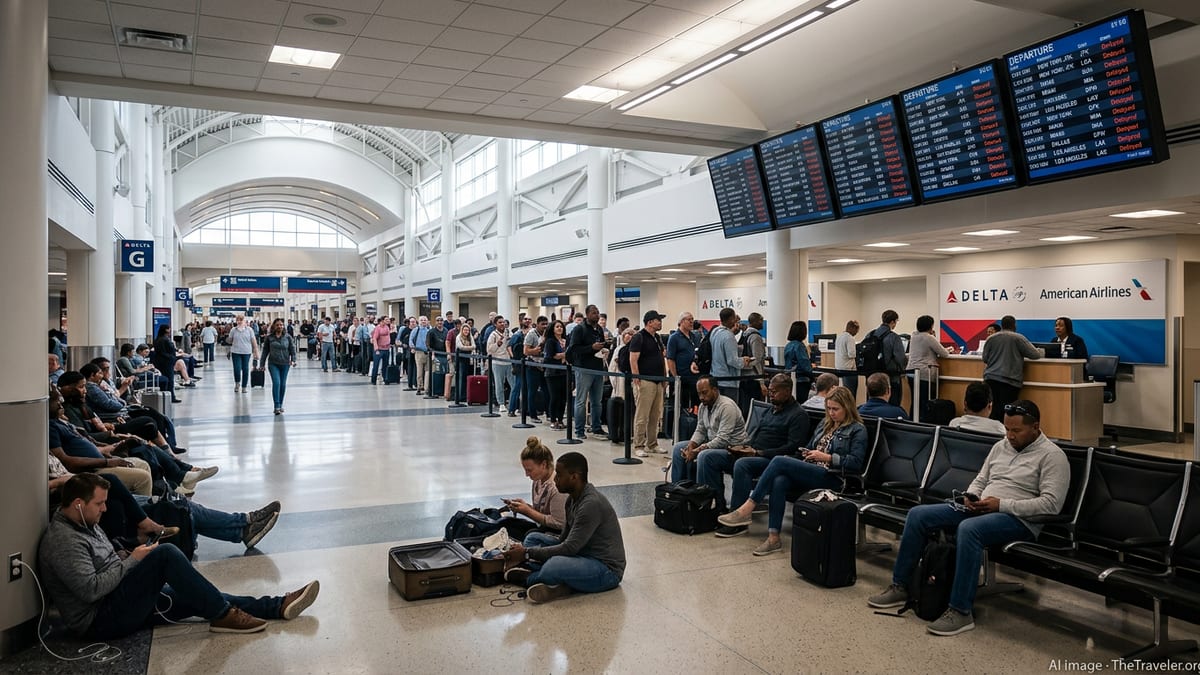
Travelers heading from Atlanta to Lima reported that their journey began to unravel when a scheduled Delta Air Lines departure was repeatedly pushed back, then ultimately canceled, leaving them without a clear timeline for reaching Peru. Accounts shared through local broadcast coverage and social media describe passengers camped out in Hartsfield-Jackson Atlanta International Airport as they tried to secure new flights and track down information about when they might finally depart.
Publicly available flight-tracking information shows that the service experienced multiple schedule changes over several days, with aircraft swaps and rolling departure times that complicated efforts to rebook travelers. Some passengers described being moved between departure gates, only to learn that another delay or cancellation had been announced. For those who had already traveled to Atlanta from other U.S. cities, returning home was often not a practical option.
According to reporting from Atlanta-based outlets, the disruption affected travelers bound for Peru for tourism, family visits and connecting itineraries onward to other parts of South America. Many said they had planned trips months in advance and suddenly faced the prospect of losing hard-to-reschedule tours, hotel nights and domestic flights beyond Lima.
As the problems stretched from hours into days, frustration among stranded travelers grew. Some recounted running out of essential medications they had packed with the expectation of a single travel day, while others worried about job and family obligations back home if they chose to abandon the trip altogether.
Airline cites operational and weather-related challenges
Delta has not released a comprehensive public breakdown of the specific causes of each delay and cancellation involving the Lima-bound service, but statements referenced in news reports point to a mix of operational constraints. These typically include aircraft availability issues, crew scheduling limits and weather disruptions affecting the broader Atlanta hub operation.
Industry data and past disruptions indicate that when storms or traffic-management programs slow operations at a major hub like Atlanta, international departures are often among the flights reshuffled, as airlines work to balance domestic and long-haul schedules. Once a single overseas flight loses its original crew or aircraft, follow-on delays can compound as replacement resources are sought and mandatory crew rest periods come into play.
Analysts note that South America routes, while important, may not always have the same level of spare aircraft and crew coverage as higher-frequency transatlantic services. That can leave airlines with limited flexibility when an individual flight encounters mechanical inspections, weather-related ground holds or last-minute operational changes. Publicly available performance data for the current summer travel period show that many carriers have struggled to keep tightly packed international schedules running on time.
Reports also highlight that the disruption in Atlanta occurred at a time of elevated demand for Latin America travel heading into the peak season, which reduces the number of available seats on alternate airlines and itineraries. Once the original flight canceled, finding same-day or next-day options for an entire planeload of passengers became significantly more difficult.
Passengers sleep in terminals as rebooking options dwindle
Accounts compiled from local television reports and passenger posts describe scenes of travelers spread out across airport seating and floors, using jackets or carry-on bags as makeshift pillows as they waited overnight for word of new flights. Some travelers reported being given meal vouchers or hotel accommodations, while others said nearby rooms quickly sold out or were located far from the airport, complicating early-morning returns for rebooked departures.
Standard airline practice during major disruptions involves a combination of hotel placements, meal credits and rebooking on the next available company or partner flights. In this case, however, reports indicate that limited space on subsequent services to Peru meant some passengers were offered routings that added extra connections or significantly lengthened overall travel time. For travelers with children or older relatives, changing planes multiple times was a daunting prospect after already spending long periods inside the Atlanta terminal.
Public complaint records and social media posts suggest that communication was a major point of contention. Some passengers said automated notifications arrived late or contradicted what they were told at the gate, leaving them unsure whether to remain in line for an agent, search for baggage or head to a hotel. Others expressed confusion about whether the issue was strictly weather-related, mechanical, or a broader staffing challenge.
Consumer advocates say such situations underscore ongoing concerns about how disruptions are handled when they stretch beyond a single day. Once multiple flight cycles are involved, the interplay between various policies on accommodations, rebooking priority, and voluntary versus involuntary changes can be difficult for passengers to navigate without clear, consistent information.
Broader questions over passenger rights and compensation
The Atlanta-to-Peru disruption adds to a growing list of high-profile incidents in which U.S. air travelers have been stranded for prolonged periods by cascading operational problems. Under current U.S. regulations, airlines are generally required to provide refunds when a flight is canceled and the traveler chooses not to fly, but there is no federal mandate for compensation for delays or for accommodations in most circumstances.
Publicly available information from the U.S. Department of Transportation shows that the agency has pressed airlines in recent years to adopt more transparent customer-service commitments, publishing comparative tables that list what each carrier promises in terms of hotels, meals and rebooking during controllable disruptions. Delta is among the major airlines that report offering hotel accommodations and meal vouchers in many such cases, though the availability of those benefits can depend on the specific cause and duration of the disruption.
Travel-law specialists note that passengers on international routes departing from the United States may face a patchwork of protections that differ from those in other regions. For example, Europe has a detailed compensation framework for certain delays and cancellations leaving from EU airports, while South America-bound flights originating in the U.S. are generally governed by carrier contracts of carriage and U.S. consumer rules, which focus more on refunds than on fixed compensation amounts.
In situations such as the Atlanta stranding, travelers often rely on travel insurance, credit card protections or goodwill gestures from the airline to recoup costs for lost nights in destination hotels, missed tours or separately booked domestic flights within Peru. Consumer advocates advise passengers to document expenses and keep records of all communications in case of later claims or disputes.
Highlighting fragility in peak-season global schedules
For many travelers, the Atlanta-to-Peru episode has become another example of how quickly complex global schedules can unravel when a single link in the chain fails. Aviation analysts say that as airlines rebuild international networks following the sharp reductions of the early pandemic years, they are pushing aircraft utilization and crew schedules to meet strong leisure demand, leaving less margin for error when irregular operations occur.
Publicly available industry data for the current travel season show that carriers are operating near or above pre-pandemic capacity on many routes to Latin America, even as supply-chain issues and staffing constraints continue to affect maintenance and ground operations. That environment can turn seemingly isolated issues on a particular aircraft or at a single hub into multi-day events for some passengers.
Observers suggest that incidents like the Atlanta stranding may encourage more travelers to build buffer days into itineraries that include tours, cruises or onward domestic flights in destination countries, particularly in regions where alternative flights are limited. Some travel advisers also recommend considering travel insurance that specifically covers missed connections or trip interruptions caused by carrier delays.
For the passengers who spent days at Atlanta’s airport waiting for a flight to Peru, the disruption has already reshaped what was meant to be a long-anticipated journey. Their experience illustrates how, even as global air travel volumes recover, the system remains vulnerable to breakdowns that can leave travelers stranded far from their intended destinations.