


More news on this day
Passengers travelling through Manchester Airport today are facing pockets of disruption, with live flight data showing a series of cancellations and significant delays across morning and afternoon departures and arrivals.
Get the latest news straight to your inbox!
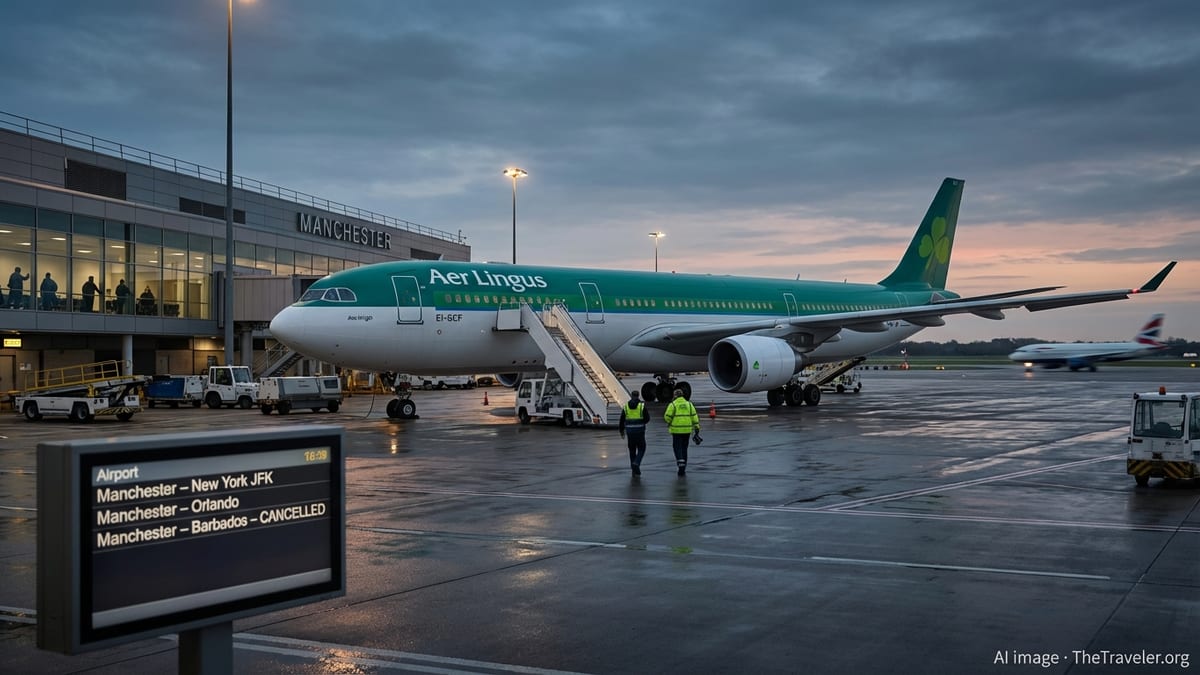
Morning departures see early cancellations and rolling delays
Live departure boards for Manchester Airport this morning showed several short-haul flights cancelled at short notice, alongside a broader pattern of late departures affecting early-bank of services. The disruption has been most visible on popular holiday and city-break routes, where turnarounds are tightly scheduled and delays can quickly cascade through the day.
Among the cancelled services are selected flights to European sun destinations and key hubs, with some airlines consolidating passengers onto later departures. Other services have departed but only after extended waits at the gate, with delays of 30 to 90 minutes being reported on a number of routes. Publicly available airport data indicates these issues are spread across multiple terminals rather than limited to a single check in or security area.
While the full mix of causes varies by flight, the pattern reflects how even modest operational challenges can generate visible disruption at a major international airport that already handles dense schedules at peak hours. Research into airport punctuality highlights how congestion at stands, runway sequencing and tight aircraft rotations can all amplify small problems into larger timetable impacts when terminals are busy.
Arrivals disrupted as knock on effects build through the day
Disruption has not been limited to departures. The live arrivals board shows a growing number of inbound flights reaching Manchester behind schedule, in some cases after earlier delays at European airports or re routing to avoid weather and air traffic constraints. As the day progresses, these late arrivals can undermine already tight turnarounds and spark further slippage on subsequent outbound sectors.
Several mid morning and lunchtime arrivals from major European gateways have landed significantly later than timetabled, with knock on delays then appearing on their onward rotations. Some services that were scheduled to arrive in the early afternoon have been pushed back, leaving passengers waiting at baggage reclaim and onward travel connections under pressure.
Published aviation analysis notes that this kind of rolling disruption is typical at large hubs, where a single aircraft may be rostered to operate multiple legs in a day. Once the first sector runs late, subsequent flights can rarely recover full punctuality without schedule padding or aircraft swaps, both of which carry their own operational costs.
Weather, air traffic control and operational factors all in play
Publicly available information suggests that today’s pattern of delays and cancellations at Manchester reflects a combination of local and wider network pressures rather than a single overriding incident. While local weather has been changeable, there have been no indications of an extended closure or sustained runway restriction of the kind that would trigger mass groundings.
Across Europe, however, air traffic control capacity constraints and convective weather have periodically forced aircraft to accept longer routings or holding patterns, slowing overall traffic flows. When those pressures intersect with already busy morning and evening peaks at Manchester, even relatively short airborne delays can spill over into ground congestion at stands, airbridges and security-filtered departure areas.
Operational factors within airlines and ground handling providers also play a role. When inbound aircraft arrive late, crews can run up against duty time limits, baggage and catering services are compressed, and boarding windows tighten. Industry studies on airport performance underline how these interlocking pressures can reduce an airport’s ability to absorb disruption, increasing the probability that individual late flights tip over into cancellations.
Impact on passengers and advice for those yet to travel
For passengers, today’s disruption has meant missed connections, rebooked holidays and extended waits in departure lounges. Travellers on cancelled flights are being directed to later services where capacity allows, while others have been offered refunds or alternative routings via other UK or European airports. Those on delayed services have spent more time at the gate than expected, with some departures held on stand while final operational checks are completed.
Consumer guidance produced by travel and aviation organisations consistently advises passengers to monitor their flight status closely on the day of travel, using a combination of airline communications, airport flight boards and trusted flight-tracking tools. Check in times remain critical, particularly during busy school holiday periods when security and bag drop queues can lengthen quickly even when flights are running close to schedule.
Travellers yet to fly today are being encouraged to allow extra time at the airport, stay flexible about refreshments and seating, and keep receipts for any additional reasonable expenses incurred while waiting. Published guidance on flight disruption notes that, depending on the cause and length of delay, some passengers may be entitled to assistance or compensation from their carrier under applicable regulations.
What the latest disruption means for Manchester Airport’s reputation
Today’s wave of delays and cancellations comes at a time when Manchester Airport’s overall passenger experience is under close scrutiny. Recent consumer surveys and media coverage have highlighted long queues, limited seating and frustration with punctuality at the airport, which serves as a key international gateway for northern England.
The current episode is likely to fuel further debate about resilience and investment at large UK airports, particularly as demand continues to recover and grow after the pandemic. Analysts point out that factors such as staffing levels, terminal design, stand availability and coordination across airlines and ground handlers all influence how well an airport copes when traffic patterns become disrupted.
For now, the live data shows that while many flights are still operating broadly on time, a significant minority of services at Manchester are running late or have been cancelled outright today. With the busy evening peak still to come, the focus for airlines, handlers and passengers alike will be on limiting further knock on effects and restoring the schedule as quickly as operationally possible.