


More news on this day
Delta Air Lines is recording the highest number of US flight cancellations so far in July 2026, as a series of thunderstorms and heat-related constraints around New York area airports disrupt operations and complicate recovery across the carrier’s domestic network.
Get the latest news straight to your inbox!
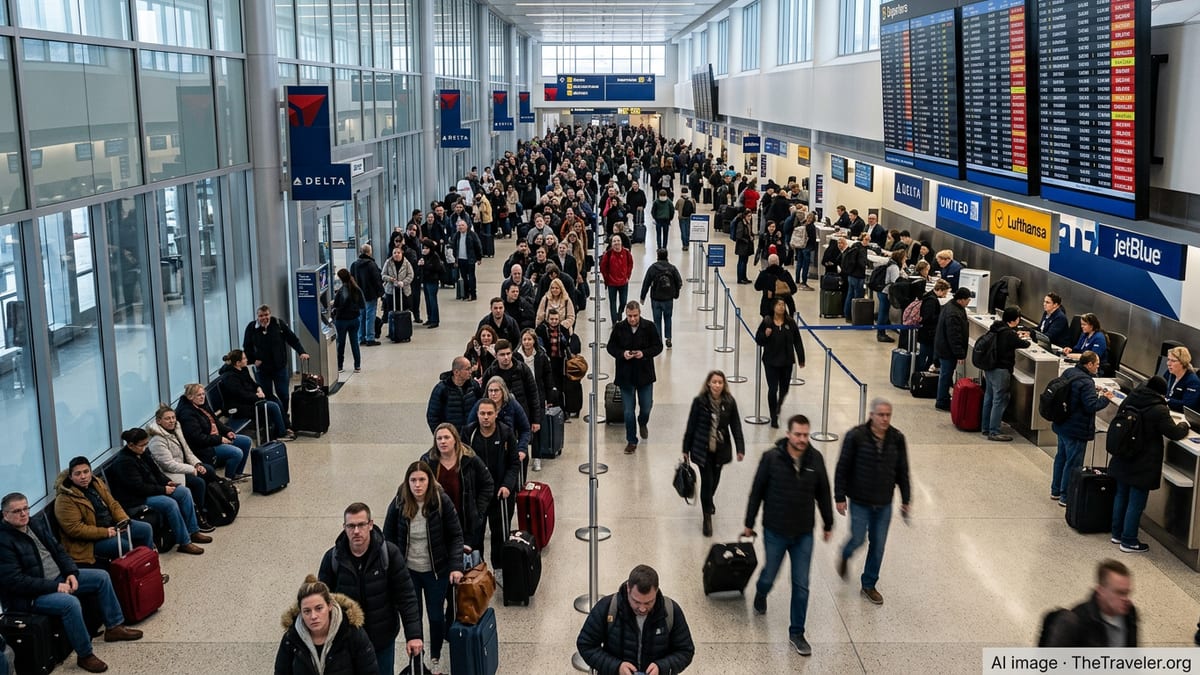
Weather bulletins and waiver policies around New York
Publicly available bulletins on Delta’s professional and advisory portals indicate that the airline has issued multiple exception policies for New York in July 2026, reflecting recurring operational pressure around the country’s busiest air corridor. A high-heat notice for New York LaGuardia published on July 1 outlined potential disruptions tied to temperature-related performance limits and operational constraints. Separate New York City weather advisories issued for early July covered travel to, from, and through John F. Kennedy International, LaGuardia, and Newark.
More recently, a Delta SkyWatch weather alert and a New York City thunderstorm bulletin dated July 16 highlighted the risk of strong storms in the metropolitan area, with travel-impact dates stretching across the mid-July period. These materials show that Delta has activated standard tools such as change-fee waivers, basic economy cancellation charge waivers, and guidance permitting refunds on unused nonrefundable tickets in cases where Delta cancels a flight and no acceptable alternative is available.
The sequence of bulletins suggests that weather in the New York area is not limited to a single storm but part of a broader pattern of convective activity, poor air quality, and heat conditions affecting flight operations. That pattern has contributed to repeated ground-delay programs and air-traffic-management initiatives, which typically ripple through an airline’s network well beyond the immediate storm window.
While the advisories are systemwide communications rather than detailed performance statistics, their timing aligns with anecdotal reports from travelers describing repeated cancellations and rolling disruption at New York airports during the first half of July.
Delta’s outsized share of cancellations among major US carriers
Industry tracking referenced by travel and consumer sites indicates that, by mid-July 2026, Delta has accounted for more cancellations in the United States than its three largest rivals American, United, and Southwest. Coverage summarizing real-time aviation data shows Delta at the top of the national cancellation tables on several July days, even as overall disruption has ebbed and flowed with the weather.
Reports describe Delta leading the “Big Four” in total cancelled flights during the second week of July, with New York service highlighted as a major pressure point because of thunderstorms and heat. At times, the airline’s cancellation count eased significantly by early morning, only to climb again later in the day when convective weather redeveloped around the New York region and along key East Coast routes.
Observers point out that Delta’s experience this summer comes less than two years after the carrier drew scrutiny for a large-scale disruption in July 2024 that followed a global technology outage. In that earlier episode, Delta struggled to reposition crews and aircraft, and federal authorities later emphasized that airlines bear responsibility for recovery from controllable events. The memory of that disruption has heightened public attention on Delta’s operational resilience in subsequent peak travel seasons.
In July 2026, however, publicly available materials consistently cite weather and related air-traffic-control actions as primary drivers of cancellations in and out of New York. That distinction matters for passenger rights, since airlines are generally not required to provide hotel accommodation or monetary compensation when flights are canceled for safety-related weather reasons.
How New York weather cascades through Delta’s network
Aviation research and historical weather data show that extreme or unstable weather around New York can have disproportionate effects across the US air transportation system. New York’s major airports are slot-constrained, heavily used by multiple large carriers, and tightly integrated into both domestic and transatlantic schedules. When thunderstorms or low visibility force reductions in arrival and departure rates, airlines must quickly reshuffle aircraft and crew, often leading to cancellations that are used to stabilize the schedule.
Academic work on weather impacts in aviation underscores how events like fast-moving squall lines or prolonged convective cells can generate long passenger delays and extensive rerouting, particularly when they intersect with peak periods at large hubs. In practice, even short-lived storms can prompt hours of ground stops and flow restrictions as air traffic control prioritizes safety and works through backlogs.
In July 2026, this dynamic appears to be playing out repeatedly at New York’s airports. Traveler accounts on public forums describe flights canceled or rerouted at short notice, sometimes after passengers have already boarded, when air traffic initiatives or new storm cells make planned routings untenable. Others point to knock-on disruptions involving crew duty-time limits, where earlier weather delays cause pilots or flight attendants to exceed their legal work hours, forcing secondary cancellations later in the day.
For a network airline like Delta, New York irregularities can quickly spill over into operations at hubs such as Atlanta, Detroit, and Minneapolis. Aircraft scheduled to operate multiple legs in a single day may fall behind, and crews positioned for onward flights may end up out of place. The result is that a thunderstorm over Queens or Newark in the afternoon can translate into canceled or heavily delayed flights in the Midwest or South by evening.
Passenger experience, rebooking and compensation options
Public discussions among travelers suggest that many passengers affected by Delta’s July cancellations have been relying on a combination of the airline’s mobile app, website, and call centers to rebook disrupted trips. Several accounts describe automatic rebookings to later Delta flights or partner airlines, sometimes using codeshare arrangements that can create additional complications at the airport if reservation details are not aligned.
Advisories published on Delta’s portals outline the formal options available during weather events, including no-fee changes within a defined rebooking window, fare differences waived on certain routes, and refunds where Delta cancels service and no viable alternative exists. However, travelers report that same-day availability is often limited during peak summer travel, leaving some customers with overnight stays or multi-stop routings that add hours to their journeys.
Because weather-related cancellations are classified as outside the airline’s control, passengers generally are not entitled to automatic hotel coverage or cash compensation under current US rules. Consumer advocates often recommend that travelers document all out-of-pocket expenses and review any protections included with credit cards or travel insurance policies, which may offer separate coverage when trips are disrupted by storms or air-traffic-control constraints.
Some travelers commenting publicly express frustration that advisory emails warning of potential weather issues can arrive even when near-term local forecasts appear benign. Industry observers note that airlines rely on their own meteorology teams and air-traffic forecasts that may anticipate conditions not yet apparent on consumer weather apps, and that preemptive waivers are designed to spread demand and reduce the severity of later cancellations.
Outlook for the rest of the month
Forecasts call for continued periods of unsettled summer weather around the northeastern United States, including the New York metropolitan area, suggesting that operational risks for airlines may persist through the remainder of July. Thunderstorms are particularly challenging to manage because they can develop rapidly, trigger lightning-related ramp closures, and force significant rerouting around convective cells along crowded airways.
Aviation analysts note that airlines such as Delta typically adjust schedules, reserve extra aircraft capacity, and refine crew planning during extended disruption periods in order to improve resilience. After past episodes of large-scale cancellations, carriers have also invested in upgraded crew-management tools and customer-facing technology to accelerate rebooking and reduce time spent in lines at the airport.
For travelers, available guidance continues to emphasize flexibility during active weather patterns. Early departures, non-stop routings where possible, and allowing additional connection time are widely recommended strategies when flying through New York in storm-prone periods. With Delta currently leading US carriers in cancellations in mid-July 2026, consumer information sources advise monitoring flight status frequently and using digital tools to adjust plans quickly if thunderstorms or heat advisories again disrupt operations at New York’s airports.