


More news on this day
More than 1,700 flights were delayed and close to 100 canceled across the United States on Saturday, according to flight-tracking data, as summer storms, air-traffic restrictions and already stretched airline operations converged to create another day of widespread travel disruptions.
Get the latest news straight to your inbox!
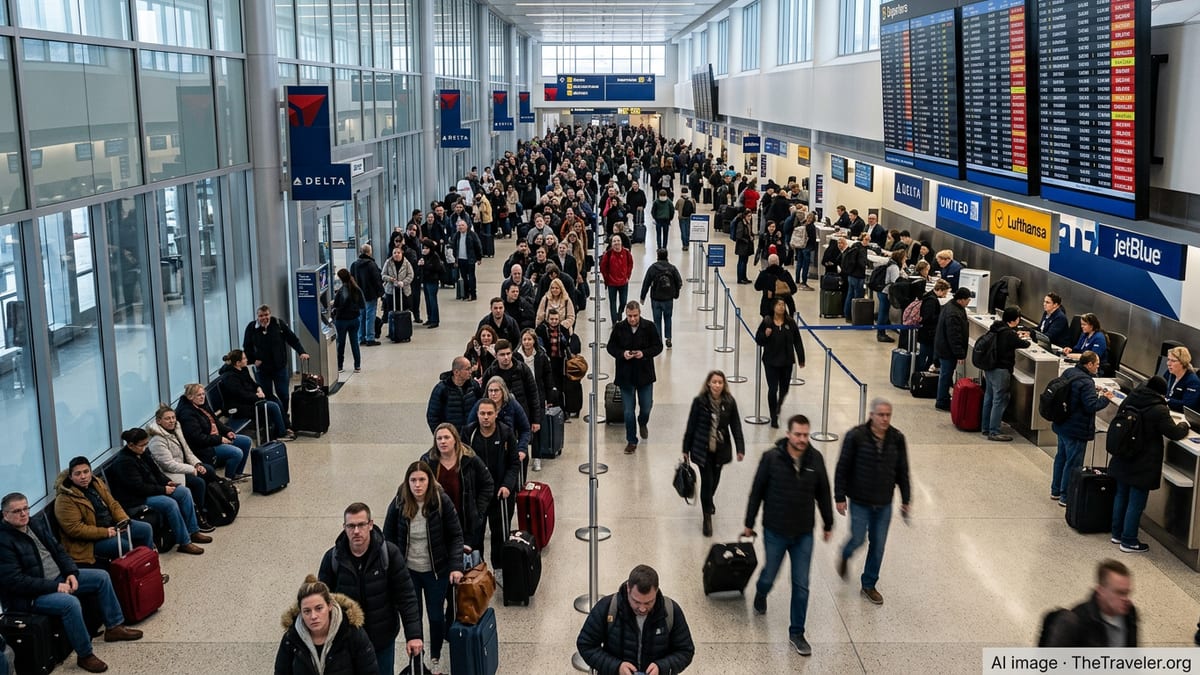
Nationwide Delays Ripple Through the Summer Travel Rush
Real-time data from major tracking services indicated that over 1,709 flights within, into or out of the United States were delayed and at least 99 were canceled as of Saturday afternoon, underscoring how fragile the system remains at the height of the vacation season. The disruptions affected nearly every major carrier and a broad range of airports, from coastal gateways to inland hubs.
The latest wave of delays followed a week in which thunderstorms and convective weather repeatedly slowed operations at some of the country’s busiest airports. When traffic volume is already high, even routine summer storms can trigger a chain reaction of schedule changes, as aircraft and crews fall out of position and recovery windows shrink.
Travelers reported crowded terminals, long lines at customer-service desks and difficulty finding available seats on later flights. With many planes running near capacity during July, rebooking options were limited, forcing some passengers to wait until the following day or reroute through secondary hubs.
Published aviation data also show that delays have been trending above typical summer levels this year, particularly during peak afternoon and evening hours, when storms and congestion often collide with tight airline schedules.
Storm Systems, Ground Stops and Congested Hubs
The Federal Aviation Administration’s national airspace status page on Saturday highlighted weather-related constraints at several key facilities, including programs that slow arrivals into major hubs when thunderstorms sit along approach paths. These measures are designed to manage safety and traffic flow but can quickly add minutes or hours to individual itineraries when demand is high.
In recent weeks, temporary ground stops and ground delay programs have been issued at airports such as Atlanta, New York Kennedy and Boston during strong storm cells, significantly reducing the number of flights that can land or depart in a given hour. Similar restrictions have affected airports in Florida and along the Mid-Atlantic, where summer weather patterns have been particularly active.
When one major hub slows down, the effect often spreads nationwide. Aircraft waiting on the ground in other cities are held for updated departure times, while inbound flights circle or are rerouted, consuming extra fuel and crew duty time. This systemic sensitivity means that a short-lived storm at one airport can still lead to missed connections and late-night arrivals across the network.
Recent travel days have also been complicated by non-weather disruptions at certain airports, including temporary security-related pauses and airspace volume controls, further tightening margins for on-time operations.
Staffing Pressures and Tight Schedules Add Strain
Beyond the immediate impact of storms, operational data and industry analyses point to structural pressures within the U.S. aviation system. Airlines are running dense summer schedules to meet strong leisure demand, leaving limited slack in aircraft and crew rotations when delays occur. Any disruption that forces crews to hit federally mandated duty-time limits can result in last-minute cancellations.
Air traffic control staffing has also drawn renewed attention. Publicly available information from federal oversight bodies has for months highlighted persistent controller shortages at several key facilities, particularly in busy East Coast and Florida sectors. When staffing is tight, controllers may need to restrict traffic flows during peak periods or adverse weather, increasing the likelihood of extended delays.
Analysis of federal on-time performance statistics for 2026 shows that weather remains the leading single cause of delays, but carrier-related issues such as crew availability, maintenance and aircraft swaps collectively account for a substantial share of disruptions. The interaction of those factors often determines whether a flight is simply late or ultimately canceled.
Travel data specialists note that this summer’s pattern of repeated, multi-day disruptions at individual hubs has made it harder for airlines to fully reset their operations between storms, leaving some carriers in a near-continuous recovery mode.
Travelers Face Crowded Terminals and Limited Options
For passengers, the practical impact of 1,709 delays and 99 cancellations is felt most acutely in airport concourses and on packed aircraft waiting for departure clearance. Social media posts and user reports on consumer platforms on Saturday described departure boards filled with yellow and red status updates and gate areas overflowing with travelers seeking updates.
With hotel availability often tight near major airports, some travelers faced the prospect of overnight stays far from home or their final destination. Consumer advocates continue to advise passengers to monitor their flight status closely, use airline apps or websites for rebooking when possible, and keep receipts for any out-of-pocket expenses that could become the basis for reimbursement under airline policies.
Published accounts from previous disruption events this year, including severe spring storms and security-related stoppages around Washington, D.C., show that early-morning departures are often less vulnerable to cascading delays than afternoon flights, which more frequently absorb the impact of earlier disruptions. However, the breadth of Saturday’s problems meant that even some first-wave flights encountered hold times and gate changes.
Passengers on tight connections, particularly those traveling internationally or attempting same-day returns, were among the most affected, with many forced into overnight stays or substantial itinerary changes when downstream flights departed without them.
What the Latest Turbulence Signals for the Rest of Summer
The scale of Saturday’s disruptions, while not unprecedented, adds to a growing list of challenging travel days in 2026 and reinforces concerns that the system has limited resilience in periods of sustained demand. Transportation analysts note that several recent weather events have each resulted in thousands of delays and hundreds of cancellations nationwide, suggesting that even ordinary seasonal patterns can quickly overwhelm schedules.
Government data from earlier this year already showed elevated delay rates compared with some pre-pandemic summers, amid strong passenger volumes and evolving route networks. The latest numbers are likely to keep pressure on carriers and regulators alike to address bottlenecks in staffing, infrastructure and scheduling practices.
For the remainder of July and into August, forecasters expect continued thunderstorm activity across much of the country, including in key aviation corridors from the Great Plains to the Northeast. Combined with school holidays and major events that draw additional traffic to certain cities, the ingredients for further disruption remain present.
Travel planners suggest that passengers build in extra time for connections, consider earlier departures when feasible and stay flexible on routing to improve their chances of reaching their destination on schedule. With more than 1,709 delays and 99 cancellations already logged in a single day, the latest turbulence serves as a reminder of how quickly U.S. air travel can be knocked off course during the peak summer rush.