


More news on this day
Prediction market platform Kalshi has moved to bring the chaos of airport flight cancellations into the world of tradable contracts, igniting debate over whether turning travel disruption into a financial product is savvy risk hedging or simply a new form of legalized gambling.
Get the latest news straight to your inbox!
How Flight Cancellations Became a Market Idea
Kalshi operates as a regulated event‑contract exchange in the United States, offering markets on real‑world outcomes such as inflation readings, sports results, and political events. Its latest frontier is air travel, where cancellations and delays have become a defining frustration of modern flying and a growing economic risk for travelers and tourism businesses alike.
Regulatory filings and published coverage indicate that Kalshi submitted a self‑certified contract design that would allow users to trade on whether flight cancellations at a specific airport exceed a set threshold over a defined time period. Instead of wagering on an individual flight, contracts would reference aggregate cancellation rates, such as the percentage of flights scrubbed on a particular day or during a holiday travel window.
According to descriptions in financial and travel media, Kalshi proposed to settle these contracts using third‑party aviation data from flight‑tracking providers that compile real‑time and historical information on arrivals, departures, delays, and cancellations. That design aims to reduce ambiguity, giving traders a clear rulebook for when a market resolves to “yes” or “no.”
The concept positions airport disruption as just another measurable risk that can be priced and traded, putting it in the same category as weather derivatives or event contracts on inflation. But because the subject is air travel, a system tightly woven into safety regulation and public infrastructure, the reaction has been far more charged than for typical financial innovations.
From Hedging Tool to Vacation Side Bet
Supporters of the move argue that flight‑cancellation contracts could serve as a form of insurance for travelers and businesses. A conference organizer dependent on hundreds of attendees flying into a single hub, for instance, could buy contracts that pay out if cancellations spike, offsetting lost ticket revenue or higher last‑minute costs.
Similar arguments appear in Kalshi’s earlier transportation‑related regulatory materials, which describe event contracts as hedging tools for firms exposed to specific operational risks. In the case of airports, those risks include not only airlines but also hotels, tour operators, convention centers, and even local tourism boards, all of which suffer when storms or staffing issues ground planes.
Yet travel commentators note that the same structure that makes the product a hedge for one party turns it into a speculative bet for another. Leisure travelers who treat prediction markets like on‑line sportsbooks could be tempted to open positions on crowded holiday travel days, essentially placing a side bet on whether winter storms or air‑traffic snarls will push cancellation rates above a posted line.
This blending of hedging and speculation is common in derivatives markets. With flight cancellations, however, it raises uncomfortable questions about whether millions of disrupted journeys might be quietly cheered in some corners of the trading world when they translate into profitable positions.
Ethical Concerns and Fears of Perverse Incentives
Reaction from consumer advocates, ethicists, and online commentators has focused on the possibility that markets tied to cancellations could create perverse incentives. If a contract pays out when cancellations exceed a threshold at a specific airport, critics argue, individuals with operational influence might gain from disruption rather than reliability.
Discussion in travel and technology outlets has highlighted scenarios in which airport or airline employees, ground staff, or contractors could, in theory, hold positions on cancellation contracts while working in roles that impact whether flights depart on time. Even if such behavior is strictly prohibited, the perception risk for both airports and airlines is significant.
Some analysts have also pointed to the risk of malicious interference from outside the aviation system. Because modern air travel can be halted by security threats or cyber incidents, skeptics worry about the possibility of bad actors seeking to trigger cancellations for financial gain through false alarms, digital attacks, or targeted disruption of key systems.
Kalshi has emphasized market‑integrity initiatives in other areas, detailing risk‑scoring, employment verification, and whistleblower programs intended to detect and deter misuse of sensitive information. Whether those measures are sufficient to reassure the flying public, or already stretched aviation regulators, remains an open question as debate over the flight‑cancellation idea intensifies.
Regulators, Lawsuits, and a Fast Backtrack
The flight‑cancellation proposal arrives at a moment when prediction markets are under heavy regulatory and legal scrutiny in the United States. Kalshi is supervised as a designated contract market by the Commodity Futures Trading Commission, but state officials and courts have increasingly challenged the line between federally regulated event contracts and prohibited gambling.
Recent months have seen state‑level lawsuits accusing several platforms, including Kalshi, of effectively running unlicensed betting operations by framing sports and other outcomes as tradable contracts. At the same time, federal regulators have been drawn into disputes over whether platforms can void trades in particular jurisdictions without violating national rules on equal access to markets.
Against that backdrop, reports in outlets such as Fortune describe how Kalshi prepared to launch its airport‑cancellation product, then abruptly reversed course following intense social media criticism and broader concern about the optics of profiting from ruined trips. The company informed reporters that it would not proceed with listing the contracts for now, even though regulatory filings suggested the mechanics were ready to go.
The quick backtrack illustrates how reputational and political risk can move faster than formal rulemaking. Even if a product passes federal regulatory muster, the combination of public backlash, state enforcement, and airline‑industry sensitivity can effectively shut down a market before it trades meaningfully.
What It Could Mean for Travelers and the Future of Prediction Markets
For travelers, the immediate impact is minimal, since the flight‑cancellation contracts have been shelved. No one booking a holiday trip today can offset the risk of a blizzard‑induced airport shutdown on Kalshi’s platform. Still, the episode offers a preview of how financial innovation might reshape the way individuals and businesses think about travel risk in the years ahead.
If regulators eventually allow products of this kind to proceed, airlines and major travel operators may face new questions from employees and customers about whether anyone linked to their operations is trading on disruption. Companies could be pressed to adopt strict internal compliance rules and public commitments that prohibit staff from participating in markets aligned with their day‑to‑day responsibilities.
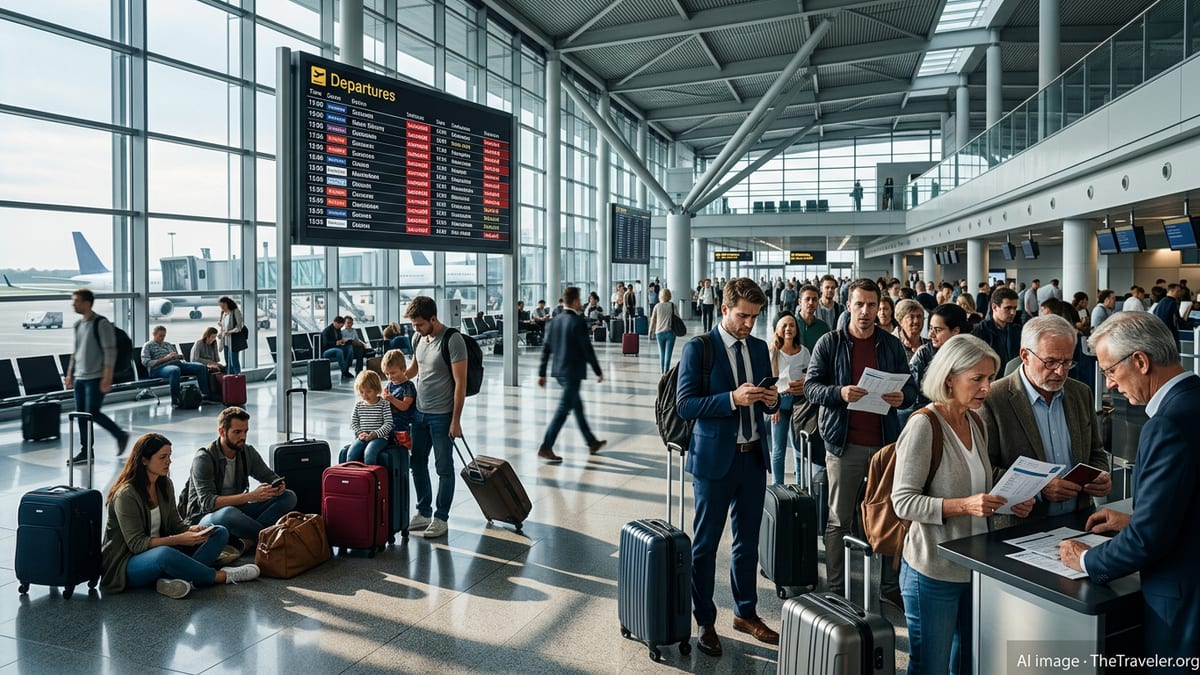
More broadly, the controversy highlights the growing friction between the promise of prediction markets as tools for information aggregation and their perception among many policymakers as thinly disguised betting platforms. Flight‑cancellation contracts combine both narratives in a particularly visible way, because the stakes are tangible: crowded terminals, missed connections, and stranded families, all mapped onto a line graph of payouts and probabilities.
For now, travel remains at the center of a wider experiment in financializing everyday uncertainty. Whether Kalshi or any competitor can turn flight cancellations into an accepted, regulated hedge without sparking public outrage will help determine how far prediction markets can expand into the core experiences of modern life, from commuting and energy use to weather and public events.