


More news on this day
Thick haze from Canadian wildfires has returned to Connecticut, raising concerns for travelers as smoky skies cut visibility and trigger air quality alerts across the state.
Get the latest news straight to your inbox!
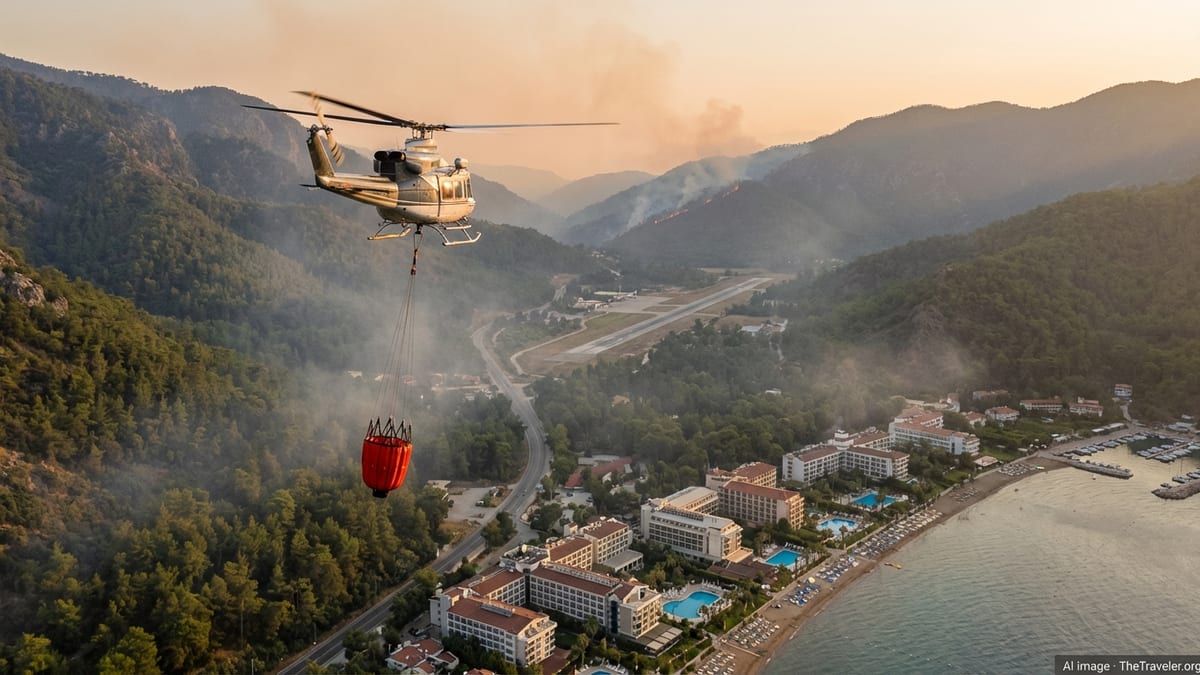
Smoke, Haze and Air Quality Alerts Across Connecticut
A new round of smoke from Canadian wildfires has drifted over New England in recent days, pushing fine particle pollution to levels considered unhealthy for sensitive groups in every Connecticut county. State environmental agencies forecasted elevated particulate levels on July 15 and 16, with residents from Hartford to New Haven reporting a milky sky and the smell of smoke in the air.
Satellite imagery and regional weather analyses show a plume of smoke sliding south and east over the Northeast, periodically thickening over Connecticut as winds shift. Local forecasts describe areas of haze and smoke reducing visibility to a few miles at times, particularly during the morning and evening hours when the smoke layer settles closer to the ground.
Publicly available guidance from air quality and health agencies emphasizes that the main concern from this episode is respiratory and cardiovascular health, not transportation shutdowns. People with asthma, heart disease, or other conditions are being advised to limit outdoor exertion and keep windows closed on the worst-smoke hours, but transportation systems, including aviation, are continuing to operate with adjustments where needed.
What Flight Data Shows at Connecticut Airports
Flight tracking data for the current smoke episode indicates that Connecticut’s major airports have seen some delays but only limited cancellations directly overlapping with the worst haze. At Bradley International Airport in Windsor Locks, daily statistics for the middle of the week show more than one hundred delayed flights and fewer than a dozen cancellations over several days when the smoke was most noticeable.
At Tweed New Haven Regional Airport, records for the same period point to several dozen delays but no significant wave of cancellations. These figures suggest that while the atmosphere has been hazy and visibility occasionally reduced, airlines have generally been able to maintain schedules with manageable slowdowns, rather than broad suspensions of service.
There is no indication in federal aviation notices of a full ground stop or prolonged closure at any Connecticut airport specifically attributed to wildfire smoke. Instead, operations have continued under instrument flight rules when conditions warranted, with pilots and controllers relying more heavily on instruments and radar when natural visibility falls below typical thresholds.
How Wildfire Smoke Affects Aviation
Wildfire smoke influences flying conditions primarily through visibility. The fine particles that create a white or brownish haze can cut how far a pilot can see horizontally, an important factor for aircraft using visual flight rules. When surface visibility drops near or below a few miles, air traffic managers may slow the rate of arrivals and departures to maintain safety margins.
Connecticut sits inside a region that already experiences episodes of regional haze from transported pollution. Aviation procedures and navigation charts for the Northeast assume that visibility can fluctuate, and airports are equipped with lighting systems, instrument approaches, and radar coverage that allow operations to continue when pilots cannot rely on clear out-the-window views.
Airlines also make their own operational choices based on aircraft type, crew schedules, and broader weather patterns. During widespread smoke events that affect multiple hubs, modest delays in Connecticut may reflect ripple effects from congestion at larger airports in the region, rather than a local shutdown. That pattern is consistent with the current episode, where nearby major hubs have reported some smoke-related visibility reductions but have remained open.
Travelers’ Experience on the Ground
Passengers traveling through Connecticut this week are more likely to notice the smoke as a visual and sensory experience than as a cause of outright flight cancellations. Reports from the ground describe dim, amber-tinted sunlight, distant skylines fading into gray, and a noticeable smell of burning vegetation near sunrise and sunset.
Inside terminals, operations have largely proceeded as normal, with typical mid-summer variability in departure times. Publicly available arrival and departure boards at Bradley and Tweed show scattered delays of under an hour on many flights, a pattern that can be driven by a combination of air traffic management, staffing, upstream weather and demand, with smoke-related visibility being only one factor among several.
Travel advice from aviation and health experts emphasizes that people with medical vulnerabilities may wish to wear a well-fitting mask when traveling to and from the airport during periods of poor air quality. For most passengers, the larger practical consequence is the possibility of minor schedule adjustments or holding patterns if air traffic controllers space aircraft farther apart during hazy conditions.
What to Check Before You Fly
Travelers flying into or out of Connecticut over the coming days are encouraged to check flight status frequently on their airline’s website or app, as the smoke plume can shift with changing winds. Even when local skies appear clearer, smoke affecting a connecting hub elsewhere in the Northeast or Midwest can cascade into delays down the line.
Monitoring local weather forecasts and air quality alerts can also help travelers plan ground transportation and time outdoors. When forecasters note reduced visibility from smoke, it can be a sign that flight operations may be slower, especially at peak travel times, but not necessarily canceled.
Overall, current information indicates that wildfire smoke has created striking skies and challenging air quality in Connecticut but has not, as of mid July 2026, resulted in widespread or long-lasting disruption to commercial flights. The situation remains changeable, however, and travelers should stay informed as the region tracks additional smoke pulses from ongoing fires to the north.