


More news on this day
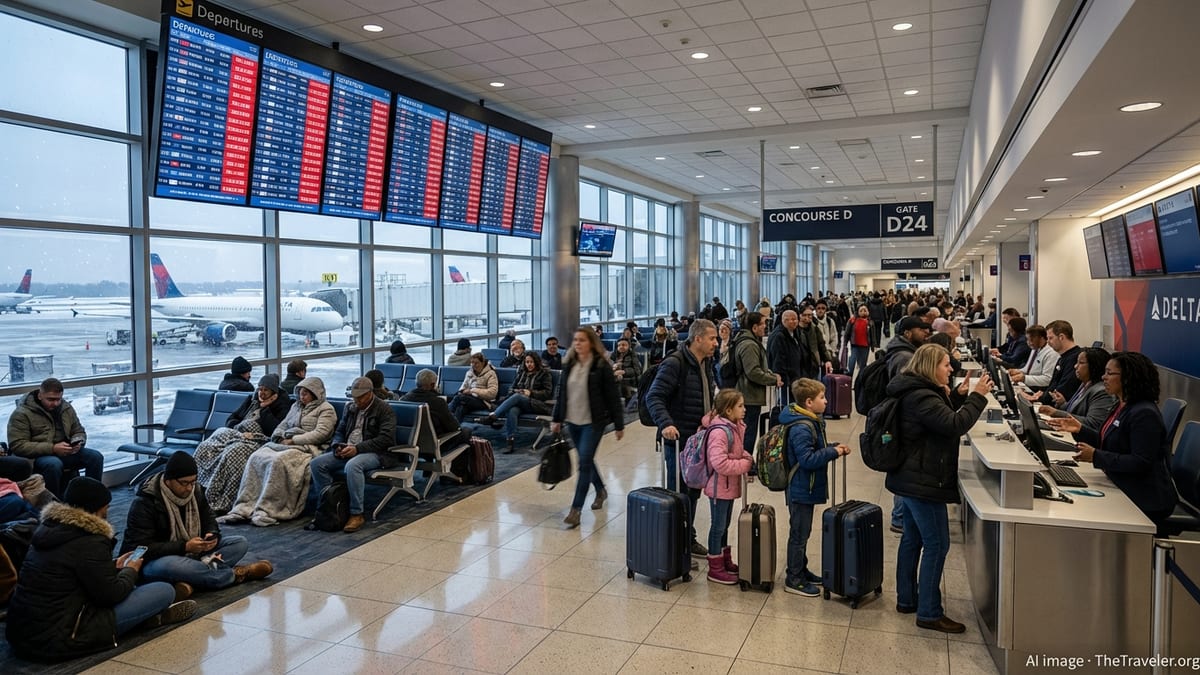
Strong thunderstorms sweeping across North Texas have triggered ground stops and cascading delays at Dallas Love Field and Dallas Fort Worth International Airport, disrupting Friday travel plans for passengers across the country.
Get the latest news straight to your inbox!
Ground Stops Implemented as Storms Move Over Metroplex
Operational notices from federal air traffic planners show that arrivals into Dallas Fort Worth International Airport were halted under a ground stop as thunderstorms passed over the region, with departures and arrivals at Dallas Love Field also subject to flow restrictions and delays. The measures were introduced as intense cells with lightning and heavy rain moved directly across key arrival and departure corridors, sharply reducing usable airspace around the two North Texas hubs.
The National Airspace System status page and related advisories indicated that DFW moved from a full ground stop into a formal delay program, limiting the number of aircraft that could land each hour and extending departure times from outlying airports. Similar language in planning advisories highlighted the potential for coordinated ground stops and delay programs at both DFW and Love Field during the most active periods of the storms.
Real-time status information for Dallas Love Field showed elevated average departure and arrival delays as the weather deteriorated, reflecting the combination of local ramp closures for lightning, slower runway operations in heavy rain, and national traffic management initiatives aimed at keeping airborne holding to a minimum.
Local aviation weather briefings for the DFW terminal area cited strong convective activity, variable winds and rapid changes in ceiling and visibility, conditions that typically prompt conservative spacing between aircraft. That combination left controllers and airlines with fewer slots to move flights in and out of the region during peak periods.
Dozens of Flights Delayed as Ripple Effects Spread Nationwide
Initial disruptions at the two Dallas airports quickly spread through airline networks, as aircraft and crews scheduled to operate later flights could not reach their next destinations on time. Publicly available flight tracking and airline status boards showed long lines of Dallas-bound flights holding departure times at their origin airports, while some aircraft already airborne were placed into holding patterns or diverted to alternate airports to wait for conditions to improve.
Reports from national outlets and traveler accounts described hundreds of weather-related delays at DFW and Love Field during recent thunderstorm outbreaks, with some days seeing more than 900 delayed flights at DFW alone when slow-moving storm lines stalled over the airport. The latest storms followed a similar pattern, with short, intense ground stops giving way to extended delay programs that continued for hours after the heaviest rain and lightning had passed.
The knock-on effects were visible in cities as far away as the East Coast and Mountain West, where flights scheduled to pass through Dallas were pushed back repeatedly. In some cases, aircraft scheduled for late-night departures out of DFW missed their slots because crews reached duty-time limits, forcing additional cancellations and overnight rebookings for passengers.
Data from previous North Texas storm events suggest that even a brief ground stop at a major hub can reshape airline schedules for the rest of the day, as missed connections and aircraft imbalances ripple across the system. Researchers studying weather-driven disruption in the air transport network have found that such events significantly increase passenger dwell times and overall travel delays, particularly when storms arrive during already busy afternoon and evening banks.
Why Thunderstorms Force Airports to Pause Operations
Convective storms over North Texas present a particular challenge for air traffic operations because they often combine intense lightning, wind shear, microbursts and rapidly changing wind directions. Ground stops are one of the primary tools used by traffic managers to keep aircraft safely separated when available airspace and runway capacity shrink without warning.
According to definitions used in the National Airspace System, a ground stop temporarily suspends departures destined for an affected airport, usually when arriving aircraft cannot be safely sequenced or when ramp operations must be closed for lightning. At Dallas airports, this can occur when a line of storms sits directly over the field or blocks typical arrival and departure corridors, leaving few safe options for routing traffic.
Thunderstorms also force airlines and air traffic controllers to increase spacing between aircraft on approach and departure, lowering the total number of flights that can be handled each hour. When that capacity drop collides with peak travel periods, even a short-lived weather event can produce a backlog of flights waiting for takeoff clearance or arrival slots.
North Texas has a long history of weather affecting aviation, and the summer convective season is especially disruptive. Planning documents and past city and airport briefings note that severe weather avoidance programs, ground delay programs and occasional ground stops are a recurring feature of warm-season operations at DFW, with Love Field often affected by the same storm systems.
Travelers Face Long Lines, Missed Connections and Rebookings
For passengers, the latest round of thunderstorms translated into hours-long waits, missed connections and, in some cases, overnight stays. Social media posts and online travel forums filled quickly with accounts of travelers spending much of the day in terminal gate areas at DFW and Love Field as estimated departure times slid back in 15 to 30 minute increments.
At Dallas Love Field, where Southwest Airlines operates the majority of flights, rolling delays on earlier segments left aircraft out of position and limited the carrier’s ability to recover quickly once the most intense storms moved east. Travelers reported that flights which did depart often did so with long queues for takeoff, as air traffic control slowly increased departure rates while monitoring residual storms in the area.
At DFW, which functions as a major hub for American Airlines, missed inbound connections created further complications. Passengers on late-evening departures found themselves rebooked for the following day when the combination of ground stops, delay programs and crew duty limits left too little margin to complete scheduled journeys. Lines formed at customer service desks as travelers sought hotel vouchers, meal assistance and alternative routings.
Airline operations centers, according to publicly shared planning messages and internal alerts that later surfaced online, responded by preemptively canceling some flights to reduce congestion and preserve on-time performance for the remainder. While such strategies limit further deterioration of the schedule, they also concentrate the impact on specific flights and cities, particularly smaller markets with fewer daily departures.
What Passengers Can Do During North Texas Storm Disruptions
Travel experts and experienced flyers recommend assuming that summer thunderstorms in the Dallas area can significantly disrupt travel, particularly for evening connections. Historical performance data and traveler reports suggest that itineraries relying on tight connection windows at DFW or Love Field are especially vulnerable on stormy days.
Passengers are encouraged to monitor both airline apps and official federal aviation status tools to track evolving ground stops and delay programs. When advisories begin to mention potential restrictions for DFW and DAL, early proactive steps such as requesting alternative routings through other hubs or moving to earlier flights can sometimes prevent longer disruptions later in the day.
Flexible travelers may also benefit from carrying on luggage rather than checking bags, making it easier to change flights or reroute through another city at short notice. For those already at the airport when a ground stop is issued, staying close to gate areas and keeping an eye on boarding announcements can help avoid missed opportunities when a brief improvement in conditions allows a limited number of flights to depart.
With the core of the summer thunderstorm season still underway in North Texas, public forecasts and traffic management advisories indicate that travelers using Dallas Love Field and DFW Airport in the coming weeks should be prepared for additional days in which quick-developing storms lead to sudden pauses in operations and extended delays across the national network.