


More news on this day
Delta Air Lines is facing a second consecutive day of major flight cancellations and delays centered on its Atlanta megahub, as the carrier struggles to recover its schedule and reposition crews and aircraft during one of the busiest travel periods of the year.
Get the latest news straight to your inbox!
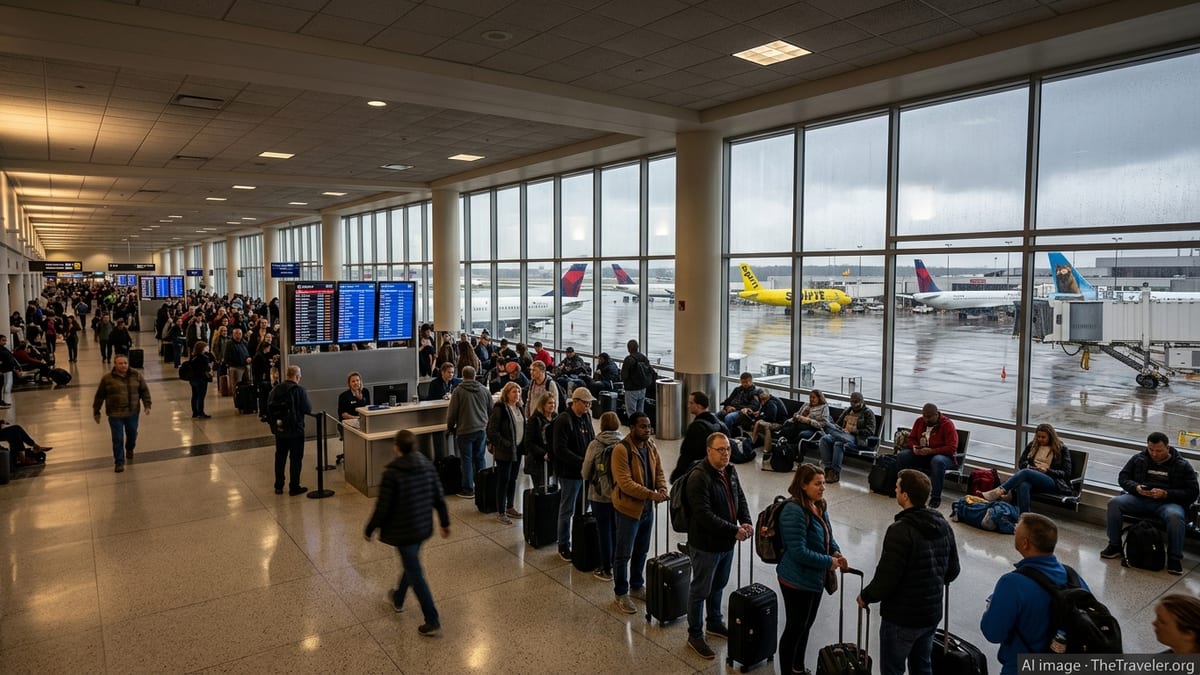
Atlanta Hub Buckles Under Cascading Disruptions
Hartsfield-Jackson Atlanta International Airport, Delta’s primary hub and the world’s busiest airport by passenger traffic, has again become the focal point of widespread operational problems. Publicly available tracking data and airport status boards indicate that hundreds of Delta-operated departures and arrivals at Atlanta have been canceled or subjected to extended delays for a second day in a row, triggering long lines, missed connections and a sharp rise in involuntary overnight stays.
The pattern mirrors previous high-profile disruptions in which an initial shock, such as a technology outage or severe weather, quickly turned into a broader breakdown in the tightly timed network that keeps aircraft and crews moving. Once large numbers of flights are scrubbed or pushed far behind schedule, crews and planes end up in the wrong cities, making it increasingly difficult to restore normal operations the following day.
Reports from passengers traveling through Atlanta describe crowded concourses, limited same-day rebooking options and difficulty securing hotel rooms near the airport. Social media posts and passenger forums highlight cases in which travelers have been rebooked one or more days later, or routed through multiple additional connections, as Delta attempts to absorb the backlog.
Operational data sites that aggregate federal aviation feeds show a sharp spike in Delta’s cancellation rate tied specifically to Atlanta compared with baseline performance, where the airline typically ranks among the stronger U.S. carriers for on-time operations. The scale and persistence of the current disruption are again drawing scrutiny to how quickly the airline can recover when its largest hub is severely constrained.
Crew Scheduling and IT Strain Echo Past Meltdowns
The current wave of cancellations follows a series of operational crises in recent years in which Delta’s reliance on complex crew-tracking and scheduling software has been cited as a key vulnerability. During the July 2024 CrowdStrike-related IT outage, published analyses and postmortems pointed to Delta’s crew management systems as a central factor in why the carrier’s disruptions lasted longer than those of its peers.
Research into that episode indicated that Delta’s systems struggled to process the huge number of last-minute changes required when flights were grounded, leaving the airline without a clear, real-time picture of where pilots and flight attendants were located. As crews timed out under federal duty rules or became stranded away from their assigned aircraft, the airline was forced to cancel additional flights even after the underlying IT issue had been addressed.
Travel data reports and subsequent academic work on the 2024 disruption described a cascading effect: aircraft and crews fell out of their planned rotations, recovery schedules became harder to execute, and each additional cancellation or long delay rippled into the next day’s operation. Observers of this week’s performance at Atlanta note similar hallmarks, with many of the second-day cancellations affecting flights that depend on crews arriving from already disrupted segments.
Industry analysts have repeatedly framed these events as warnings about the limits of legacy IT and optimization tools in an environment where traffic volumes are near or above pre-pandemic records. Delta has announced various modernization and resilience initiatives in the wake of past meltdowns, but the latest turmoil at its primary hub suggests the airline’s recovery playbook continues to face significant stress under extreme conditions.
Passengers Confront Rebookings, Vouchers and Long Waits
For travelers, the abstract language of crew scheduling and network recovery translates into highly tangible inconvenience. Stranded passengers at Atlanta and connecting airports have shared accounts of missed weddings, vacations cut short and work trips thrown into uncertainty as they navigate multi-hour hold times and crowded service desks.
Publicly available consumer guidance from aviation watchdogs and airline performance trackers underscores that disruptions of this type can entitle passengers to specific forms of assistance when the cause is within an airline’s control. Major U.S. carriers, including Delta, have committed to provide meal vouchers after substantial delays, hotel accommodations when an overnight stay is required, and fee-free rebooking on their own flights in many controllable disruption scenarios.
In practice, however, access to those benefits can be uneven during a mass cancellation event. Reports from this latest episode at Atlanta describe instances where travelers were advised to seek out hotels on their own and request reimbursement later, or where vouchers were limited by local room availability. Some passengers have turned to other airlines or ground transportation at their own expense to complete their journeys when rebooking windows stretched into the following day or beyond.
Consumer advocates frequently encourage travelers facing similar meltdowns to document all expenses, save boarding passes and disruption notices, and make use of official complaint channels if they believe they were not offered the level of support outlined in carrier commitments and federal guidance. The scale of the current disruption suggests a new wave of refund requests and complaints could follow in the days ahead.
Regulators Watching After Prior Federal Scrutiny
Extended cancellation crises have increasingly drawn attention from regulators in recent years, particularly when the underlying issues are considered controllable rather than solely weather-related. After the 2024 global IT outage, federal transportation officials publicly singled out Delta for the length and severity of its recovery relative to other U.S. airlines, and launched an investigation into the carrier’s handling of refunds and passenger assistance.
Policy documents and enforcement notices stemming from that period emphasized that carriers are expected to maintain robust contingency plans, including sufficient staffing reserves and resilient technology, to minimize the customer impact of foreseeable disruptions. The experiences of Delta and other airlines during recent meltdowns helped shape new federal rules on automatic refunds for significant delays and cancellations, as well as clearer disclosure of passenger rights.
With Atlanta again serving as the epicenter of a prolonged disruption, industry observers note that regulators are likely to closely review Delta’s latest performance metrics, refund practices and customer communications. Although weather and air traffic constraints can play a role during busy travel weeks, high levels of cancellations focused on a single carrier and hub often raise questions about internal planning and recovery strategies.
The renewed turmoil arrives at a moment when air travel demand has rebounded strongly and airlines are under pressure to prove they can deliver reliability alongside growth. How Delta navigates the coming days at Atlanta, and how quickly it restores normal operations, will be closely watched by both regulators and the traveling public.
What Travelers Connecting Through Delta’s Hubs Should Know
The current cancellations at Atlanta are a reminder that disruptions at a single major hub can quickly spill over across an airline’s entire network. Delta’s hub-and-spoke model funnels large numbers of passengers through Atlanta, New York and other key airports, meaning a wave of cancellations at one location can translate into missed connections and rolling delays for travelers who never set foot in the affected city.
Travel data services and aviation planners often advise passengers with time-sensitive plans to build in longer connection windows when routing through megahubs, particularly during peak seasons or when an airline is already experiencing operational strain. In events like the present meltdown, those additional buffers can be the difference between a completed journey and an involuntary overnight stay.
For upcoming trips on Delta, travelers are being urged by consumer groups and frequent-flyer communities to monitor flight status closely, use mobile apps to adjust itineraries as soon as disruption alerts appear, and consider alternative routings that bypass heavily affected hubs where options allow. Same-day changes, even with added connections, can sometimes keep a trip viable when later nonstop flights are already oversubscribed or at risk of cancellation.
With the latest meltdown at its largest hub entering a second day, Delta faces the dual challenge of restoring operational stability and rebuilding confidence among travelers who have long associated the brand with above-average reliability. The speed and transparency of its response at Atlanta may shape traveler perceptions well beyond this week’s disruption.