


More news on this day
Hong Kong has reclaimed a prominent role on the Pacific air map as Delta Air Lines launches daily nonstop flights to Los Angeles, restoring a major East–West corridor and intensifying competition for premium travelers and cargo between Asia and the United States.
Get the latest news straight to your inbox!
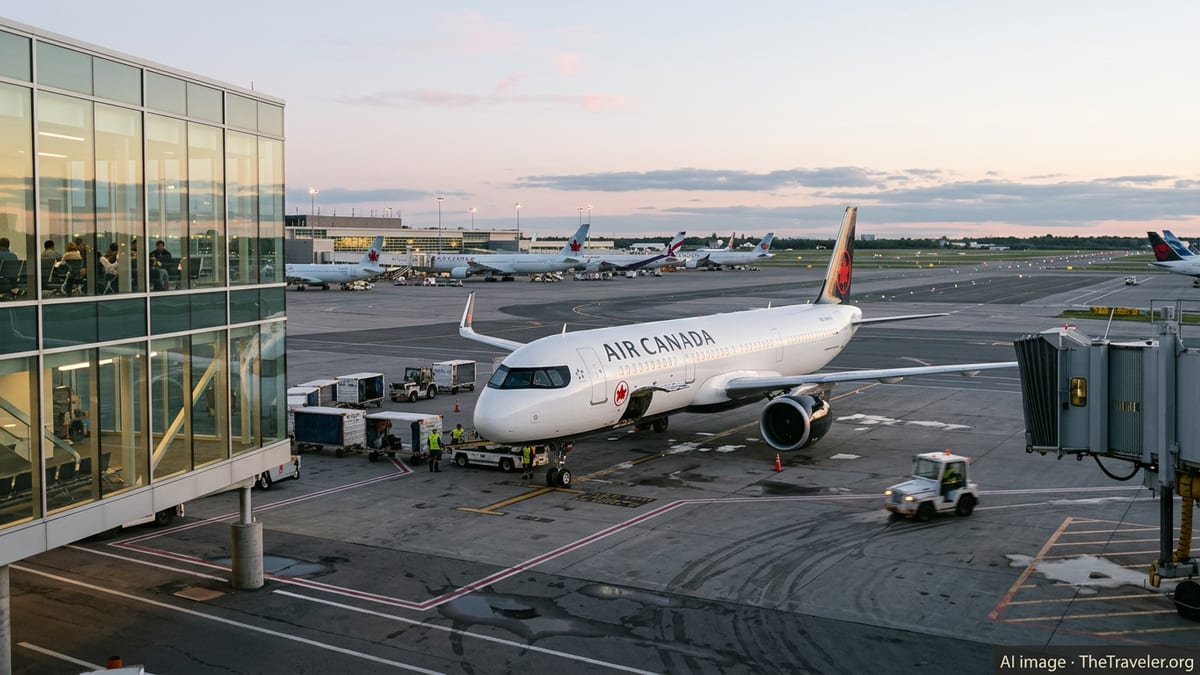
A Strategic Return Linking Two Global Gateways
The new Hong Kong–Los Angeles service, which began operating in early June 2026, marks Delta’s formal return to Hong Kong after several years away from the market. Publicly available information shows that the route operates daily in both directions, reconnecting one of Asia’s leading financial and logistics hubs with Delta’s primary West Coast gateway.
Reports indicate that the launch is designed to tap into resurgent transpacific demand and to position Hong Kong once again as a high-value connecting point for corporate travelers, leisure passengers and freight operators. The timing aligns with a broader rebuilding of long-haul networks across the region as airlines restore capacity that was cut during the pandemic period.
Industry coverage notes that Hong Kong’s role as a global finance center, coupled with its established aviation infrastructure, made it a logical candidate for Delta’s next phase of Asia-Pacific growth. The carrier had already been expanding its Los Angeles hub with additional routes to Northeast Asia and the South Pacific, and the Hong Kong link adds a high-profile spoke to that network.
By reinstating nonstop service to the US West Coast, Delta enters a competitive field where Cathay Pacific and United Airlines already operate between Hong Kong and major US cities. Analysts suggest that the additional capacity is likely to sharpen competition on fares, schedules and onboard experience, especially at the premium end of the market.
Premium Cabins and Product Upgrades on the A350
Delta is deploying its flagship Airbus A350-900 on the Hong Kong–Los Angeles route, a widebody aircraft configured to emphasize premium cabins and long-haul comfort. According to published coverage, the jet offers four cabin classes, including Delta One Suites with lie-flat seats and privacy doors, a dedicated Premium Select cabin, extra-legroom Comfort+ seating and a refreshed Main Cabin.
Onboard product descriptions highlight a focus on an upgraded passenger experience, with wider seats and deeper recline in premium economy, enhanced bedding in business class and extensive in-flight entertainment options available across all cabins. The A350’s lower cabin altitude and improved air filtration are promoted as added benefits for travelers on the 14 to 16 hour transpacific sector.
Publicly available information about Delta’s ground investments at Los Angeles International Airport underscores the premium positioning of the new service. The airline has completed a multibillion-dollar terminal transformation, including a redesigned departures hall and expanded security screening areas. Passengers traveling in the top cabin from Hong Kong gain access to dedicated premium check-in and lounge spaces at LAX, positioning the flight as a flagship link into Delta’s broader US network.
Travel industry observers say this emphasis on high-yield passengers fits a wider industry strategy on ultra-long-haul routes, where airlines increasingly rely on business, corporate contract and affluent leisure traffic to support the economics of daily widebody service.
Reinforcing Hong Kong’s Status as a Cargo Powerhouse
Beyond the passenger cabins, the new flight is being framed as an important addition to cross-Pacific cargo capacity. Hong Kong remains one of the world’s busiest airfreight hubs by volume, and public data show that Delta’s A350 operations add significant daily belly-hold space on the Hong Kong–Los Angeles corridor.
Air cargo analysts note that transpacific freight has been buoyed by demand for high-value goods such as electronics, pharmaceuticals, fashion and e-commerce shipments. A nonstop connection to Southern California, which includes the ports of Los Angeles and Long Beach and a dense logistics ecosystem, provides shippers with a faster and more predictable link into North American supply chains.
According to industry commentary, the Hong Kong–Los Angeles service is also expected to support time-sensitive shipments that benefit from overnight or same-week delivery windows, especially for technology, healthcare and automotive customers. Daily frequencies allow freight forwarders and logistics providers to plan more reliable rotations, smoothing seasonal swings in demand.
The additional capacity feeds into Delta Cargo’s broader Pacific network, which uses joint venture and interline partnerships to reach secondary markets across the Americas. Market watchers suggest that the strengthened cargo proposition, combined with a premium passenger product, enhances the overall viability of the new route.
Network Synergies and Asia-Pacific Connectivity
The Hong Kong–Los Angeles launch dovetails with Delta’s growing reliance on partner hubs in North Asia, particularly through joint ventures that funnel traffic via Seoul and other regional gateways. Route announcements and schedule filings indicate that Hong Kong will complement, rather than replace, these partner flows, giving travelers alternative itineraries depending on schedule, pricing and destination.
At Los Angeles, the new service plugs into more than 50 onward destinations across North America, including major business centers on the US East Coast and in the Midwest. For travelers originating in Hong Kong or connecting from other parts of Asia, this structure creates a one-stop option to cities that previously required double connections or routings via other US gateways.
Industry reports emphasize that the move also reflects intensifying competition for leadership in the Pacific market. United and American have invested heavily in their own transpacific networks, while Asian carriers such as Cathay Pacific, Korean Air and ANA continue to rebuild and expand long-haul capacity. Delta’s latest addition from Hong Kong to Los Angeles signals an intent to regain share in a region where it has historically lagged some competitors.
Analysts point to the upcoming 2028 Olympic and Paralympic Games in Los Angeles as another factor shaping long-term capacity decisions. Airlines are positioning now to serve expected spikes in inbound tourism and corporate travel, and a mature Hong Kong–Los Angeles route could be well placed to capture demand linked to that event and the broader Asia-Pacific visitor base.
Implications for Travelers and Regional Tourism
For travelers, the immediate impact of Delta’s daily Hong Kong–Los Angeles flights is greater choice in schedules, cabin products and frequent flyer options. The additional nonstop capacity strengthens Hong Kong’s appeal as a departure point for the United States, particularly for passengers valuing alliance connectivity across Asia and North America.
Tourism bodies and market commentators suggest that more robust air links can help accelerate the recovery of visitor flows in both directions. Hong Kong is working to attract back international tourists with new events, promotions and infrastructure enhancements, while Los Angeles continues to promote its role as a gateway to the US West Coast, national parks and nearby leisure destinations.
Pricing trends will take time to emerge, but aviation analysts expect competitive dynamics on the route to influence fares across cabins. Loyalty program members may also benefit from new redemption and upgrade opportunities, as mileage charts and award availability adjust to reflect the additional daily widebody service.
While long-haul aviation still faces challenges from fuel prices, geopolitical uncertainty and shifting corporate travel policies, the launch of Delta’s Hong Kong–Los Angeles nonstop is being interpreted as a vote of confidence in the long-term strength of transpacific demand. For Hong Kong, it is another step in reclaiming stature as a premier aviation crossroads. For Los Angeles, it reinforces the city’s ambition to act as a central bridge between Asia and the Americas.