


More news on this day
The title of longest commercial flight in the world currently belongs to Singapore Airlines’ non-stop route between New York and Singapore, a journey that can last close to 19 hours and has become a benchmark for how far, and how long, modern aviation can go without refuelling.
Get the latest news straight to your inbox!
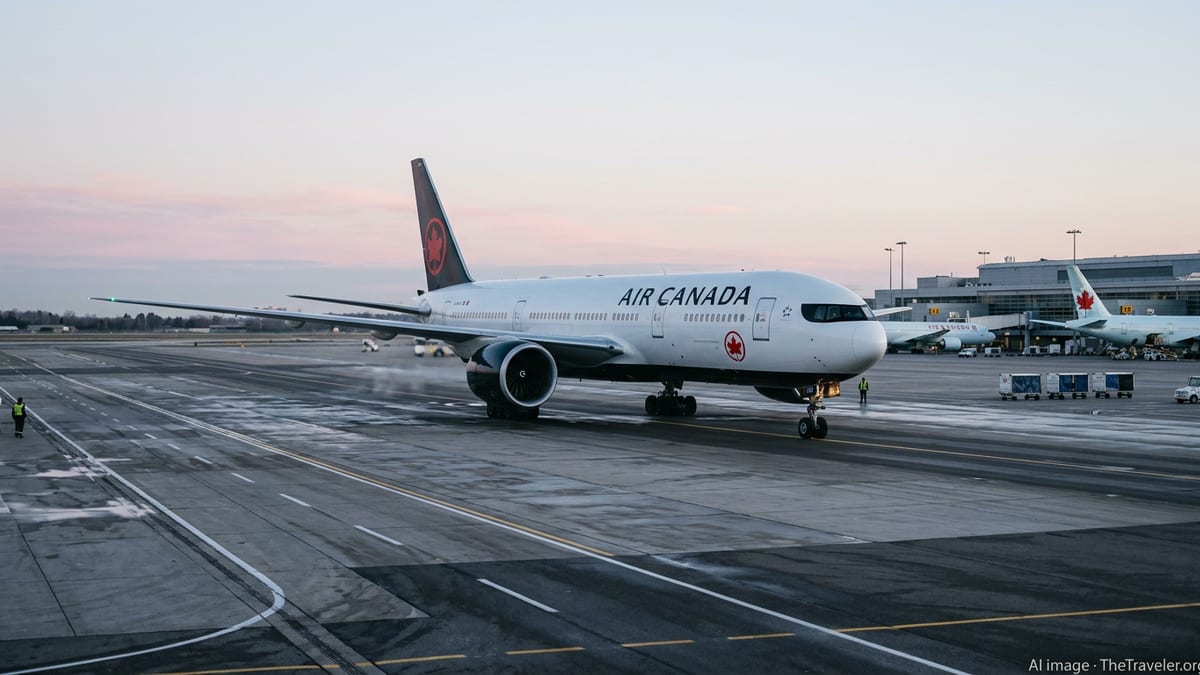
Nearly 19 Hours Non-stop Between New York and Singapore
Publicly available schedules and recent industry coverage show that Singapore Airlines operates the world’s longest regularly scheduled commercial flights between New York’s JFK and Singapore Changi, as well as a sister route from Newark to Singapore. Measured by great-circle distance, these flights cover roughly 15,300 kilometres and are timetabled at up to around 18 hours and 50 minutes, depending on direction and season.
Aviation data and recent reporting indicate that the JFK to Singapore leg can run close to 19 hours in the air when winds are unfavourable, placing it at the top of current ultra long haul services by both distance and duration. These flights surpass other high-profile long routes such as Qantas services between Australia and Europe or Emirates’ connections between Dubai and New Zealand, which typically remain in the 16 to 17 hour range.
The New York to Singapore services are operated by a specially configured Airbus A350-900ULR, a variant designed for “ultra long range” operations. Public technical documentation notes that the aircraft carries additional fuel compared with standard A350 models and features aerodynamic and weight optimisations that enable it to stay airborne for nearly a full day while still meeting safety and performance margins.
Operational data compiled by aviation analysts suggest that the flights usually cruise along a polar or near-polar routing, crossing more than ten time zones and large stretches of the Arctic and Eurasia before descending into Southeast Asia. Actual airborne time can vary by close to an hour depending on upper-level winds and preferred routing on a given day.
Beating Other Ultra Long Haul Contenders
While New York to Singapore currently sits at the top of the table, it does so in a field that has been steadily expanding. Rankings compiled by aviation news outlets for 2025 and 2026 show the top tier of ultra long haul routes clustered within a few hundred kilometres of one another, underscoring how competitive airlines have become in claiming extreme-distance records.
Among the contenders are Qantas’ non-stop Perth to London services, often cited as a transformative link between Australia and Europe, and several long Emirates routes such as Auckland to Dubai. These flights regularly exceed 14,000 kilometres and can keep passengers in the air for 16 hours or more, but they still fall short of the New York to Singapore pairing both in nominal distance and scheduled duration.
Industry watchers also point to special one-off or limited-run operations that push flight times even further. Recent coverage highlighted a nearly 29-hour journey connecting Shanghai and Buenos Aires via a technical stop, described as the longest commercial itinerary on a single flight number. However, that operation involves a stop and is not a non-stop sector, so it is usually treated separately from rankings of continuous flights between two points.
Looking ahead, proposed “Project Sunrise” routes from Qantas, which aim to connect Australia’s east coast directly with destinations such as London and New York, are expected to challenge New York to Singapore for the endurance title. Airline briefings and analysis suggest some of these future services could schedule around 20 hours gate-to-gate, although they had not yet entered regular commercial service as of mid-2026.
What Nearly 19 Hours in the Air Feels Like
Spending the better part of a day in a pressurised cabin presents a very different experience from even a typical long haul flight. Passenger accounts collected across travel blogs and media reports describe meticulous planning around sleep, meals, and movement in the cabin to cope with the extended confinement and time-zone shift.
Airline-provided information indicates that the A350-900ULR used on the New York to Singapore route is configured with a reduced number of seats compared with standard long haul aircraft of similar size, prioritising premium economy and business class. The lower seat density allows for larger galleys and storage areas for catering, as well as more space per passenger, a recognition that comfort becomes critical when the flight time approaches 19 hours.
Cabin environment features are also emphasised on these routes. Manufacturers highlight higher cabin humidity, lower cabin altitude, and LED lighting schemes designed to support circadian rhythms. Frequent flyers interviewed by travel publications often mention that these factors, while subtle, can make a noticeable difference in how they feel upon arrival after such an extended period in the air.
Despite these enhancements, ultra long haul flights remain physically demanding. Medical and travel advisories commonly recommend regular stretching, hydration, and moderate food and alcohol intake to reduce the risks associated with prolonged immobility and disrupted sleep patterns. For many passengers, the trade-off is one very long day in exchange for avoiding one or two intermediate stops and several additional hours spent in transit lounges.
Engineering and Operational Challenges Behind the Record
Operating the world’s longest commercial flight is not simply a matter of loading more fuel. Technical briefings from manufacturers and independent analysis highlight a complex balance of payload, range, and efficiency that determines how feasible such a route can be on a regular basis.
The A350-900ULR’s extended-range capability comes in part from increased fuel capacity, but also from a higher maximum take-off weight and efficiencies in the airframe and engines. Airlines still need to make decisions about how many seats to install and how much cargo to carry, as any additional weight directly affects range and operating margins. This is one reason why the longest flights tend to prioritise higher-yield passenger cabins rather than large economy sections and heavy cargo loads.
Operational planning is similarly intricate. Dispatchers rely on detailed long-range weather forecasts, including jet stream positions and potential turbulence zones, to determine the day’s routing. In some cases, a less direct path that offers more favourable winds can save significant fuel and time over the course of an 18 or 19 hour flight, even if the distance flown is slightly longer.
Safety and diversion planning also become more demanding as flights stretch deeper into remote airspace. Routes that skirt the polar regions, for example, require careful consideration of alternate airports, communication coverage, and contingency fuel in case of medical emergencies or technical issues. Published regulatory guidance for extended twin-engine operations outlines strict maintenance and planning standards that airlines must meet before placing such routes on sale.
A Glimpse of Air Travel’s Next Frontier
The success of the New York to Singapore non-stop services has encouraged airlines and manufacturers to think more ambitiously about what is possible in commercial aviation. Industry commentators note that ultra long haul flights have become a way for airlines to differentiate their networks, capture premium business traffic, and showcase new aircraft types.
At the same time, questions persist about sustainability and passenger well-being. Environmental groups and some aviation researchers point out that ultra long haul sectors concentrate fuel burn and emissions into a single, lengthy leg. Others argue that by eliminating additional take-offs and landings, such flights may be more efficient overall than itineraries involving multiple connections, although the balance can depend on load factors and aircraft type.
For travellers, the longest commercial flight in the world is both a curiosity and a practical tool. For some, nearly 19 hours in one seat is a challenge to be endured once. For others, especially frequent business travellers, the ability to step onto a jet in New York and step off in Singapore without a connection has turned a once-cumbersome multi-stop journey into a single, if very long, day’s work in the sky.