


More news on this day
Travelers in and out of Denmark faced a difficult day as a series of operational disruptions led to four flight cancellations and four significant delays, affecting both domestic services and international routes across Europe and leaving many passengers stranded at airports.
Get the latest news straight to your inbox!
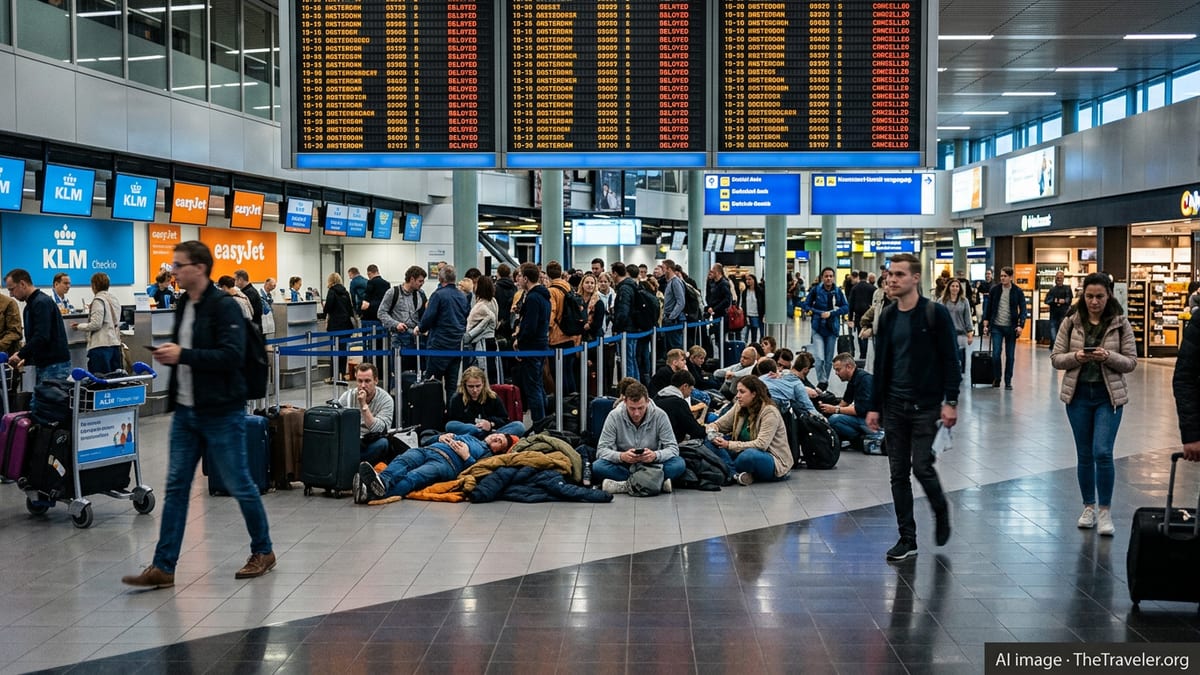
Cluster of Disruptions Hits Key Danish Gateways
The latest disruptions were concentrated at Denmark’s primary aviation hubs, where a small number of affected departures and arrivals created knock-on effects across already busy schedules. Publicly available airport data indicates that four flights were canceled outright while four others departed with extended delays, straining capacity on alternative services as carriers attempted to rebook passengers.
The cancellations primarily impacted short haul European services as well as at least one domestic connection, while delays were reported on routes linking Denmark with major transit points on the continent. Travel platforms tracking live departure boards showed extended waits on services connecting to hubs in northern and central Europe, increasing the risk of missed onward connections.
Although the overall number of affected flights was limited relative to daily traffic, the timing of the disruptions coincided with peak travel periods, amplifying the impact for leisure travelers, commuters and transfer passengers heading to other European destinations.
Reports from Scandinavian and European aviation trackers describe crowded departure halls and longer queues at service desks, as travelers sought rerouting options or information on overnight arrangements after missing late evening departures.
Operational Pressures and Tight Turnarounds
Travel data and recent industry coverage point to a mix of operational pressures behind the difficulties, including tight aircraft turnarounds, crew availability challenges and a busy summer travel pattern across Europe. When several irregular operations occur in quick succession, even a handful of cancellations and long delays can rapidly absorb spare seats on alternative departures.
Analysts note that Scandinavian and European carriers are operating close to pre pandemic schedules, with strong demand on city pair routes linking Denmark to major capitals such as Amsterdam, London, Paris, Stockholm and Berlin. In such conditions, a canceled flight can require multiple downstream services to accommodate displaced travelers, especially when aircraft are already close to capacity.
Weather did not appear to be the primary driver on the day of disruption, based on regional forecasts and airport status summaries for Denmark and neighboring countries. Instead, the pattern of delays and cancellations resembled the sort of operational bottlenecks that occur when earlier minor schedule slippages cascade into later waves of flights.
Published punctuality summaries for Scandinavian airports in recent seasons show that while on time performance is generally strong, there are days where individual airlines experience reduced punctuality and higher average delay times, often aligning with peak holiday periods or days of widespread air traffic congestion in mainland Europe.
Impact on Domestic Links and European Connections
The disruptions were felt both on internal Danish routes and on cross border services linking the country to key European hubs. Domestic passengers reported longer than expected travel days as missed connections forced rebookings on later flights or, in some cases, shifts to rail or bus alternatives when remaining seats were limited.
For international travelers, the most significant consequences arose from broken connection chains. Passengers who had planned tight transfers in European hubs after departing Denmark encountered challenges rejoining their itineraries, particularly on popular city break and business routes where spare capacity was scarce.
Travel monitoring services indicated that some of the delayed flights departed with substantial late running, but still in time for a portion of travelers to make onward evening departures from major European airports. Others, especially those scheduled later in the day, left passengers facing overnight stays and the need to rebook subsequent sectors for the following morning.
Families and leisure travelers heading to southern European destinations were among those most visibly affected, with social media posts and travel forums describing extended waits in terminals and last minute accommodation searches after late night cancellations.
What Stranded Passengers Are Experiencing
Stranded travelers in Denmark and at onward European hubs faced the familiar challenges that accompany irregular operations. Crowded customer service counters and long telephone wait times made it harder to secure quick rebookings, while hotel availability in some airport districts tightened as more passengers required overnight stays.
Publicly accessible airport guidance generally advises affected passengers to check airline apps and departure screens frequently, as gate changes and revised departure times can occur at short notice. In practice, many travelers turned to digital channels to seek updates, with some airlines pushing revised itineraries or vouchers via their mobile platforms.
For those whose flights were canceled, rebooking options varied by route. On busy intra European corridors, same day alternatives were sometimes available but often involved indirect routings or lengthy layovers. On thinner domestic or regional routes, passengers in some cases had to wait until the next scheduled service, prolonging the disruption into the following day.
Travel consumer groups in the region consistently recommend that passengers retain boarding passes, receipts and written confirmations of delays or cancellations, which can be important if they later seek compensation or reimbursement for extra expenses such as meals, accommodation and alternative transport.
Guidance for Travelers Planning to Fly via Denmark
While the current cluster of four cancellations and four delays represents a small fraction of Denmark’s daily flight movements, it serves as a reminder for travelers to build in buffers when planning itineraries that rely on tight connections through European hubs. Travel advisers often suggest allowing extra time between flights, particularly when journeys involve separate tickets or peak seasonal travel.
Prospective passengers are encouraged to monitor their flight status closely on the day of travel using airline tools and airport departure boards, as these sources tend to provide the most up to date information on schedule changes, gate assignments and estimated departure times.
Travel planning resources also highlight the value of knowing basic passenger rights in Europe, including the circumstances under which compensation or assistance may be available following significant delays or cancellations. Understanding these frameworks in advance can help travelers make informed decisions if they face extended disruption at the airport.
Despite the challenges associated with the latest disruptions, aviation data indicates that Danish airports typically maintain relatively strong punctuality performance over the longer term. For now, however, travelers passing through Denmark and its European connections may wish to stay alert to potential schedule changes and prepare contingency plans in case further irregular operations occur.