


More news on this day
Traffic along a busy stretch of Amarillo Boulevard was disrupted Wednesday afternoon after a train came off the tracks and stopped across several intersections, prompting detours and delays on one of Amarillo’s main east–west corridors.
Get the latest news straight to your inbox!
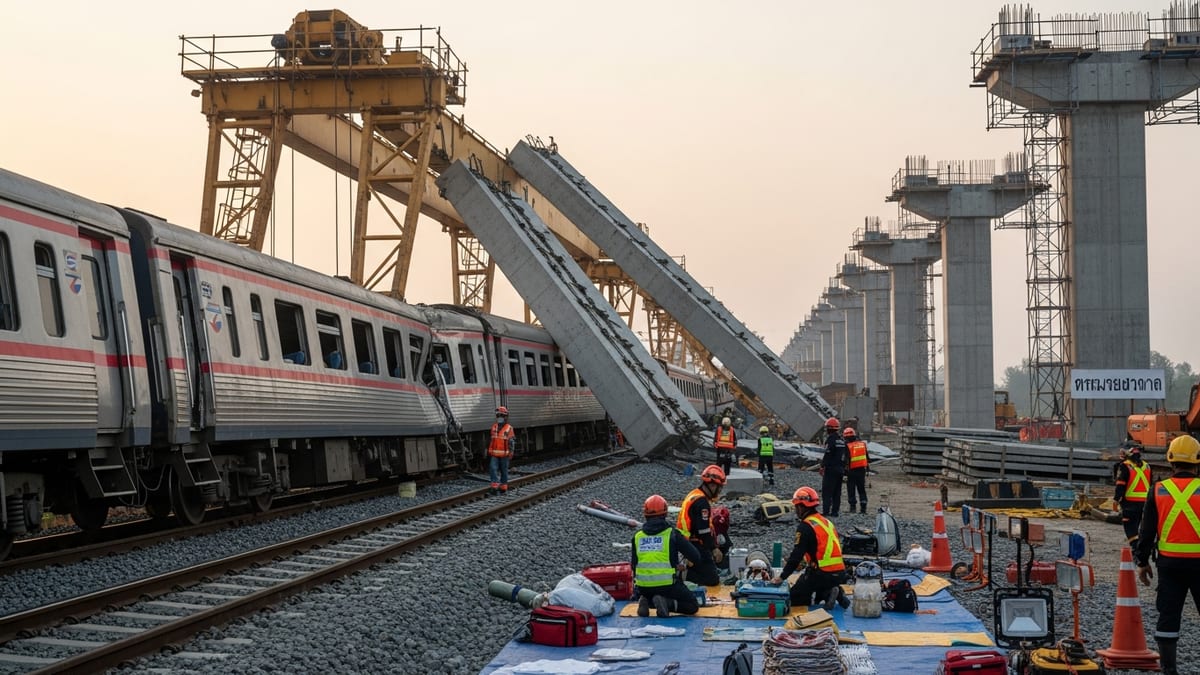
Train Derails on Amarillo Boulevard With No Reported Injuries
Reports from local coverage indicate that the incident occurred on Wednesday, July 1, when a train derailed along Amarillo Boulevard and came to rest across multiple road crossings. Early information describes the train as remaining upright, with several cars off the rails but not overturned, reducing the risk of a more serious crash scene.
According to publicly available information, the Amarillo Fire Department responded to the derailment and reported that there were no injuries connected to the incident. The absence of a fire or apparent hazardous-material leak allowed emergency crews to focus primarily on securing the scene and coordinating with railroad personnel to begin the process of getting the cars back on the tracks.
Published coverage notes that the derailment took place on a stretch of Amarillo Boulevard that carries a steady mix of local and through traffic. The disruption has been described as significant for drivers in the immediate area, even though the incident did not involve a collision with another vehicle.
Key Intersections Closed as Freight Train Blocks Crossings
Public alerts cited in regional media describe several Amarillo Boulevard intersections as affected, including Amarillo Boulevard at Ridgemere Street, Seminole Street and Grand Street. With the train stretched across the roadway, these crossings have been blocked to vehicle traffic while crews assess the scene and plan rerailing operations.
Drivers in north Amarillo have been advised through open reports and traffic updates to avoid the immediate vicinity and seek alternate east–west routes. Nearby arterials and frontage roads are carrying additional traffic as motorists attempt to bypass the blockage, adding to delays during already busy travel periods.
Amarillo Boulevard parallels portions of major freight and highway corridors that connect the Texas Panhandle to regional hubs, so even a localized rail incident can quickly ripple across city streets. Commuters, delivery services and visitors passing through the city are being urged by publicly available guidance to allow extra time and remain alert to changing traffic patterns near railroad crossings.
Response Efforts Focus on Rerailing and Clearing the Corridor
Information released through local news outlets indicates that emergency personnel have secured the area while railroad crews are summoned to move the derailed cars. Specialized equipment and teams are typically required to lift or nudge heavy railcars back onto the tracks, a process that can take several hours depending on the extent of the derailment and the weight of the equipment involved.
Reports suggest that the current priority is restoring the rail line and reopening Amarillo Boulevard as soon as conditions are considered safe. With no reported injuries and no publicly indicated hazardous-material release, the operation centers on mechanical recovery rather than complex environmental cleanup.
Travelers may continue to see work lights, heavy trucks and cranes positioned near the tracks as the recovery proceeds. Law enforcement and fire crews are expected, based on standard practice, to maintain a perimeter around the site while the rail company conducts inspections and ensures the line is stable before normal operations and road traffic resume.
Disruption Highlights Role of Amarillo Boulevard in Local Mobility
The derailment underscores the importance of Amarillo Boulevard as a daily link for residents and commercial traffic on the north side of the city. The corridor carries a steady stream of passenger vehicles, freight trucks and local business traffic connecting neighborhoods, industrial areas and highway access points.
Transportation commentary about Amarillo often points to the city’s dependence on road travel and limited redundancy for crossing major rail lines. When a freight train blocks multiple intersections, drivers sometimes have few convenient alternatives and are forced to make long detours or cut through residential streets, which increases congestion and complicates navigation for visitors.
In recent years, state and local transportation agencies have highlighted Amarillo Boulevard and nearby interstate connections as critical parts of the region’s freight network. The current disruption illustrates how rail operations and road mobility intersect in communities that serve as hubs for long-distance trucking and train traffic.
Advice for Drivers and Travelers in North Amarillo
Publicly available information encourages drivers to avoid attempting to navigate around rail barriers or stopped trains, even when delays appear lengthy. Safety campaigns across Texas emphasize that motorists should never drive around crossing arms or attempt to squeeze between railcars, both of which can result in serious injury.
Travelers moving through Amarillo, including those following historic Route 66 segments or connecting between Interstate 40 and local attractions, may encounter congestion or detours near the affected stretch of Amarillo Boulevard. Using alternate arterial roads away from the rail line and watching for posted detour signs can help minimize delays.
Residents and visitors are encouraged to monitor regional traffic and news updates for notice that the tracks and roadway have fully reopened. Until crews complete rerailing operations and inspections, the blocked crossings on Amarillo Boulevard are expected to remain a temporary choke point on the city’s north side.