


More news on this day
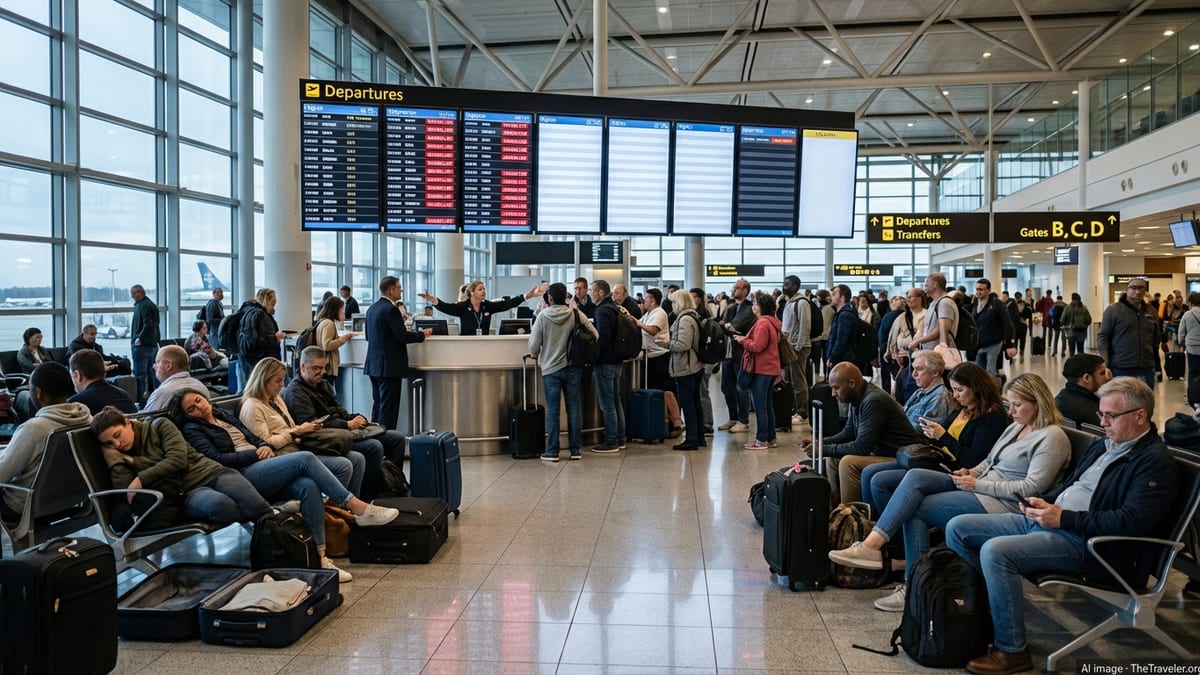
Travelers heading to and through Washington, D.C., for America’s 250th birthday are being urged to brace for uncommon July 4 disruption, as sweeping airspace restrictions tied to military flyovers and a record-breaking fireworks display shut down flights at Ronald Reagan Washington National Airport for much of the holiday.
Get the latest news straight to your inbox!
Historic Semiquincentennial Drives Rare D.C. Airspace Lockdown
The United States marks its 250th anniversary on July 4, 2026, and federal planning documents describe an exceptionally dense program of commemorations centered on the capital. The celebration, framed nationally as part of the America 250 observances, includes extended military aviation displays and what event organizers describe as one of the largest coordinated fireworks shows ever staged over Washington.
To create a clear safety buffer for those activities, federal flight notices and graphic depictions published by aviation authorities show a temporary flight restriction over the Washington region on July 4, with additional security measures in the already controlled Special Flight Rules Area that surrounds the capital. The restrictions are designed to keep commercial, private and drone traffic away from the choreographed military formations and high-altitude pyrotechnics planned over the National Mall and Potomac River.
Publicly available information on Semiquincentennial planning indicates that Washington has been positioned as the symbolic focal point of the anniversary year, concentrating ceremonial flyovers, concerts and fireworks in a compact airspace that is normally among the most tightly regulated in the country. Aviation advisories emphasize that this year’s security footprint goes beyond the familiar Independence Day precautions seen in previous years.
Reagan National Flights Halting at Midday on July 4
The most visible impact for travelers is at Reagan National, the riverfront airport just south of downtown Washington that sits directly beneath the planned flight paths for military aircraft and fireworks staging. According to coverage of announcements from the Metropolitan Washington Airports Authority, no commercial flights are scheduled to operate at Reagan National after 12 p.m. Eastern on Saturday, July 4.
Reports indicate that the shutdown is part of roughly 15 hours of cumulative airspace closures at Reagan National across July 3 and July 4. The pauses are timed around rehearsal windows and the main flyover and fireworks program, and follow coordination between airports, airlines and federal air traffic managers. Airlines serving Reagan National have adjusted schedules in advance, moving or canceling departures that would otherwise have fallen during the restricted period.
Information shared by local media and traveler alerts notes that passengers booked to, from or through Reagan National on the holiday weekend may see itinerary changes, including reroutes to Washington Dulles International or Baltimore/Washington International. Some carriers have issued limited travel waivers tied specifically to the America 250 airspace restrictions, allowing affected customers to rebook without change fees within a defined window around July 4.
Airport guidance stresses that while runways will be quiet for much of the afternoon and evening on July 4, terminal facilities, concessions and parking will remain open. Travelers caught by long layovers during the closure will be able to stay inside the building, but they will not be able to board flights until the restrictions are lifted and operations resume early on July 5.
Tight Security, Crowds and Extreme Heat on the Ground
On the ground, Washington is preparing for a convergence of heavy crowds, intense security and dangerous heat during the anniversary weekend. City and federal event planners have released maps showing fenced viewing zones, secure entry points and river closures around the National Mall, with screening that local television coverage has likened to Transportation Security Administration checkpoints.
District agencies are warning that record visitor numbers, forecast triple-digit temperatures and the late-night timing of the fireworks could combine to strain transportation and public safety systems. Weather outlooks from regional forecasters describe a prolonged heatwave over the Washington metropolitan area leading into the holiday, increasing the risk of heat-related illness for spectators waiting for flyovers and fireworks.
Environmental reporting has also highlighted air quality risks. Internal analyses obtained by national media outlets suggest that the unprecedented volume of fireworks planned for the National Mall could briefly push particulate levels into hazardous ranges in central Washington on the night of July 4. Health experts consulted in those reports recommend that people with asthma or cardiovascular conditions consider watching from indoors or using masks if they remain in dense smoke plumes after the show.
Local transportation briefings indicate that major road closures will affect bridges, the Mall and surrounding neighborhoods for much of the day, and that public transit schedules are being modified to accommodate late-night crowds leaving the event. Visitors are being encouraged to rely on rail and to plan for long walks between stations, security checkpoints and viewing areas.
Nationwide Effects: Reroutes, Delays and General Aviation Limits
While the most dramatic changes are centered on Washington, the airspace precautions for America’s 250th birthday are producing wider ripples across the national aviation system. Industry notices and airline communications describe schedule adjustments by major carriers that rely on Reagan National as a hub or focus city, affecting connections for travelers far beyond the capital region.
Operational planning shared in industry forums indicates that airlines have shifted some traffic to Dulles and Baltimore/Washington to preserve connectivity, particularly for travelers with tight onward connections. Crews and aircraft normally cycling through Reagan National on the afternoon of July 4 are being repositioned, which could slightly tighten equipment availability on other routes that day.
General aviation pilots are also being affected. Flight advisories and notices to air missions outline strict operating limitations for noncommercial aircraft in and around the Washington Special Flight Rules Area during the Semiquincentennial events. The guidance reinforces long-standing bans on recreational drone flights anywhere near the capital, and warns that temporary displays and demonstration flights in other regions of the country could prompt localized restrictions on July 4 as communities stage their own anniversary flyovers and fireworks.
Aviation commentators note that July 4 can already be a challenging day for flying because of thunderstorm risks, heavy leisure demand and pop-up local airspace closures for fireworks. This year’s layered restrictions, centered on the symbolic celebrations in the nation’s capital, are prompting some pilots and passengers to avoid same-day travel in favor of earlier or later departures.
What Travelers Should Do Now
Travel and consumer reports consistently advise anyone with July 3 or July 4 itineraries involving Washington to verify flight status directly with their airline and to check for any flexibility policies that may apply to their ticket. Same guidance suggests focusing in particular on connections that route through Reagan National between midday Saturday and early Sunday morning, when the most significant disruptions are expected.
Passengers holding nonrefundable tickets are being urged to review the fine print on schedule change thresholds that qualify for complimentary rebooking or refunds. In some cases, even modest schedule shifts prompted by airspace closures can unlock options to move to an earlier or later flight without added cost.
Travel planners recommend building in additional time to reach the airport, especially for morning departures from Reagan National on July 4, when road closures and security perimeters related to Mall events may lengthen normal drive times. Those staying in the city for the festivities are also being encouraged to monitor local advisories on heat, air quality and crowd management throughout the day.
With the United States preparing to mark a once-in-a-lifetime milestone, this year’s Independence Day in Washington is expected to look and feel different both in the sky and on the ground. For travelers, staying informed and flexible will be the key to navigating an unusually constrained Fourth of July travel landscape.