


More news on this day
Seattle-Tacoma International Airport is preparing for one of the 10 busiest days in its history as Fourth of July vacationers, cruise passengers and World Cup fans converge on the region, creating the potential for long lines and cascading delays across the holiday period.
Get the latest news straight to your inbox!
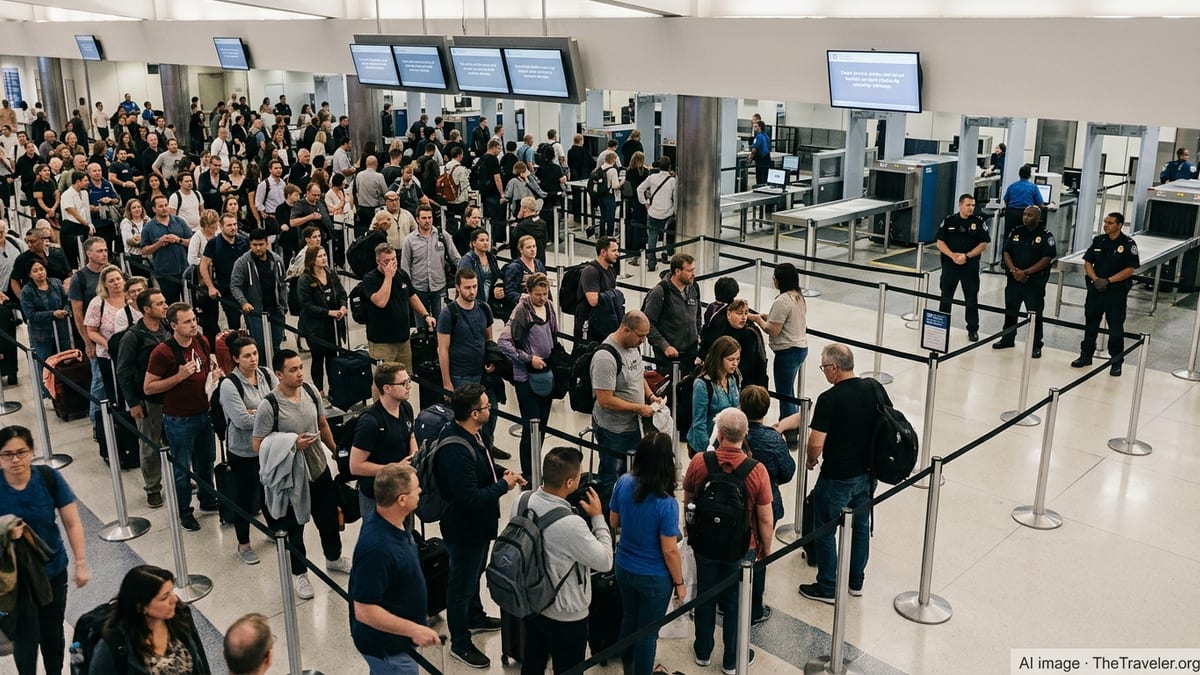
Holiday surge pushes Sea-Tac toward historic volumes
Recent coverage of travel forecasts for the Independence Day period indicates that Sea-Tac is on track for among its heaviest days on record, with airport statistics showing average summer traffic of more than 175,000 passengers per day in June, July and August. That level of volume places the airport firmly among the top 10 busiest hubs in the United States, and the coming holiday peak is expected to push daily passenger counts well beyond the seasonal average.
The July 4 weekend this year coincides with major sporting events, including World Cup fixtures in North America, which are drawing additional visitors through Seattle. Cruise season is also in full swing, with ships embarking to Alaska from the city’s waterfront. Publicly available data shows that summer cruise departures can add thousands of same-day flyers as passengers connect through Sea-Tac before or after their voyages, compounding demand on an already tight schedule.
Nationally, federal aviation data points to record-breaking traffic across the U.S. air system since 2024, and summer 2026 is following a similar trajectory. Sea-Tac’s own records in recent years show that several of its highest-volume screening days have occurred in June, July and August, underscoring how vulnerable the airport is to bottlenecks when any disruption collides with peak demand.
When the airport is busiest and who is most at risk
Travel guidance specific to Seattle-Tacoma International Airport indicates that passenger volumes spike between 4 a.m. and 2 p.m., with the most intense pressure on security checkpoints from about 5 a.m. through midday. Thursdays and Fridays are typically the busiest days of the week, followed closely by Sundays, which means this year’s Friday holiday start lands squarely in the airport’s most congested window.
Early-morning bank departures, dense schedules to West Coast and Mountain West destinations, and a wave of cross-country flights all converge during those hours. Travelers with flights departing between 6 a.m. and 11 a.m. face the highest risk that modest slowdowns at check-in, bag drop or security will snowball into missed departures. Families traveling with children, large groups and passengers checking multiple bags are especially exposed, since they move more slowly through each step.
Even outside the daily peak, Sea-Tac operates at high utilization. Analyses of on-time performance rank the airport among the busiest in the country by daily departing passengers, with average security waits that are not the worst nationally but still significant at roughly the mid-20-minute mark during heavy periods. With aircraft and gates scheduled tightly, gate holds, late inbound aircraft and ground congestion can all ripple through the system more quickly when the terminal is close to capacity.
Timing strategies to cut your risk of delays
For travelers who have not yet booked, the single most effective step to reduce delay risk is to select the earliest reasonable departure of the day. Industry data across major U.S. hubs shows that morning flights are more likely to leave on time because aircraft and crews begin the day where they are scheduled, and thunderstorms and traffic constraints have not yet built up across the network. At Sea-Tac, flights leaving before 9 a.m. often depart in smoother conditions than those later in the afternoon or evening.
For those with fixed tickets, adjusting arrival time at the airport can still ease pressure. Current recommendations for Sea-Tac call for arriving at least two hours before domestic flights and three hours before international departures, but during this holiday peak, travelers on morning and midday flights may wish to pad that by an additional 30 to 60 minutes. That buffer is particularly important for anyone checking bags, renting or returning a car, or relying on shuttle buses from off-site parking.
Travelers with flexibility in travel dates may also benefit from avoiding the single peak day altogether. Shifting outbound trips to very early on the holiday itself, or to the preceding midweek day when possible, can mean dealing with shorter security lines and less congested road approaches. Return trips that avoid the main Sunday and Monday rush after the long weekend may encounter fewer delays and better seat availability.
Using programs and tech to move faster
Security pre-screening programs remain one of the most effective tools for reducing the time spent in line. TSA PreCheck and CLEAR both operate at Sea-Tac, and while they do not eliminate waits entirely on peak days, data on average processing times consistently shows that they tend to move faster and more consistently than standard lanes. Travelers who already hold these memberships should confirm which checkpoints support them and follow airport signage to the correct queues.
Sea-Tac also offers a virtual queue system, branded locally for reserving a spot in the general screening line during daytime hours. By securing a timeslot in advance, travelers can bypass some of the most congested portions of the queue and arrive closer to their screening window, which is particularly useful for those without PreCheck or CLEAR. Capacity for these reservations can fill quickly on busy days, so checking availability as soon as travel times are set can make a meaningful difference.
Apps and online tools provide another layer of protection. The Transportation Security Administration, the Federal Aviation Administration and various third-party tracking services publish real-time or near real-time information on checkpoint waits and traffic management initiatives. Monitoring these tools on the way to the airport can alert travelers to emerging delays, allowing them to leave earlier, change their route to the terminal or contact airlines proactively if it appears they may miss a connection.
Ground transport, baggage choices and terminal tactics
Congestion at Sea-Tac often begins long before travelers reach the ticket counters. Local reports and traveler accounts highlight recurring bottlenecks on the airport drives when drivers stop to load or unload in through lanes, blocking the flow of traffic. To avoid getting stuck outside the terminal, travelers are encouraged to use designated loading zones as quickly as possible and consider alternate drop-off points, including using the arrivals level for departures when permitted and directed by posted instructions.
Light rail and scheduled bus services offer an important hedge against roadway backups. By bypassing curbside traffic entirely, rail passengers often arrive at the terminal in a more predictable timeframe even when highways are snarled. For those who must drive, pre-booking off-site parking and allowing extra time for shuttle transfers can reduce last-minute stress.
Baggage decisions also play a direct role in delay exposure. Travel experts consistently note that flying with only carry-on luggage, when feasible, eliminates the risk of check-in queues and reduces the time spent waiting at crowded carousels on arrival. Where checked bags are unavoidable, using airline mobile apps or kiosks to check in before reaching the counter can speed the process. Securing essentials such as medications, a change of clothes and important documents in a carry-on can soften the impact of a delayed or misplaced bag.
Once inside the terminal, passengers can further protect their itineraries by moving directly to security rather than lingering at curbside or check-in. After clearing screening, locating the gate early, checking for any last-minute changes, filling water bottles and buying food for inflight consumption all help minimize the need to move around crowded concourses just as boarding begins. In a summer when Sea-Tac is brushing up against its busiest days on record, those small tactical choices may be the difference between a smooth start to vacation and an unplanned night in the terminal.