


More news on this day
Germany’s state-owned rail operator Deutsche Bahn is contesting recent findings by the Federal Audit Office that question its investment priorities, mounting debt and expansion abroad, arguing that its current strategy remains compatible with national transport and rail reform objectives.
Get the latest news straight to your inbox!
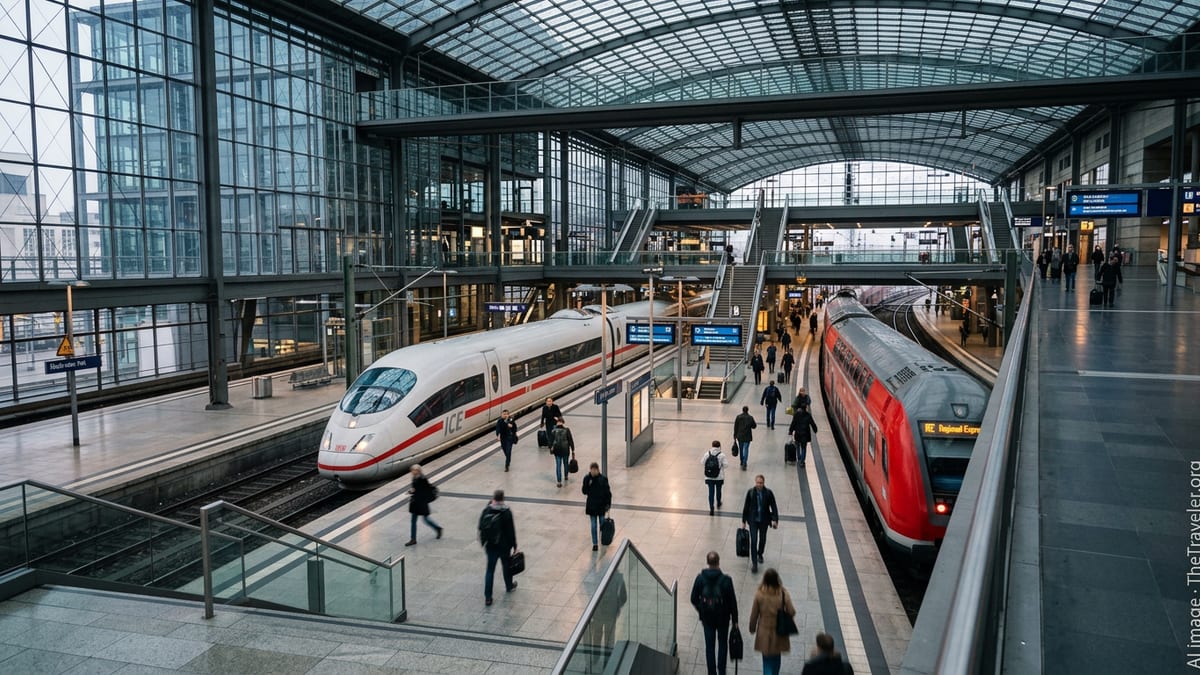
Audit Office raises concerns over debt and investment focus
Recent reporting on a new assessment by Germany’s Federal Audit Office describes significant concerns about Deutsche Bahn’s financial stability and investment focus. The watchdog highlights the rail group’s rising debt levels and questions whether the company’s mix of domestic infrastructure spending and international ventures can deliver the capacity and reliability targets set by the German government.
According to publicly available summaries of the report, the Audit Office points to a growing mismatch between the funds required to modernize and expand the German rail network and the resources available within Deutsche Bahn’s balance sheet. The critique frames the company’s current trajectory as creating potential long term risks for taxpayers, given the federal government’s role as sole shareholder and the centrality of rail to national climate and mobility goals.
The assessment also revisits longstanding questions about the pace at which infrastructure projects are delivered. Reports indicate that auditors see delays, cost overruns and complex project structures as weakening the overall impact of record investment programs. In that context, the Audit Office casts doubt on whether Deutsche Bahn’s current strategic orientation can achieve the expected improvements in punctuality and capacity.
Beyond pure balance sheet metrics, the document reportedly calls for clearer transparency on how funds flow between the core rail infrastructure business, passenger and freight operations, and foreign subsidiaries. This level of scrutiny reflects broader political debates in Germany about whether a more tightly focused rail group would deliver better outcomes for both passengers and public finances.
Deutsche Bahn insists strategy aligns with rail reform goals
Deutsche Bahn has moved quickly to reject the key conclusions drawn by the Audit Office. Company statements summarized in German and international business coverage emphasize that the rail operator views its investment and financing strategy as not only sustainable, but essential for achieving Germany’s transport transition and climate targets.
Publicly available information from the company stresses that rising debt is closely linked to unprecedented levels of capital expenditure on tracks, signalling technology and rolling stock. Deutsche Bahn frames these outlays as long term, generational investments that cannot be judged solely against short term financial indicators. The group argues that pausing or scaling back projects would jeopardize efforts to shift traffic from road to rail and would ultimately create higher costs for the economy.
On the question of strategic focus, Deutsche Bahn maintains that its network, passenger, freight and logistics activities complement one another. The company’s position, as reflected in recent statements, is that these combined operations create synergies for customers and support Germany’s role in European freight corridors, rather than draining resources away from the domestic rail network.
The rail operator also disputes suggestions that its corporate structure stands in the way of rail reform. It points to ongoing initiatives to reorganize infrastructure activities, tighten governance and increase transparency around how funds are used. From the company’s perspective, these efforts demonstrate that it is already responding to political and regulatory expectations without the need for more radical restructuring.
Implications for travelers amid network upgrades
For travelers, the disagreement between Deutsche Bahn and the Audit Office comes at a time when the German rail network is undergoing extensive works that directly affect day to day journeys. Major corridors are subject to prolonged construction phases intended to renew aging infrastructure, expand capacity and prepare the system for more frequent services on both national and cross border routes.
These upgrades have led to timetable changes, temporary speed restrictions and, in some cases, replacement bus services on routes that are important for domestic and international tourism. Travel industry observers note that the scale of works can create short term inconvenience for passengers, but is viewed by many policy specialists as necessary if the network is to handle higher volumes of long distance and regional traffic in future years.
The Audit Office’s focus on costs and debt speaks directly to the sustainability of this investment phase, while Deutsche Bahn’s response centers on maintaining the momentum of the modernization push. For visitors planning trips through Germany, the debate highlights the structural challenges involved in keeping a dense rail system running reliably while large parts of it are being renewed.
Reports from transport analysts suggest that travelers can expect periods of disruption on key lines to continue as so called corridor refurbishments progress. At the same time, some upgraded sections are already delivering more reliable services, improved accessibility at stations and better connections to airports and neighboring countries, which are seen as important benefits for tourism flows.
Political and European context of the disagreement
The clash between Deutsche Bahn and the Federal Audit Office sits within a wider political conversation in Germany about the role of state owned enterprises and the structure of the rail sector. Parliamentary debates in recent years have included proposals ranging from tighter separation of infrastructure and operations to more fundamental changes in ownership models, all intended to improve performance and accountability.
According to coverage in national media, the Audit Office’s findings are likely to feed into this discussion by providing fresh material for critics who argue that Deutsche Bahn is too complex and financially stretched to deliver on its mandate. Conversely, the company’s forceful rejection of the conclusions underscores its determination to retain a broad integrated model that spans domestic passenger rail, freight and international logistics.
The European context is also significant. Germany’s network is a central artery for cross border passenger and freight movements within the European Union, and European rail liberalization rules encourage competition and interoperability. Any changes in Deutsche Bahn’s structure or investment capacity could have knock on effects for international services that link major hubs such as Paris, Amsterdam, Zurich, Vienna and destinations beyond.
Observers of European transport policy point out that national debates about state backed rail companies increasingly overlap with EU level goals to grow rail’s share of long distance travel. In this environment, the outcome of discussions around Deutsche Bahn’s finances and strategic orientation may influence not only the company’s future, but also the shape of rail travel options across central Europe.
What travelers should watch in the months ahead
In the near term, the dispute over the Audit Office report is expected to translate into further political scrutiny of Deutsche Bahn’s investment plans and debt trajectory. Parliamentary committees and transport policy forums are likely to examine how far the company’s current strategy can be reconciled with fiscal constraints and competing demands on public funds.
For travelers, key indicators to watch include the publication of revised timetables, announcements of new long distance or overnight services, and updates on major corridor refurbishment projects. These developments will signal whether modernization efforts are continuing at the planned pace or being adjusted in response to the financial debate.
Travel industry analysts suggest that passengers planning multi country rail journeys through Germany may wish to pay particular attention to seasonal construction schedules and network capacity forecasts. These factors can affect journey times, recommended connections and the reliability of services linking popular city break destinations and tourist regions.
Over a longer horizon, decisions about Deutsche Bahn’s financial framework and corporate structure could shape the competitiveness and appeal of rail as a mode of travel within Germany and across Europe. While the current disagreement centers on technical questions of debt, investment and governance, its eventual resolution is expected to have tangible consequences for how smoothly and extensively travelers can move around one of the continent’s most important rail hubs.