


More news on this day
As global travel rebounds and itineraries grow more complex, passengers flying with Turkish Airlines are increasingly focused on how to reach the carrier quickly when plans go wrong, from missed connections to last-minute schedule changes.
Get the latest news straight to your inbox!
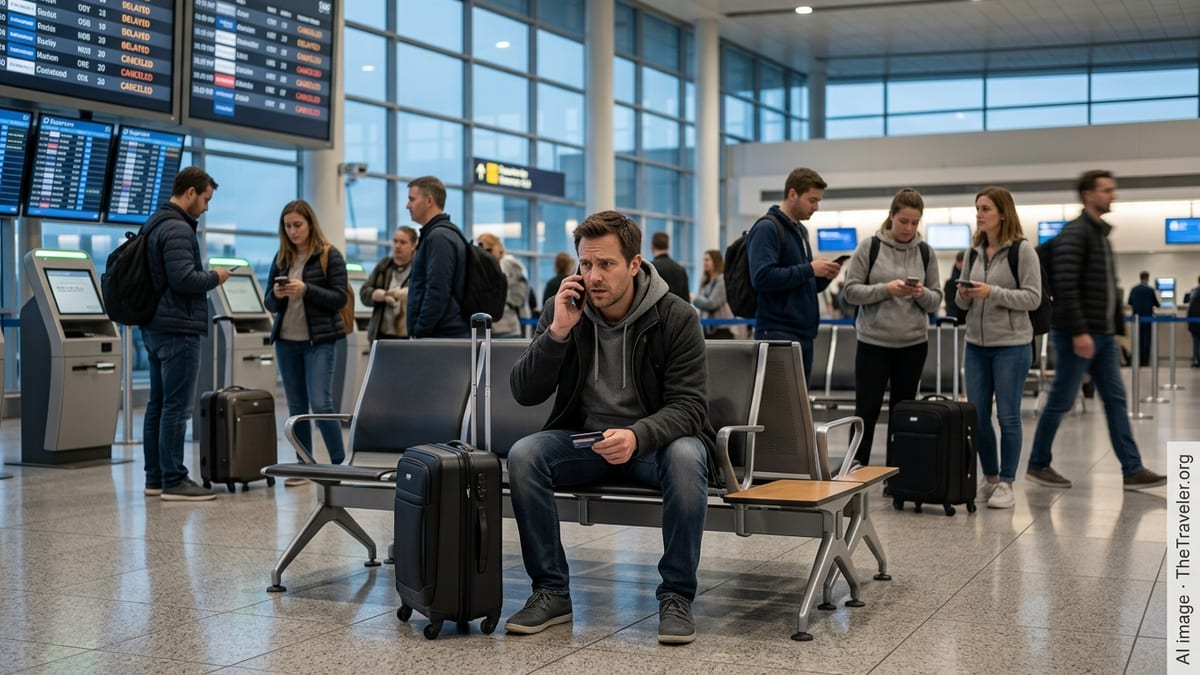
Call Centers Remain the Primary Emergency Lifeline
For urgent situations such as same-day flight disruptions, missed connections or last-minute itinerary changes, publicly available information indicates that Turkish Airlines still relies heavily on its global network of call centers. The airline lists central contact details through its “Get in Touch” pages, including a main switchboard at its Istanbul headquarters alongside local call center numbers in key markets.
Travel industry guidance and recent consumer reports suggest that calling a local or regional Turkish Airlines number can often result in shorter wait times than phoning the main line in Türkiye. Travelers seeking rebooking during irregular operations or severe weather are increasingly advised to try multiple country numbers where possible, particularly outside peak business hours in Europe and the Middle East.
Turkish Airlines contact pages emphasize that customer feedback and service requests are handled across multiple channels, but phone support continues to be presented as the most direct option for time-sensitive cases. For long-haul itineraries involving tight connections through Istanbul, agents reached by phone are generally the first to process rebooking, issue new tickets or confirm last available seats.
Consumer feedback shared in public forums highlights mixed experiences with call wait times, particularly during major disruption events. However, passengers who successfully reached agents by phone often report that complex changes, such as rerouting multi-city tickets or resolving no-show status, were resolved more quickly by voice than via digital self-service tools alone.
Smart Travel Assistant and WhatsApp Chat Expand Digital Support
In parallel with traditional call centers, Turkish Airlines has been promoting its smart travel assistant, which can be accessed through messaging platforms including WhatsApp. The airline’s own “Get in Touch” information points passengers toward this assistant for common questions about bookings, baggage, and travel rules, positioning it as a first layer of support that can operate continuously.
Travelers describe the experience as starting with an automated chatbot that can recognize booking references, answer basic questions, and surface options such as checking flight status or reviewing fare rules. In some cases, users report that structured prompts in the assistant can lead to a transfer from automated responses to a human agent in the same chat environment, particularly when an issue cannot be resolved by standard scripts.
Recent accounts from passengers indicate that WhatsApp and similar messaging channels have become an increasingly popular fallback when phone lines are congested. Some travelers say the assistant has been able to correct minor issues such as name spelling errors within certain limits, verify ticket status, or confirm whether a reservation has been properly ticketed after payment.
At the same time, many reports stress that more complex problems, including involuntary schedule changes, multi-passenger itinerary disruptions, or refund disputes, still tend to be escalated back to call centers or formal feedback channels. For that reason, messaging-based tools are seen as a useful complement, rather than a full replacement, for direct voice contact in emergencies.
Website, Help Center and Feedback Forms for Documentation
Turkish Airlines directs passengers with non-urgent issues to its online Help Center, where detailed articles cover topics such as baggage rules, special assistance, ticket changes, and travel policies. For travelers with imminent departures, these pages can help clarify what options exist before contacting a live representative, making any later interaction more efficient.
The carrier also puts emphasis on a structured feedback and complaint management process. Publicly available policy statements describe a model focused on transparency, accessibility and prompt responses, with feedback submitted through online forms that route to specialized teams. Passengers who have used these forms report that they can be effective for post-travel claims, written documentation of disputes, or follow-up on unresolved service issues.
However, for truly time-critical matters such as same-day cancellations, missed connections or errors discovered just before check-in closes, travel advisers note that online forms are generally too slow to rely on alone. Instead, passengers are encouraged to use the feedback system alongside other channels, particularly when they want a written record of what has been requested or promised by customer service.
In practice, many passengers now combine self-service tools on the website with more immediate channels. For example, travelers may first verify fare conditions and change penalties online, then call a regional number armed with that information, which can shorten call handling times and reduce the risk of misunderstandings.
Mobile App, Airport Desks and Social Media as Parallel Channels
Turkish Airlines continues to update its mobile application, which allows travelers to manage bookings, check in, change some flights, purchase ancillary services and access boarding passes. Recent app descriptions highlight ongoing improvements and indicate that the app can also serve as a gateway to customer support options, including call and chat functions that are particularly useful when a traveler is already on the move.
At airports, traditional service desks and ticket counters remain important for travelers facing disruptions close to departure time. Reports from major hubs suggest that transfer desks in Istanbul and local offices at large international airports can sometimes resolve rebookings and missed connections more quickly than remote call centers, especially when staff can see current gate information and seat maps in real time.
Social media is another significant component of Turkish Airlines’ customer outreach. The airline promotes its presence on platforms such as Facebook, X, Instagram and others as a way to share updates, marketing campaigns and operational notices. It also operates branded customer-support handles on X that respond publicly and via direct messages to questions and complaints throughout the day, positioning these channels as a 24/7 contact option.
Consumer advocates, however, caution travelers to verify that they are engaging only with officially verified accounts, particularly on platforms where brand impersonation is known to occur. Recent online discussions have highlighted the risk of lookalike profiles posing as airline support teams. Passengers are advised to cross-check account details through official airline pages and to avoid sharing payment information or full booking codes in public replies or with unverified profiles.
Eight Core Routes to Quick Response for Turkish Airlines Passengers
As Turkish Airlines broadens its communication channels, travel experts now tend to group the fastest options for urgent help into eight core routes. First are the international call centers and local country numbers, which remain the main path for live-agent intervention in emergencies such as missed flights or cascading delays.
Second is the WhatsApp-based smart travel assistant, which can address routine questions and sometimes route complex issues to human agents in chat. Third, passengers rely increasingly on the airline’s mobile app, using it both for self-service changes and as a direct bridge to help lines. Fourth, airport ticket and transfer desks at hubs such as Istanbul and key international gateways continue to provide on-the-spot solutions when travelers are already in transit.
Fifth and sixth are the official social media support accounts and the broader Help Center pages, which together deliver both quick outreach and detailed policy explanations. Seventh is the structured feedback form system, intended for formal complaints, claims and documentation that may follow an urgent incident. Finally, some passengers still turn to local sales offices or city ticket offices where available, particularly when they need assistance with complex itineraries or travel documents that benefit from face-to-face review.
For travelers trying to secure a rapid response during peak travel periods, current public guidance emphasizes using several of these channels simultaneously. By combining phone calls, digital messaging, app tools and in-person assistance where possible, passengers increase the chances of reaching an agent with the authority and information needed to resolve urgent Turkish Airlines travel problems in time.