


More news on this day
Asian and Middle Eastern carriers are tightening their grip on the skies, with new global rankings of the world’s best airlines showing passenger favorites clustered across hubs from Singapore and Doha to Tokyo and Hong Kong.
Get the latest news straight to your inbox!
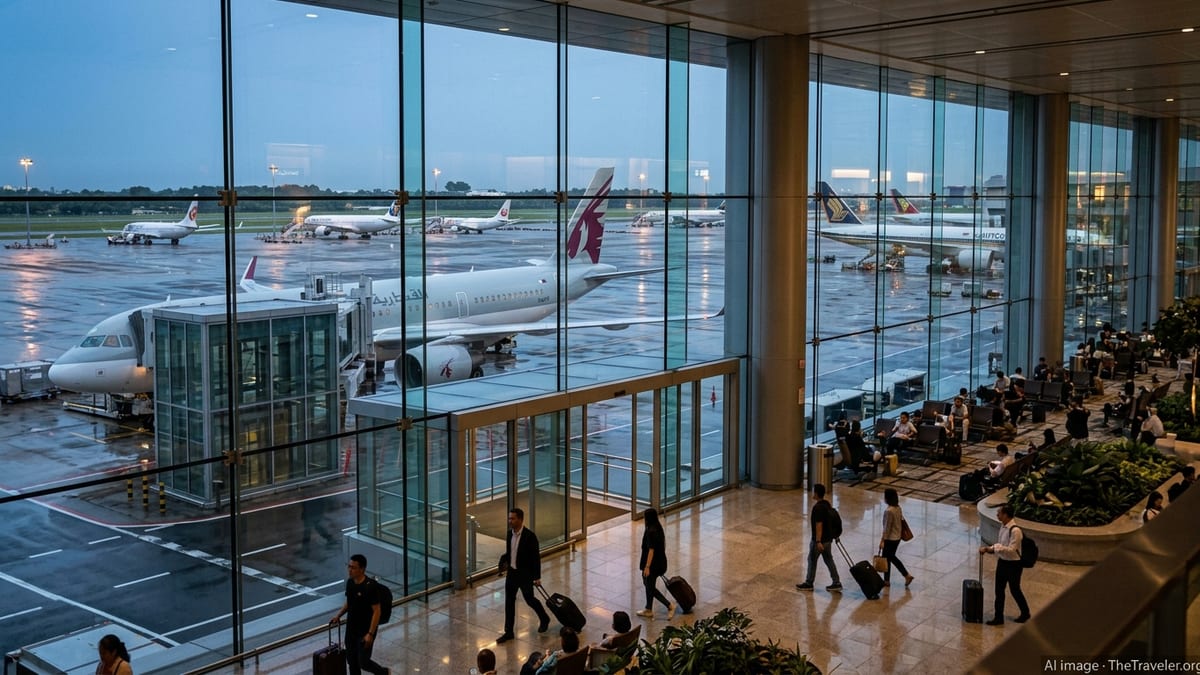
Singapore, Qatar and ANA lead a reshaped global top tier
Recent league tables compiled from flyer-focused awards and review-based assessments point to a clear shift in aviation’s center of gravity toward Asia and the Gulf. Singapore Airlines and Qatar Airways continue to trade places at or near the top of major global rankings that blend passenger satisfaction with independent safety and product evaluations.
According to published coverage of the latest Skytrax World Airline Awards and analyses by aviation rating sites, Singapore Airlines has retained a leading position on the strength of its long-haul comfort, cabin service and premium cabins, while Qatar Airways is frequently cited for its business-class suites, network breadth and consistently high customer scores. All Nippon Airways (ANA) also remains firmly embedded in the global top tier, reflecting Japan’s strong reputation for on-time performance and meticulous in-flight service.
Reports summarizing the newest lists show that when travelers are asked to rate their experiences across comfort, crew, cleanliness and consistency, these three carriers repeatedly emerge as benchmarks for the industry. Their dominance is mirrored in independent safety and product audits, which typically place them at or near the top for fleet age, innovation and cabin quality.
This alignment between flyer sentiment and professional assessment underscores how much investment in on-board product, digital tools and training has concentrated in Asian and Gulf hubs over the past decade. For travelers choosing long-haul routes in 2024, the odds are high that an airline regarded as “best in the world” will be based in Singapore, Doha or Tokyo.
Asian brands crowd the global top 10
Beyond the headline battle between Singapore Airlines and Qatar Airways, the latest rankings reveal that Asian carriers now occupy most of the coveted top 10 positions. Published lists combining Skytrax results and other international ratings consistently feature ANA, Japan Airlines, Cathay Pacific and EVA Air among the world’s leading airlines, with several more Asian brands not far behind.
These carriers are credited in industry coverage with delivering relatively generous legroom in economy cabins by global standards, strong premium economy offerings and competitive business-class products on key intercontinental routes. Many also maintain strong reputations for cabin cleanliness and attentive service, areas that have become more important to travelers in the wake of the pandemic.
In North Asia, ANA and Japan Airlines are frequently highlighted for their punctuality records and refined service standards, while Taiwan’s EVA Air appears regularly in the top tier for long-haul comfort and premium economy. In Southeast Asia, Singapore Airlines and Cathay Pacific are joined by a growing cohort of regional competitors that aim to emulate their mix of reliable operations and polished onboard experience.
Industry observers note that these airlines have treated cabin upgrades, fleet renewal and staff training as long-term strategic investments, not short-term marketing tools. As a result, when passengers vote in large numbers or when review aggregators crunch satisfaction scores, Asian carriers are often rewarded with multiple appearances near the top of the charts.
Middle Eastern hubs remain central to long-haul travel
Middle Eastern airlines also retain a prominent place in the latest global rankings, reinforcing the region’s role as a key connector between Asia, Europe and the Americas. Reports on the 2024 awards results highlight Qatar Airways and Emirates among the world’s highest-rated airlines, with Etihad Airways often appearing just behind them.
These Gulf carriers operate some of the youngest widebody fleets in the world, and publicly available assessments emphasize their extensive global networks, large-scale investment in premium cabins and focus on hub-airport connectivity. Business and first-class travelers, in particular, have driven strong ratings for lie-flat seats, dedicated lounges and service consistency across long-haul routes.
While the current passenger-voted rankings show Asian airlines as the most numerous in the global top 10, the Gulf carriers’ presence ensures that the upper ranks remain geographically diverse. For many flyers connecting between continents, a one-stop itinerary through Doha or Dubai with a top-rated airline continues to be a popular choice, often competing directly with trans-Asian or trans-European routings.
The continued strength of these Middle Eastern airlines in passenger surveys also reflects how competition on long-haul trunk routes is pushing up standards globally. Carriers across Europe, North America and Asia have been compelled to refresh cabins and service concepts to keep pace with the high bar set in Doha, Dubai, Abu Dhabi and beyond.
European and North American airlines lag but still feature
Although Asian and Middle Eastern carriers dominate the newest world rankings, a handful of European and North American airlines still feature in the upper tiers, especially within the top 25. According to recent summaries of AirlineRatings.com and Skytrax results, European brands such as Air France, KLM, Turkish Airlines, Finnair and Lufthansa appear regularly in the higher ranks, often recognized for specific strengths like long-haul comfort, connectivity or premium cabins.
In North America, the picture is more mixed. Publications reviewing the latest data indicate that Air Canada tends to perform best among the region’s full-service airlines in global lists, with some U.S. carriers including Delta Air Lines occasionally appearing in extended rankings. Passenger feedback, however, continues to highlight variability in service levels, cabin products and punctuality across the continent’s large legacy networks.
Observers point out that many European and North American airlines are in the midst of multi-year renewal programs, replacing older widebody aircraft and overhauling cabins to introduce newer business-class seats, improved inflight entertainment and better connectivity. These investments may take time to translate into higher rankings, especially when compared with Asian competitors that already operate large fleets of modern twin-engine jets.
Nevertheless, for travelers based in Europe and North America, the inclusion of familiar flag carriers in the top 25 signals that service gaps are narrowing in some areas, particularly on key transatlantic and transpacific routes where competition from leading Asian and Gulf airlines is most intense.
What traveler-focused rankings measure – and why they matter
The latest global airline rankings are compiled using a mix of large-scale passenger surveys, online review analysis and independent assessments of safety and product standards. Skytrax’s World Airline Awards rely principally on traveler surveys covering aspects such as cabin comfort, crew friendliness, cleanliness and inflight entertainment, while review-aggregation and safety-focused sites like AirlineRatings.com blend passenger feedback with operational and safety metrics.
Published explanations of the methodology highlight factors such as fleet age, innovation, route network and cabin upgrades alongside direct traveler satisfaction. Airlines that invest heavily in new aircraft, modern interiors and staff training tend to score strongly across these criteria, which helps explain the consistent presence of Asian and Gulf carriers near the top of the tables.
For passengers, these rankings are not definitive verdicts but useful indicators of what to expect on board. Travel industry analysts emphasize that individual routes, aircraft types and crews can significantly influence personal experience, even on highly rated airlines. However, when multiple independent rankings align in placing the same carriers at or near the top, it suggests a sustained commitment to quality that frequent flyers are likely to notice.
As international travel demand continues to recover and grow, the latest results show that competition at the upper end of the market is intensifying. For now, though, the clearest takeaway from the world’s newest best-airline lists is that travelers see the most consistent excellence in the skies above Asia and the Middle East.