


More news on this day
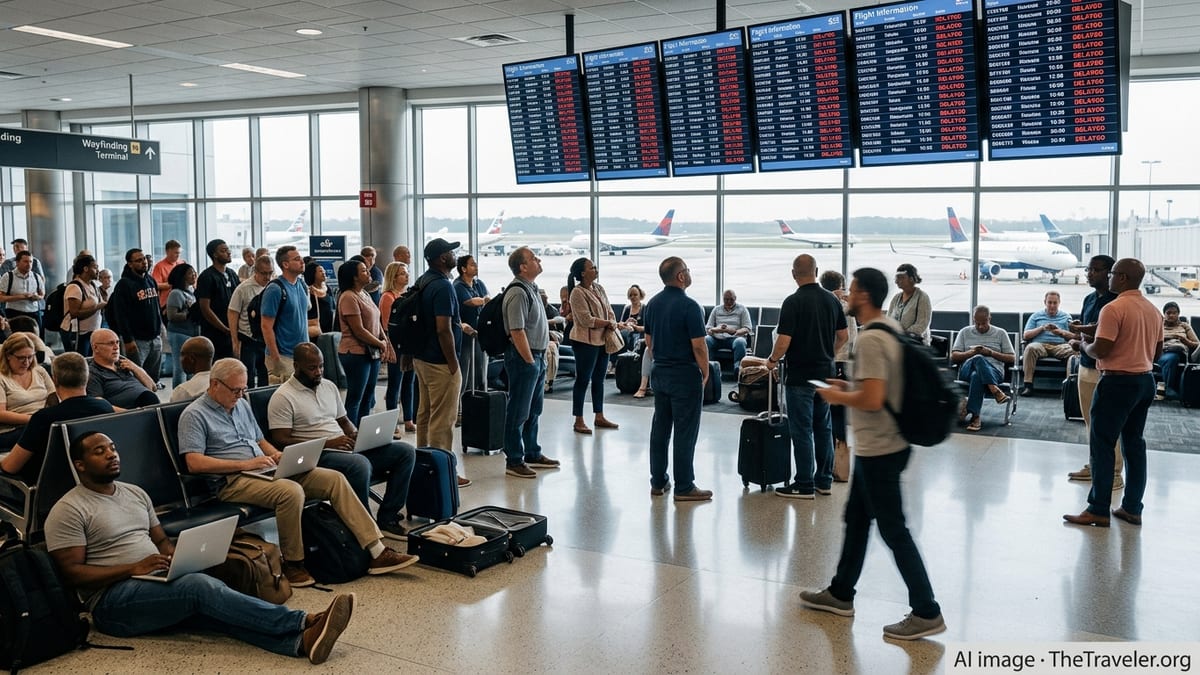
Passengers at Dallas Fort Worth International Airport faced extensive disruption as a wave of delays and a small number of cancellations affected American Airlines, Contour, Delta and several partner carriers, stranding travelers and unsettling flight schedules across the United States and key routes to Canada, Mexico, Germany, Japan and Australia.
Get the latest news straight to your inbox!
Heavy Operational Strain At A Major US Hub
The disruption at Dallas Fort Worth unfolded against the backdrop of one of the country’s busiest holiday travel periods, magnifying the impact of each delayed departure or missed connection. Publicly available tracking data indicated that around 365 flights connected to the airport were delayed over the course of the day, while at least three were cancelled outright, leaving passengers grappling with missed meetings, disrupted vacations and unexpected overnight stays.
American Airlines, which operates its largest hub at Dallas Fort Worth, faced the greatest concentration of schedule pressure. A dense bank of domestic departures bound for cities such as Denver, Los Angeles, Charlotte and El Paso, along with long-haul and codeshare services, meant that any delay in North Texas could quickly reverberate through the wider American network. Even relatively short postponements on high-frequency routes added up to long queues at gate podiums, backup at security and crowded customer-service lines throughout the terminals.
Delta and regional carrier Contour were also among the airlines affected by the operational strain. Although they represent a smaller share of movements at Dallas Fort Worth compared with American, they serve important point-to-point and regional markets. As rolling delays accumulated, connections that depended on tight turnarounds became increasingly vulnerable, resulting in missed onward flights for travelers who originally expected seamless same-day travel.
Airport operations at large hubs are highly interdependent, from aircraft availability and crew scheduling to ramp logistics and air-traffic flow. When disruptions reach the scale reported at Dallas Fort Worth, they tend to ripple outward quickly, impacting carriers that share gates, ground staff or codeshare agreements, even if the original cause is confined to a single airline or weather cell earlier in the day.
Ripple Effects Across North America And Beyond
The delayed flights at Dallas Fort Worth did not remain a local issue for long. Because the airport functions as a central connecting node for American and several partners, disruptions there can affect destinations across North America. Travelers on routes linking Texas with Canadian cities such as Toronto and Vancouver, and Mexican destinations including Monterrey and resort gateways, faced uncertain departure times and tight connection windows after initial hold-ups in Dallas.
Published schedules show that Dallas Fort Worth also feeds long-haul and partnership traffic to Europe and the Asia-Pacific region. Delays on U.S. domestic legs destined to connect with services toward Germany and Japan increased the risk of misaligned itineraries, particularly for passengers whose journeys relied on single-day connections. Even where transatlantic or transpacific flights departed relatively close to schedule, travelers originating from delayed feeder flights sometimes arrived too late to board, forcing rebookings for the next available departure.
The disruption also extended to traffic linked to Australia through codeshare and alliance arrangements. Flights from Dallas Fort Worth to major U.S. and Pacific Coast gateways serve as critical links for itineraries that ultimately connect onward to Australian cities. When those initial segments falter, entire multi-leg journeys can unravel, pushing travelers into standby queues and stretching accommodation and rebooking capacities at hubs far from Dallas.
Such cascading effects illustrate how a heavy delay day at one airport can become a multi-country issue. Passengers departing from Canada, Mexico or Europe may not experience visible congestion at their local airport, yet still find themselves subject to missed connections and schedule changes because a single U.S. hub encountered concentrated operational stress.
Passengers Face Long Waits, Confusing Options
For those on the ground at Dallas Fort Worth, the statistics translated into long hours in crowded gate areas and customer-service lines. Travelers reported spending extended periods awaiting updated departure times, only to see rolling delays push flights farther into the evening. In some cases, passengers who initially expected minor disruptions ultimately missed onward connections to international destinations or late-night domestic flights that had no remaining seats.
Delayed operations often create a complex puzzle of choices for travelers, particularly when only a handful of flights are cancelled outright. Rebooking from a delayed flight onto a different connection, selecting an alternative routing through another hub or opting to stay overnight can all carry different costs and benefits. Publicly available guidance from consumer-advocacy groups emphasizes the importance of documenting delay notifications, keeping boarding passes and monitoring airline apps or airport displays to understand when a delay might tip into a missed-connection or cancellation scenario.
The combination of high passenger volumes and constrained seat availability limited rebooking options for some of those stranded at Dallas Fort Worth. When multiple carriers face simultaneous delays, spare capacity on alternate flights tends to disappear quickly. Travelers attempting to switch from one airline to another may encounter higher last-minute fares or limited interline options, particularly on smaller regional routes served by carriers such as Contour.
Families and business travelers alike confronted the practical consequences of disruption: unexpected hotel stays, changes to ground transportation plans and uncertainty about when checked luggage would arrive. Consumer resources note that travelers can often mitigate some of the inconvenience by keeping essential items in carry-on bags, maintaining flexible travel insurance and proactively exploring alternative routings before lines at service desks grow too long.
Why A Handful Of Cancellations Can Still Matter
While the day’s tally of three cancelled flights appears small compared with the 365 delays, cancellations have a disproportionate effect on passengers who lose their seats entirely. In a large hub-and-spoke system, a single cancelled departure can strand dozens or hundreds of travelers, particularly when it is the final frequency of the day to a smaller city or a key long-haul gateway. Many of those passengers must wait for the next available flight, which can be fully booked during peak travel periods.
Travel-data analyses from recent months highlight that weather, air-traffic control constraints and crew availability remain recurring drivers of cancellations and long delays across U.S. hubs, including Dallas Fort Worth. When disruptions begin earlier in the day, later flights often inherit crews and aircraft that are already running behind schedule, increasing the likelihood that one or two tightly timed rotations will be scrubbed rather than pushed further into the night.
Even when most flights ultimately depart, the mixture of widespread delays and a few cancellations raises broader questions about network resilience. Aviation analysts point to factors such as high aircraft utilization, lean staffing models and complex connection patterns as contributors to operational vulnerability. When demand is strong and schedules are dense, carriers have less slack available to absorb unexpected disruptions without triggering knock-on effects for travelers in multiple regions.
For passengers, that reality underscores the value of considering schedule padding, longer connection times and travel at less congested times of day, particularly when itineraries involve international links that are more difficult to rebook than short domestic hops.
What Travelers Can Learn For Future Itineraries
The latest disruption at Dallas Fort Worth offers a practical case study for travelers planning future trips through major hubs. Choosing itineraries with more generous connection windows, especially for flights linking domestic segments to international departures, can provide a buffer when large delay totals hit an airport. Even an extra hour of connection time can make the difference between making an onward flight and facing an unplanned overnight stay.
Consumers may also wish to pay attention to the role of specific hubs in their airline’s network. When a carrier concentrates a large share of its flights at an airport like Dallas Fort Worth, operational problems there are more likely to affect a broad range of routes, from short-haul domestic sectors to long-haul services to Europe, Asia and the Pacific. Building itineraries that spread risk across multiple hubs, where possible, can reduce exposure to a single point of failure.
Travel-insurance policies and credit-card protections can provide additional safeguards when delays or cancellations become severe. Some products offer compensation for hotel stays, meals and alternative transportation when disruptions surpass certain thresholds. Passengers are encouraged by consumer advocates to review coverage details in advance, retain receipts and follow claims procedures carefully if they incur significant out-of-pocket costs during events like the one seen at Dallas Fort Worth.
Although long delay days remain an unwelcome feature of modern air travel, they also highlight steps passengers can take to prepare. By understanding how hubs operate, how delays propagate across networks and what rights and tools are available, travelers can navigate future disruptions with greater resilience, even when hundreds of flights at a single airport are running behind schedule.