


More news on this day
Operations at Dubai International Airport have faced renewed disruption as FlyDubai cancels several departures and records extended delays on key regional and medium-haul routes, affecting connections to Hargeisa, Multan, Copenhagen, Bahrain, Riyadh and additional destinations across its network.
Get the latest news straight to your inbox!
Targeted Cancellations and a Wave of Delays
Publicly available live flight-tracking data shows that FlyDubai has suspended at least five scheduled flights from Dubai International Airport, while many others are operating with substantial delays. The affected services include departures toward the Horn of Africa, the Indian subcontinent and key Gulf and European markets, creating a knock-on effect for travelers relying on Dubai as a connecting hub.
Routes to Hargeisa, Multan, Copenhagen, Bahrain and Riyadh are among those experiencing disruption. Flight-status boards for Dubai International indicate a mix of outright cancellations and rolling delays, with some departures pushed back repeatedly and others removed entirely from schedules close to departure time. The pattern reflects continued operational strain in the wider Gulf region as airlines adjust to changing airspace conditions and network constraints.
Flight-history data for FlyDubai services shows irregular operations across multiple days, with some rotations operating significantly behind schedule and others not operating at all. These inconsistencies make forward planning difficult for passengers, particularly those with onward connections on separate tickets or tight layovers through Dubai.
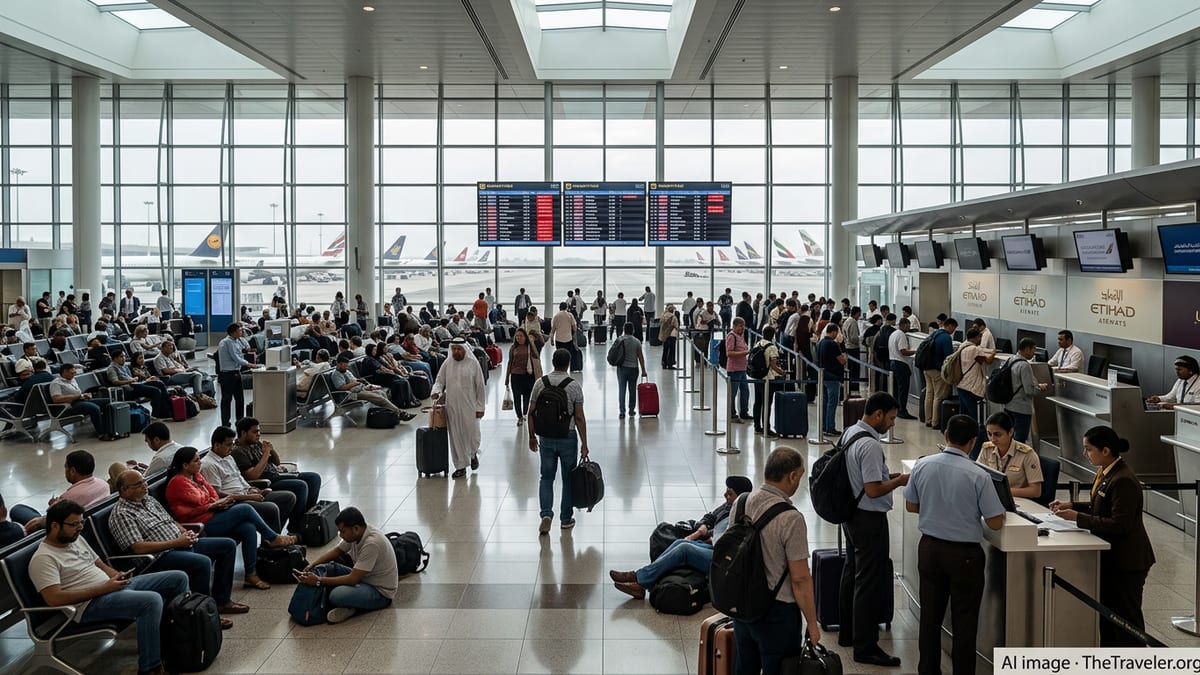
While airport departure boards list many flights as “scheduled” or “on time,” closer inspection of individual services reveals altered departure times, revised routings and occasional last-minute cancellations. The result is an uneven travel experience in which some passengers depart close to schedule while others face long waits in terminals or unplanned overnight stays.
Regional Airspace Pressures Continue to Ripple Through Dubai
Recent coverage of Gulf aviation conditions points to recurring airspace restrictions and rerouting pressures across parts of the Middle East as a key backdrop to the latest disruption. Earlier in 2026, temporary closures and limitations affecting airspace in countries such as Iran, Iraq, Bahrain and others forced airlines including FlyDubai to divert traffic, lengthen flight paths and, in some cases, suspend services entirely on certain days.
Industry analyses released in recent months describe how these regional constraints have led to congestion on remaining corridors, extended flying times and tighter aircraft and crew rotations. For carriers built around high-frequency short and medium-haul operations, even modest changes in flight times can erode schedule resilience, increasing the risk of cascading delays once the day’s operation is underway.
Dubai International, one of the world’s busiest transfer hubs, remains particularly sensitive to these pressures. When regional routing options are limited, airlines have fewer opportunities to recover from disruptions such as weather events, air-traffic control holds or late-arriving aircraft from upstream destinations. The suspended and delayed FlyDubai services seen on routes to Hargeisa, Multan, Copenhagen, Bahrain and Riyadh fit into this broader pattern of operational fragility.
Recent travel-advice bulletins for the Gulf region have also warned that intermittent airspace measures can reappear with limited notice, prompting airlines to adjust timetables on short lead times. This environment increases the likelihood of sudden schedule changes, especially on routes that cross multiple affected flight information regions.
Impact on Passengers Across Africa, South Asia and Europe
The latest cancellations at Dubai International are having an outsized impact on travelers heading to secondary cities and emerging markets, where alternative options are limited. Passengers booked to or from destinations such as Hargeisa and Multan, which rely heavily on a small number of weekly services, face challenges in rebooking when a flight is suspended on short notice.
For travelers bound for Copenhagen, Bahrain and Riyadh, disruption is more likely to manifest in missed connections, changed routings or extended layovers. Dubai’s role as a connecting hub means that a delay departing the city can cause passengers to miss onward services on other carriers, while inbound delays can strand connecting travelers in the terminal for hours.
Reports from consumer-rights organizations and air-travel advisories highlight that such disruptions can generate additional costs for passengers, including accommodation, meals and visa-related expenses if overnight stays become necessary. Travelers transiting without a visa may need special arrangements or airline assistance when forced to remain in Dubai longer than planned.
The pattern of irregular operations also creates uncertainty for business travelers and those flying for time-sensitive reasons, such as medical appointments or family events. In these cases, even moderate delays can have significant consequences, underscoring the importance of real-time monitoring and flexible itineraries during periods of regional instability.
Airline Guidance and What Travelers Are Being Told
Operational guidance published on the FlyDubai website urges passengers to regularly check flight status and monitor official operational updates before leaving for the airport. The airline emphasizes that schedules remain subject to change and that passengers should rely on the most recent information available through digital channels and airport displays.
Travel-industry briefings focused on Dubai and Sharjah have similarly advised passengers to avoid heading to the airport until their flight is clearly confirmed as operating, particularly during periods of heightened regional tension. These advisories stress that same-day cancellations and gate changes remain possible and recommend that travelers enable notifications in airline apps.
Consumer advocates point out that passengers whose flights are canceled or severely delayed may have rights to care, rebooking or compensation, depending on the jurisdiction and the circumstances behind the disruption. However, the extent of those rights varies widely between legal frameworks, and travelers are encouraged to review the conditions of carriage applicable to their tickets.
Publicly available airline policy documents note that rebooking options are often prioritized for those who booked directly with the carrier rather than through third parties. As a result, travelers using online travel agencies may need to coordinate both with the airline and their booking platform to secure timely alternatives.
Practical Steps for Passengers Facing Disruption at Dubai
Travel advisories published in recent weeks recommend that passengers transiting through Dubai build additional buffer time into their itineraries when possible and avoid scheduling tight connections, especially on separate tickets. Allowing longer layovers offers more flexibility to absorb delays without missing onward flights.
Experts in air-travel planning also suggest that passengers keep essential items, including medications, chargers and a change of clothes, in carry-on luggage in case an unplanned overnight stay becomes necessary. Access to these basics can significantly reduce the stress of unexpected disruptions.
When a cancellation or long delay occurs, guidance from passenger-rights groups encourages travelers to document events in real time, including screenshots of status updates and any written notifications received. Such records can be useful later if travelers seek reimbursement or submit claims through airlines, travel insurers or specialized compensation services.
With FlyDubai’s latest wave of cancellations and delays touching routes to Hargeisa, Multan, Copenhagen, Bahrain, Riyadh and beyond, the situation at Dubai International illustrates how regional airspace pressures continue to reverberate through one of the world’s busiest aviation hubs. For passengers, close monitoring of flight status and flexible planning remain the most effective tools for navigating an unpredictable travel environment.