


More news on this day
Travellers heading to Europe this summer are being warned to brace for airport queues of up to five hours as aviation groups intensify calls for the European Union’s new digital border system to be scaled back or suspended during peak holiday periods.
Get the latest news straight to your inbox!
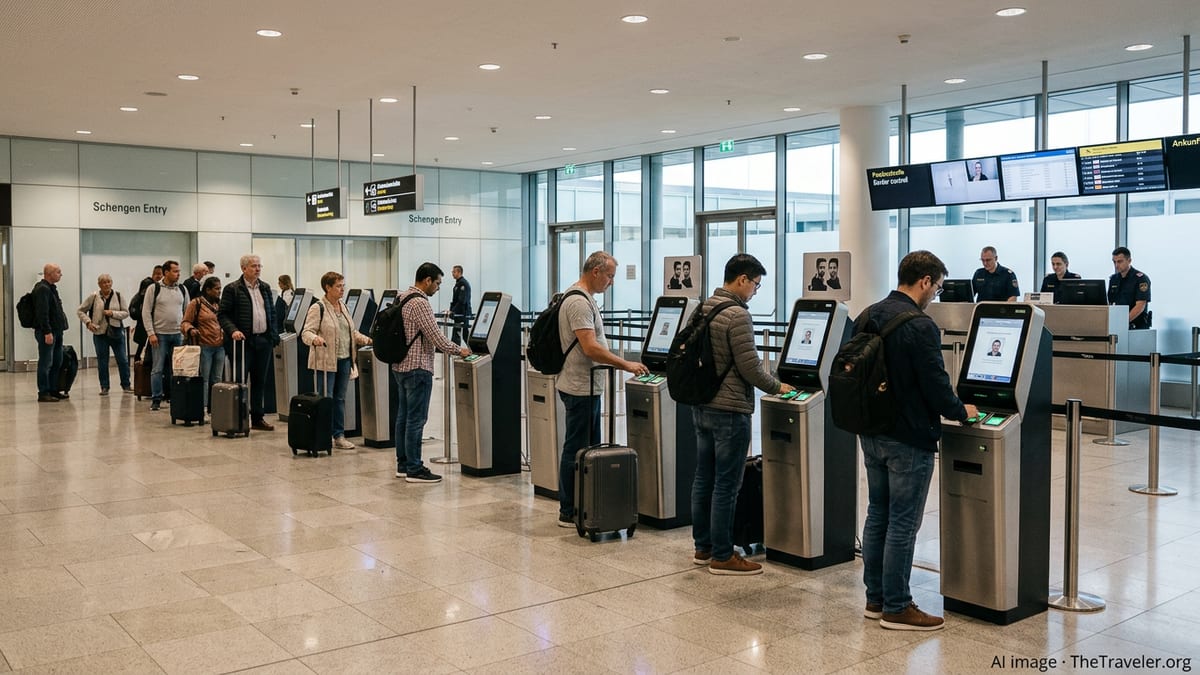
Industry sounds alarm over Entry/Exit System queues
Europe’s airports, airlines and aviation bodies have issued an unusually stark warning about the impact of the EU’s new Entry/Exit System, a biometric border scheme now fully in force across the Schengen area. According to recent industry letters and public statements, waiting times at passport control are stretching to as long as five hours at some airports during busy periods.
The scheme replaces the stamping of passports for most non-EU nationals with a digital record of each entry and exit, including fingerprints and facial images taken at the border. While the system is designed to tighten security and track overstays more efficiently, reports indicate that the rollout has collided with staffing gaps, uneven infrastructure and high summer demand, creating bottlenecks across key tourist gateways.
Recent coverage in European and international media describes aircraft leaving with rows of empty seats because passengers were still trapped in security and border queues when departure cut-off times arrived. Airports and carriers say the current pattern of disruption risks undermining confidence in European travel just as the region’s tourism sector is returning to full strength.
The latest warnings follow earlier alerts from individual airlines and travel bodies throughout the spring, as early-season holidaymakers encountered multi-hour waits and missed flights at hubs from Milan to Berlin. Industry figures now describe the situation as reaching a critical point on the eve of the main summer rush.
Plea to pause rules as peak summer nears
In response to mounting disruption, leading airport and airline associations have jointly urged Brussels to temporarily suspend or soften enforcement of the Entry/Exit System during the busiest weeks of July and August. Their position, set out in recent open letters to senior EU officials, argues that the infrastructure and procedures required to operate the system smoothly are not yet in place at many border checkpoints.
According to published coverage of these appeals, the groups say border control staff, airport operators and airlines are under “unsustainable pressure” as they attempt to process high volumes of passengers through new biometric kiosks and manual capture points. They are calling for what they describe as urgent political intervention to prevent queues from worsening as schools break up and family travel peaks.
Industry representatives stress that they are not seeking to abandon the Entry/Exit System altogether, but to introduce greater flexibility in how and when it is applied. Suggestions include pausing first-time registrations during peak hours, prioritising departing passengers with imminent flights and allowing more transitional measures at airports that lack sufficient automated gates.
Reports from Brussels indicate that EU institutions are under growing pressure to show that the new border regime can be adjusted without compromising security objectives. Officials have signalled that further discussions with the aviation sector are planned, but there is as yet no clear indication of a broad suspension of the rules for the summer period.
UK and other non-EU travellers face longest waits
The heaviest impact so far has fallen on travellers from outside the EU and Schengen zone, who are required to complete full biometric registration the first time they encounter the Entry/Exit System. This includes visitors from the United Kingdom, the United States and many other long-haul markets, whose details must be captured in person at kiosks or staffed desks before they can clear the border.
Travel coverage in the UK has highlighted cases in which British holidaymakers have missed flights or spent several hours queuing at popular Mediterranean destinations. In one widely reported incident earlier in the season, more than one hundred passengers were left behind after delays at border control prevented them from reaching the gate before the flight crew hit their legal working-time limit.
Airlines serving the UK market have advised customers to build in substantial extra time at departure airports in the EU, especially when returning home from busy resorts. Some carriers have recommended arriving at least three hours before take-off to account for potential hold-ups at border checks, in addition to the usual security screening and bag-drop queues.
Surveys commissioned by travel companies suggest that a significant share of UK holidaymakers now expect delays linked to the new system. This expectation is already influencing booking behaviour, with some travellers reportedly favouring non-Schengen destinations or opting for shoulder-season trips to avoid the worst of the congestion.
Economic stakes for European tourism
The timing of the disruption is particularly sensitive for Europe’s tourism economies. Recent analysis by global travel and tourism organisations warns that if long queues and repeated flight delays persist, millions of potential arrivals could be deterred from visiting Schengen destinations this year, with billions in visitor spending at risk.
Southern European countries that rely heavily on summer tourism revenue are seen as especially exposed. Airports serving coastal resort regions are among those experiencing the longest waits, as large numbers of leisure travellers arrive in concentrated weekend and school-holiday waves. Prolonged delays at land and sea borders covered by the same rules could amplify the impact on cruise passengers and coach tours.
Hoteliers, tour operators and local tourism boards are monitoring the situation closely. Some have already begun issuing practical guidance to guests on leaving extra time for border formalities, in an effort to limit missed transfers and disrupted itineraries. Others are voicing concern that negative headlines about queue chaos at European airports may linger beyond this summer, influencing travel planning into 2027.
The issue also intersects with ongoing reforms to EU air passenger rights, intended to clarify compensation rules for long delays and cancellations. Consumer advocates argue that any systemic disruption linked to new regulations should not weaken the protections travellers currently enjoy when flights are significantly delayed.
What travellers can do now
With no swift overhaul of the Entry/Exit System in sight, travel experts are advising passengers to take practical steps to reduce their exposure to long queues. Recommendations in recent media coverage include arriving at airports earlier than usual, particularly for morning departures and flights from major holiday hubs where border facilities are under strain.
Holidaymakers are also being encouraged to complete airline check-in formalities online where possible, travel with carry-on baggage only on short breaks and keep boarding passes and travel documents easily accessible to speed progress once inside the terminal. Allowing more time between connecting flights within Europe may help reduce the risk of missed onward journeys if initial border processing takes longer than expected.
For those yet to book, choosing flights at quieter times of day, avoiding peak weekend travel and considering alternative airports within the same region could all make a difference. However, aviation bodies caution that as long as the Entry/Exit System continues to operate without major adjustments, periods of severe congestion are likely to persist across many parts of the network during the height of summer.
Travellers planning trips to Schengen countries over the coming months are being urged to stay informed through airline communications and airport advisories, and to factor potential five-hour waits at border control into their itineraries. While the long-term goal of a more secure and efficient digital border remains in place, the immediate reality for many passengers arriving in Europe this summer will be defined by patience, preparation and the hope that policymakers heed growing calls to ease the rules.