


More news on this day
A freight train derailment in Amarillo, Texas, temporarily blocked Amarillo Boulevard and disrupted traffic flows through a key east west corridor, according to early coverage from local broadcasters and public safety updates.
Get the latest news straight to your inbox!
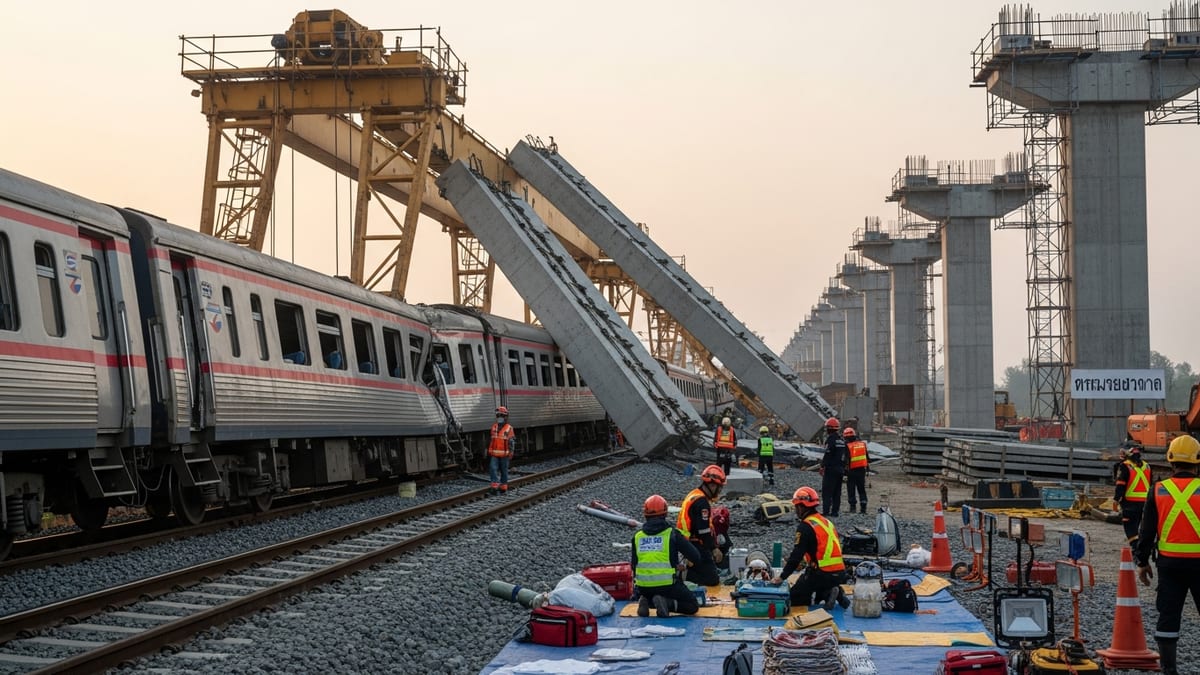
Freight cars off the tracks on key Amarillo corridor
Initial reports indicate several rail cars left the tracks near an at grade crossing on Amarillo Boulevard, creating a barrier across multiple travel lanes and forcing vehicles to divert around the scene. Local television coverage notes that the Amarillo Fire Department responded to the incident after receiving word of the derailment and the resulting traffic blockage.
Publicly available information suggests the train involved was a freight consist traveling through the city rather than a passenger service. As rail cars derailed, they came to rest in positions that made it impossible for motorists to pass, effectively closing the crossing in both directions while emergency and railroad personnel assessed the situation.
As of early reports, there were no immediate indications of serious injuries associated with the derailment. Coverage from Amarillo based outlets focuses primarily on the transportation impacts along the busy boulevard, with attention on efforts to reroute drivers and clear the tracks.
Traffic cameras and on scene images shared by local media show vehicles backed up along Amarillo Boulevard as drivers encountered flashing emergency lights and barricades. The location is a heavily used surface route that carries local traffic as well as regional travelers passing through the city, magnifying the disruption when a rail crossing becomes blocked.
Amarillo Fire Department response and rail safety checks
Reports indicate the Amarillo Fire Department mobilized to the derailment scene to evaluate potential hazards, including any risk of fire, fuel leaks, or cargo spills. Standard practice in these events is to establish a safety perimeter around the affected rail cars while teams determine whether any hazardous materials are present and whether additional resources are needed.
Railroad personnel typically join local responders to inspect wheels, axles, and track conditions following a derailment, as well as to verify the contents of each affected car. Early information available to the public has not highlighted any major hazardous material release, but responders generally proceed cautiously until each car is accounted for and documented.
The incident on Amarillo Boulevard adds to a broader national pattern of blocked roadways when trains leave the tracks or stop across crossings. Federal transportation data and prior derailment reports show that even minor incidents can snarl local traffic for hours while investigations and rerailing operations take place.
Local fire departments often coordinate with police, traffic management centers, and railroad companies to move equipment into place, protect nearby homes and businesses, and keep residents away from the tracks. In Amarillo, similar playbooks appear to be guiding the response along the boulevard as crews work to secure the site.
Traffic delays, detours and driver frustration
The derailment occurred along a stretch of Amarillo Boulevard that serves as a critical connector for neighborhoods, commercial corridors, and access to other major routes. When trains block at grade crossings, drivers can be forced into lengthy detours on parallel streets that may not be designed for heavy traffic volumes.
Local coverage and social media posts from motorists often describe long waits and circuitous reroutes in similar situations, particularly for drivers who rely on Amarillo Boulevard for daily commutes. Delivery trucks, school traffic, and regional freight haulers can also be affected, compounding congestion on alternative routes.
Blocked crossings are a recurring concern in many communities with dense rail traffic, and Amarillo is no exception. When a train derails or stalls across a roadway, emergency vehicles sometimes must take longer routes to reach calls, increasing response times and adding risk for nearby residents.
In this case, early reports center on vehicle delays and blocked lanes rather than collisions between trains and cars. Even so, transportation safety advocates frequently note that driver frustration at prolonged closures can lead to risky behavior near the tracks, underscoring the importance of visible barriers and clear instructions from responders during an incident.
Railroad recovery and investigation process
Once immediate safety concerns are addressed, the focus typically shifts to clearing the crossing and getting Amarillo Boulevard moving again. Railroads deploy specialized crews and heavy equipment to lift derailed cars, repair damaged track components, and restore service along affected lines.
The rerailing process can be time consuming, particularly if multiple cars are off the tracks or if track infrastructure has been compromised. During that period, crossings remain closed, and road agencies may keep detour plans in place until crews complete repairs and confirm that trains can pass safely.
Derailments of this type usually trigger an internal review by the railroad, along with documentation that can be used by state and federal transportation agencies. Investigators consider factors such as track condition, train speed, mechanical issues, and switching operations to determine what caused the cars to leave the rails.
Publicly available information from previous derailment investigations across the country shows that common contributors include track defects, broken components, or issues with railcar loading. Any findings from the Amarillo incident are expected to inform future maintenance and operational practices along this busy corridor.
Community concerns about crossings and future mobility
The train blocking Amarillo Boulevard has renewed local attention on the broader challenges of sharing space between roads and rail lines in fast growing communities. Residents in many cities have pressed for grade separations, such as overpasses or underpasses, to prevent extended stoppages when freight trains pass through.
National transportation programs now include funding opportunities aimed at eliminating high conflict crossings and improving safety at locations where road and rail traffic intersect. Incidents like the Amarillo derailment often feed into local discussions about which crossings should be prioritized for investment and what long term solutions might look like.
Urban planners and traffic engineers have pointed to busy corridors like Amarillo Boulevard as key candidates for more resilient infrastructure that can withstand disruptions. In the short term, however, cities rely on real time traffic messaging, coordinated detours, and close cooperation with rail operators to keep people and goods moving when unexpected closures occur.
For Amarillo drivers, the immediate concern remains how quickly the derailed train can be cleared and normal traffic restored along one of the city’s best known thoroughfares. As rail crews and the fire department work through established protocols, residents are watching closely for updates on both the cleanup and the longer term implications for travel through the area.