


More news on this day
Travelers across North America and beyond are facing a fresh wave of disruption after four key flights operated by Envoy Air and Air Canada were canceled at Dallas Fort Worth International Airport, creating knock-on delays and missed connections across more than 60 cities, according to live flight-tracking data and airport operations reports on June 18.
Get the latest news straight to your inbox!
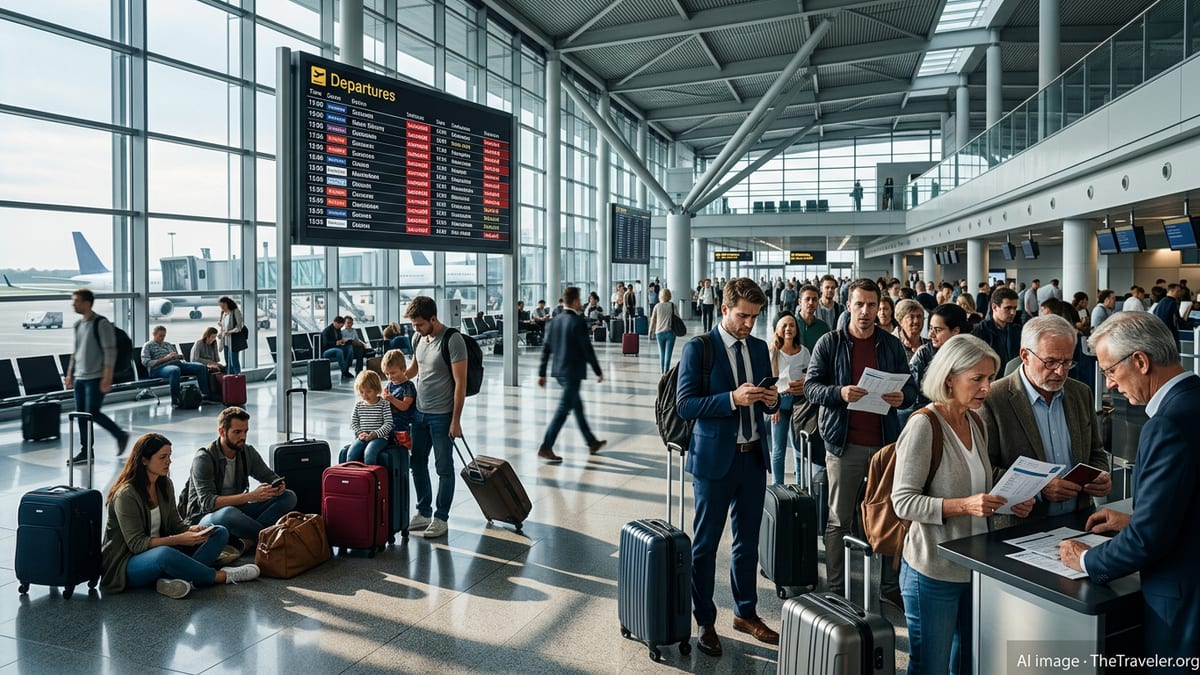
Targeted Cancellations Spark Wider Network Disruption
Publicly available flight-status boards and operational summaries indicate that Envoy Air, a regional affiliate that operates many American Airlines-branded services, and Air Canada scrubbed four departures and arrivals at Dallas Fort Worth on Tuesday. Although the number of flights involved is relatively small, their timing and role as connecting services turned them into critical pressure points in an already stretched network.
Operational data shows that Envoy’s affected services linked Dallas Fort Worth with smaller U.S. cities that rely heavily on regional connections, while Air Canada’s cancellations involved cross-border routes that feed long haul services. With Dallas Fort Worth serving as one of the continent’s busiest hubs, those lost sectors removed key links in complex itineraries, stranding passengers mid-journey and forcing large-scale rebooking efforts.
Airport delay trackers and analytics platforms show departure and arrival punctuality deteriorating in the hours after the cancellations, with mounting late departures from Dallas Fort Worth rippling out to hubs and secondary airports across the United States and Canada. As aircraft and crews fell out of position, knock-on delays extended into the evening at airports far from Texas.
Although only a limited number of flights were formally canceled, rolling delays meant that many passengers experienced significant schedule changes, including missed onward flights to transatlantic and transcontinental destinations.
Weather, Airspace Constraints and Crew Positioning Under Scrutiny
Dallas Fort Worth is particularly vulnerable to combinations of convective weather and airspace management programs, and recent advisories from U.S. air traffic authorities highlight the use of ground delay measures to manage traffic flows into North Texas. When these programs coincide with thunderstorms around the Metroplex, airlines often trim schedules or proactively cancel flights to avoid aircraft and crew becoming trapped out of position.
Industry analyses and previous disruption patterns at Dallas Fort Worth show that regional operations, such as those flown by Envoy Air, can be disproportionately affected. Short-haul sectors operate on tight turn times, so any restriction in takeoff and landing rates may quickly cascade across an entire day’s rotations. Once a key feeder flight is canceled, passengers booked on onward domestic and international legs can lose their connections, forcing airlines to search for scarce seats on later departures.
For Air Canada, the cross-border nature of its Dallas Fort Worth services adds another layer of complexity. Publicly accessible customer guidance from the airline emphasizes that weather, air traffic control initiatives and operational constraints can drive last-minute schedule changes, and that the knock-on impact can continue for several days on certain routes. When a Dallas-bound aircraft and crew fail to arrive as planned, subsequent legs across the network may face delays or consolidation.
Analysts note that these factors can combine into what travelers experience as “airport chaos,” even when the initial number of cancellations appears modest. Gate changes, rolling departure times and long queues at customer service counters are common symptoms when multiple airlines adjust their schedules in response to the same weather and airspace bottlenecks.
Impact Spreads to More Than 60 Domestic and International Cities
Real-time flight-tracking dashboards on Tuesday showed cascading delays on routes connecting to Dallas Fort Worth from major hubs and regional airports across North America, as well as select transatlantic services. Cities reporting secondary disruptions included large markets such as Chicago, New York, Toronto and Los Angeles, along with smaller communities that depend on one or two daily connections through Dallas Fort Worth.
In Canada, publicly visible flight-status pages indicated altered timings on services linked to Air Canada’s Toronto and Montreal networks, where some Dallas Fort Worth passengers connect onward to Europe and other long haul destinations. Adjustments ranged from relatively minor schedule shifts to multi-hour delays where crews and aircraft were out of position following the initial cancellations.
Within the United States, Envoy-operated flights feeding American Airlines’ mainline network experienced rolling knock-on effects. Travelers connecting through Dallas Fort Worth to cities across the Midwest, Mountain West and Southeast reported extended layovers, missed connections and rebookings onto later flights or alternative hubs such as Charlotte or Phoenix, according to publicly shared accounts on traveler forums and social platforms.
By late afternoon, delay maps commonly used by frequent fliers depicted a wide geographic spread of late-running flights associated with Dallas Fort Worth operations, underscoring how a disruption centered on a single hub can affect dozens of destinations, including some in Europe and Latin America, within hours.
Passenger Rights and Rebooking Options Vary by Airline and Route
For travelers caught up in the disruption, options largely depend on the operating carrier, the reason for the cancellation and the origin and destination of the trip. Public guidance from U.S. regulators states that passengers are entitled to a refund if an airline cancels a flight or makes a significant schedule change and the traveler chooses not to fly. However, there is no broad federal requirement for compensation in the case of weather or air traffic control constraints, so vouchers, meals and hotel accommodation are provided at the airline’s discretion.
In Canada and on certain international itineraries, Air Canada passengers may have additional protections under the Air Passenger Protection Regulations, which outline obligations for rebooking and, in some cases, monetary compensation when cancellations are within the airline’s control. The carrier’s customer information stresses that it will attempt to rebook travelers on the next available service operated by Air Canada or partner airlines, though investigations into the cause of disruption can take time.
For Envoy Air services marketed under the American Airlines brand, passengers typically fall under American’s policies. Publicly accessible information describes rebooking travelers on the next available flight, including on partner carriers in some cases, particularly when disruptions are not classified as weather-related. However, when cancellations are tied to storms or airspace flow programs, assistance may be limited to rebooking rather than hotel or meal coverage.
Travel advocates often recommend that passengers monitor their reservations closely via airline apps and flight-tracking tools, especially when connecting through weather-prone hubs like Dallas Fort Worth during peak storm periods. Same-day changes, voluntary reroutes through alternative hubs and proactive contact with airlines can sometimes reduce the risk of missed connections when early signs of a cascading delay pattern emerge.
What Travelers Through Dallas Fort Worth Should Watch Next
Operational data and recent history at Dallas Fort Worth suggest that disruption can linger after an initial day of cancellations, as airlines work to reposition aircraft and crews. Even once local weather improves and ground delay programs are lifted, some routes may continue to see altered schedules while carriers clear backlogs and restore normal rotation patterns.
Travel planning tools that aggregate airport delay statistics show that Dallas Fort Worth periodically swings from routine operations to periods of significant congestion, particularly during busy travel seasons and severe weather outbreaks. During these windows, even a small number of targeted cancellations by key operators such as Envoy Air and Air Canada can amplify existing strain on runways, taxiways and gate capacity.
Analysts note that growing demand for both domestic and international travel through Dallas Fort Worth leaves limited slack in the system. Airlines have increased their reliance on tightly timed connections and high aircraft utilization, meaning that unexpected constraints in one part of the network quickly affect distant destinations.
For the coming days, travelers connecting through North Texas are being urged by consumer advocates and travel planners to leave additional time for connections, keep a close eye on real-time flight information and consider flexible tickets or alternative routings where possible. While Tuesday’s disruption centered on four canceled flights, its reach across more than 60 cities illustrates how interconnected modern air travel has become, and how quickly local operational issues at a major hub can evolve into a network-wide challenge.