


More news on this day
Targeted cancellations by Envoy Air and Air Canada at Dallas Fort Worth International Airport have triggered hours of disruption, with schedule data showing knock-on delays and missed connections across more than 60 cities in North America, Europe, Latin America, and Asia.
Get the latest news straight to your inbox!
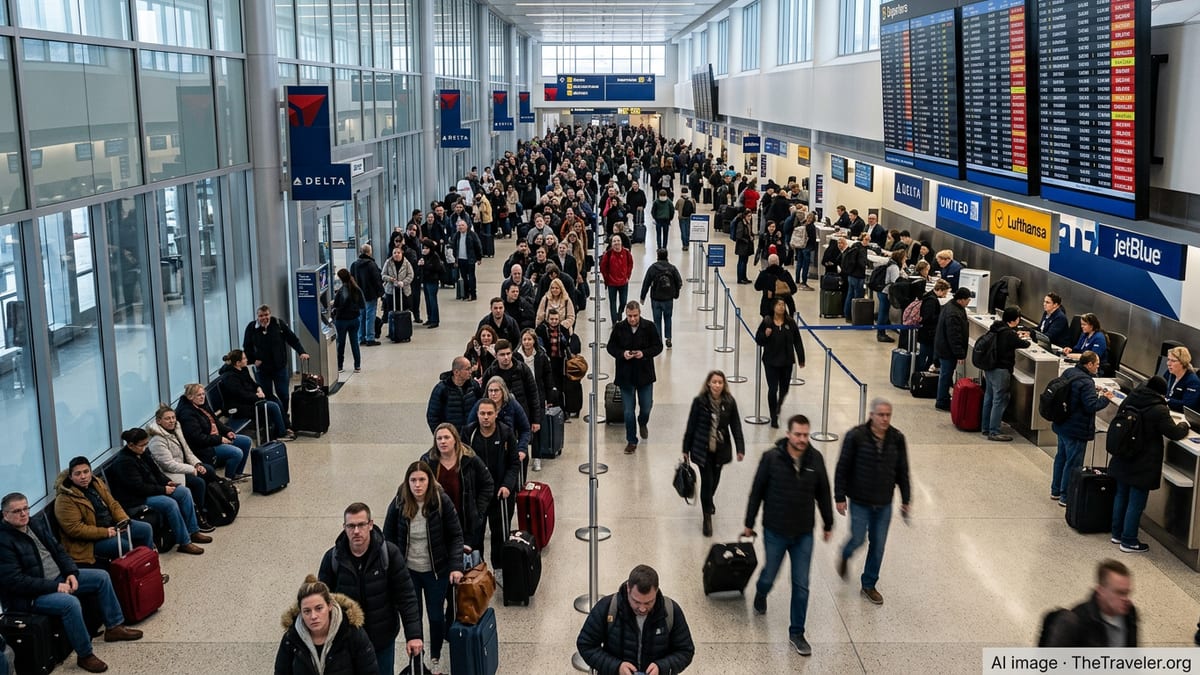
Four Cancelled Flights, One Overstretched Hub
The latest operational turbulence at Dallas Fort Worth International Airport centers on four cancelled departures and arrivals involving Envoy Air and Air Canada, two carriers that play very different roles at the Texas megahub. Envoy Air, a regional affiliate that feeds passengers into American Airlines’ vast domestic and international network, scrapped two regional services after inbound aircraft and crews were delayed. Air Canada, which links DFW to its Toronto and other Canadian gateways, cancelled two additional rotations, further tightening already constrained midweek schedules.
Publicly available flight status boards and independent tracking platforms indicate that the cancellations occurred during a peak period when DFW was already experiencing extended ground delays. Operational advisories from air traffic coordination services pointed to a combination of convective weather in North Texas and traffic management programs that reduced arrival and departure capacity at the field. In practical terms, that meant fewer takeoff and landing slots than scheduled flights, forcing airlines to decide which services to delay and which to cancel outright.
Analysts who track the airport’s performance note that the decision to cancel four flights rather than delay them indefinitely reflects a strategic attempt to prevent a complete breakdown of the hub’s tightly timed connection banks. By selectively removing some services from the grid, Envoy Air and Air Canada freed aircraft and crews to stabilize other parts of their networks. For travelers booked on the affected flights, however, that strategy translated into lengthy rebookings, unexpected overnight stays, and missed onward journeys.
DFW’s scale magnifies the impact of even a small number of cancellations. The airport regularly ranks among the world’s busiest and serves as the primary connecting point for millions of passengers traveling between the United States, Canada, Latin America, and Europe. Envoy Air alone moves millions of travelers through the hub each year, so disruptions on its regional spokes can quickly ripple outward as missed connections cascade through later departures.
How Four Flights Became a Continent-Wide Tangle
While four cancellations may sound modest in isolation, the structure of modern hub-and-spoke networks means that a handful of grounded aircraft can disrupt dozens of downstream flights. At DFW, Envoy’s regional services typically arrive in tightly coordinated waves designed to feed passengers into American Airlines departures leaving 30 to 90 minutes later. When an Envoy inbound is cancelled, passengers lose not only that segment but often the carefully timed long haul that follows.
On the day of the disruption, data from airline and airport information services showed an uptick in rolling delays for flights departing Dallas for major U.S. cities including Chicago, New York, Los Angeles, Denver, and Miami. Similar patterns appeared on transborder services to Canadian hubs such as Toronto and Montreal. Because Air Canada’s DFW routes connect into its own banks of transatlantic and transpacific flights, cancellations there meant missed onward departures to cities in Europe and Asia, amplifying the reach of the original problem.
By evening, flight tracking platforms and social media posts from stranded travelers pointed to knock-on delays and missed connections affecting more than 60 destinations. Passengers reported missed links to European capitals via Toronto and Montreal, disrupted journeys to leisure destinations in the Caribbean and Mexico, and domestic misconnects across the American heartland and U.S. coasts. Even airports far removed from the storm systems over Texas felt the strain as crews and aircraft arrived late or not at all.
This kind of chain reaction is increasingly common at major hubs where airlines operate complex, highly synchronized schedules. When capacity is suddenly reduced, carriers often prioritize keeping long haul services operating, which can mean proactively cancelling shorter regional segments and some secondary international routes. The result is a patchwork of delays and cancellations that can be difficult for travelers to understand, especially when their local weather appears calm.
Weather, Air Traffic Controls, and Tight Staffing
Although the immediate trigger at DFW appears linked to thunderstorms and resulting air traffic controls, aviation observers emphasize that underlying structural issues make airports more vulnerable to such shocks. Over the past several years, U.S. carriers have run fuller schedules with less slack in aircraft and crew availability. At the same time, national air navigation services have grappled with controller staffing constraints, which can force temporary limits on traffic flows into busy hubs.
Public advisories from traffic coordination centers in late May and June outlined several ground delay programs in the Dallas Fort Worth airspace, specifying reduced arrival rates and the potential for en route holding. When such programs are in effect, airlines often receive so-called slot times that are significantly later than their scheduled departures and arrivals. If the delays threaten to push crews beyond maximum duty limits or cause aircraft to miss connections to later flights, carriers may opt to cancel flights outright.
For Envoy Air, which operates smaller regional jets on fast turnarounds, any extended ground hold can quickly ripple through an entire day’s schedule. A delay of even an hour can make it impossible for an aircraft to complete its subsequent rotations on time, especially if weather or congestion affects multiple airports on its route map. Air Canada faces similar challenges when connecting DFW services into its long haul network, where missed arrival windows in Toronto or Montreal can disrupt evening transatlantic departures.
Industry data and recent published analyses suggest that airlines increasingly lean on preemptive cancellations as a tool to manage such scenarios. Rather than allowing long lines of flights to accumulate delays of several hours, carriers cancel selected services early to preserve operational stability elsewhere. While this can reduce the risk of passengers being stuck on aircraft for extended periods, it also concentrates disruption on a smaller group of travelers who may struggle to find alternative options, particularly from secondary markets.
Passenger Impact Across North America and Beyond
For travelers, the operational logic behind such cancellations offers little comfort. The four DFW flights dropped from the schedules left hundreds of passengers seeking new itineraries, and their missed connections rippled into thousands more disrupted journeys worldwide. Reports from affected travelers described lengthy lines at customer service desks, limited same-day rebooking options, and scarce hotel availability near major hubs.
North American travelers connecting through DFW felt the effects first. Passengers originating in smaller markets served only by Envoy regional jets often found themselves rebooked a full day later, as seat availability on later flights evaporated. In some cases, travelers opted to drive to alternate airports within Texas or neighboring states in search of workable connections, a familiar pattern during previous mass disruption events at the airport.
Internationally, the Air Canada cancellations triggered a wave of missed onward flights via Canadian hubs. Passengers bound for Europe and Asia reported being offered alternative routings via other North American gateways or being reprotected on different carriers where agreements allowed. For those with complex multi-stop itineraries, however, a broken first segment from Dallas often meant an entire journey had to be reconstructed from scratch.
Travel insurance providers and passenger rights advocates have highlighted these episodes as illustrations of how fragile global itineraries can be, particularly when they depend on a single hub. A missed regional flight in Texas can strand a traveler in an unexpected city on a different continent hours later, underscoring the importance of longer connection times and contingency planning on trips that cross multiple regions.
What Travelers Can Do When Hubs Seize Up
Although passengers cannot control weather systems or air traffic control directives, there are practical steps that can mitigate the impact of sudden cancellations at major hubs like DFW. Aviation consumer groups recommend building extra buffer time into itineraries, especially when connecting from regional flights onto long haul services. A layover of two to three hours, rather than the legal minimum, can offer precious margin when thunderstorm season or airspace congestion is in full swing.
Travel experts also point to the value of monitoring flight status and broader airport conditions well before leaving for the airport. Many airlines and independent tracking services publish disruption indicators for major hubs, signaling when delays are beginning to accumulate. If early signs of trouble appear at a connecting airport, travelers may have time to adjust routing, request an earlier departure, or in some cases reroute through a different hub altogether.
When cancellations do occur, acting quickly is crucial. Rebooking inventory on later flights can disappear in minutes as entire aircraft loads seek alternatives. Self-service tools on airline websites and mobile applications often update faster than airport counters, allowing travelers to secure seats while they wait in line to discuss additional assistance. In complex international cases, contacting the airline operating the next long haul segment can sometimes produce more creative solutions than working solely with the carrier that cancelled the initial flight.
The turbulence around the four Envoy Air and Air Canada flights at DFW offers a stark reminder of the interconnected nature of modern air travel. At one of the world’s busiest hubs, even a small cluster of cancellations can send shockwaves through schedules on multiple continents, leaving travelers to navigate a maze of rebookings and changing plans long after the storms over Texas have cleared.