


More news on this day
Early summer travel plans across Europe have been thrown off course as a fresh wave of operational disruption in June 2026 triggered at least 80 cancellations and more than 570 delays affecting services operated by Virgin Atlantic, British Airways, KLM, SAS and Air Canada across major hubs including London, Amsterdam, Copenhagen and Brussels.
Get the latest news straight to your inbox!
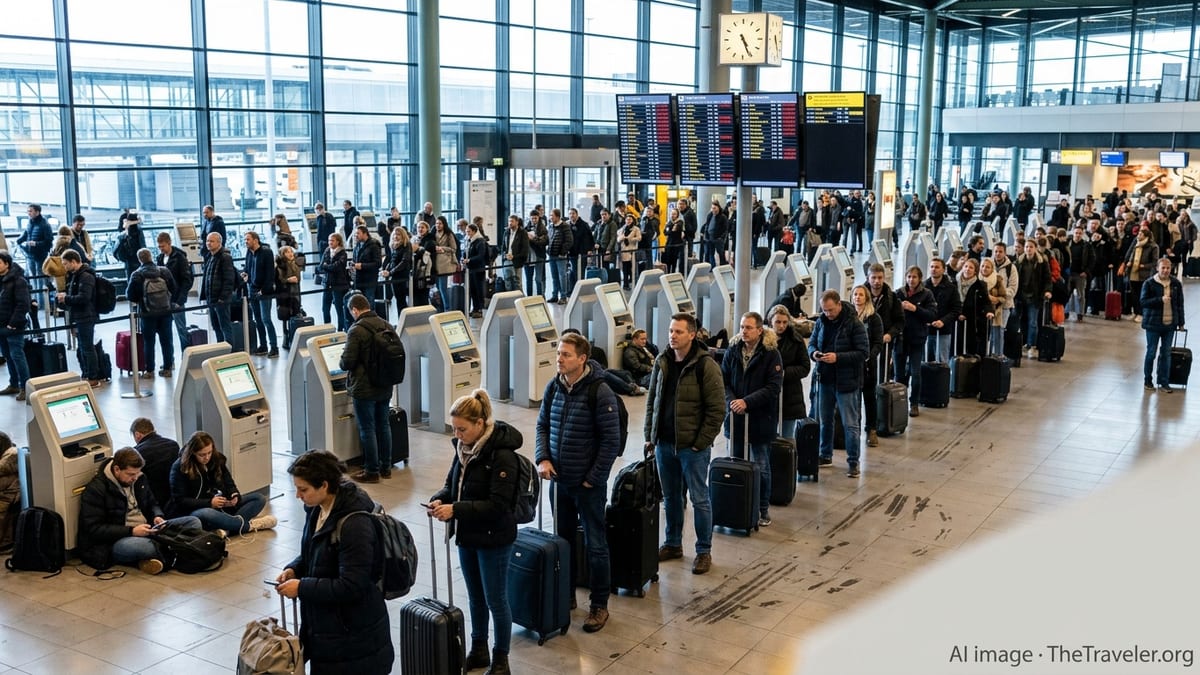
Knock-on disruption ripples across European hubs
Publicly available flight-tracking data and airport performance reports for mid-June indicate a sharp spike in disruption across several leading transatlantic and intra-European carriers. The figures, compiled from multiple European airport dashboards and operational reports, point to roughly 80 cancellations and 576 delays involving Virgin Atlantic, British Airways, KLM, SAS and Air Canada within a short multi-day window, largely concentrated at London Heathrow, London Gatwick, Amsterdam Schiphol, Copenhagen and Brussels.
The impact has been particularly visible on long-haul and connecting itineraries, where a single late inbound aircraft can cascade into downstream delays across the network. Reports from passenger forums and airline operations summaries describe a pattern of aircraft arriving late into European hubs, leading to missed connections and rebookings onto later departures or alternative routings via other cities.
At London-area airports, delay and incident statistics for June show elevated levels for both British Airways and Virgin Atlantic, with airport performance data listing dozens of individual delay incidents for each carrier in recent weeks. Similar patterns are visible for SAS and Air Canada in operational summaries for major European gateways, underscoring how even modest schedule changes can compound during a busy early-summer travel period.
While the overall number of flights operated by these airlines in June runs into the thousands, the concentration of more than 650 affected services highlights how fragile the system remains in peak season, with relatively minor disruptions in one part of the network quickly radiating across the continent.
Strikes and staffing issues add pressure to tight schedules
Industrial action and staffing constraints have been key contributors to the latest round of travel chaos. In Belgium, a spontaneous work stoppage by air traffic control personnel at national provider Skeyes on 2 June triggered widespread delays and cancellations across the country’s airports, with the effects spilling over into neighboring hubs as aircraft and crews missed their scheduled rotations.
Brussels Airport experienced a second wave of disruption in mid-June when a wildcat strike at ground handling company Aviapartner led to dozens of affected flights. Although operations had largely returned to normal by 16 June, residual delays continued to affect some departures, adding further strain to already busy schedules at the start of the summer season.
These localized stoppages intersected with ongoing staffing challenges at several major European airports, where ground handling, security and airside operations teams are still rebuilding capacity after earlier pandemic-era cuts. Airlines including KLM and SAS have been operating dense summer schedules that leave little margin to absorb irregular operations when crews or ground resources are out of position.
In practice, this has meant that a weather or staffing disruption early in the day can translate into long evening delays, particularly on routes that rely on tight turnaround times. For long-haul carriers such as Virgin Atlantic and Air Canada, which depend on precise connections between North America and Europe, any slippage in departure slots can quickly affect onward flights across the region.
Weather, technical issues and safety checks compound delays
Beyond labor-related disruption, a mix of weather and technical issues has further complicated operations for Europe-bound travelers in June. Earlier in the year, prolonged winter weather highlighted the vulnerability of major hubs such as Amsterdam Schiphol to snow and de-icing bottlenecks, and operators have continued to navigate intermittent bouts of poor weather and congestion affecting air traffic flow.
In mid-June, a highly publicized incident involving a cellphone fire on board a British Airways service between London and Las Vegas underscored how unplanned safety events can add last-minute pressure to airline schedules. The flight landed safely and the episode was contained, but such events typically require inspections, documentation and, in some cases, aircraft changes that can bleed into the availability of aircraft for subsequent rotations.
Technical problems on individual aircraft have also led to overnight cancellations and last-minute rebookings. Recent accounts shared by travelers on SAS and KLM services describe late-night notifications of cancellations tied to “technical reasons,” followed by re-accommodation on alternative departures the next day. These disruptions often remove an aircraft from the planned schedule, creating knock-on effects for other flights and partner airlines sharing the same fleets or code-share agreements.
With aircraft utilization running high at the outset of the summer peak, even a small number of unplanned technical checks can translate into multiple delayed or canceled flights across a given week, disproportionately affecting busy transatlantic corridors and connection-heavy hubs.
Passengers lean on EU261, UK261 and Canada’s APPR protections
The latest wave of disruption has reignited traveler interest in air passenger rights regulations, particularly EU261 and its UK equivalent, along with Canada’s Air Passenger Protection Regulations. Consumer-focused coverage across European and North American outlets in June has highlighted how these legal frameworks can provide compensation or support when delays and cancellations meet certain criteria.
EU261 and UK261 generally apply to flights departing from the European Union or United Kingdom, regardless of carrier, and to flights into the region operated by EU or UK airlines. This means passengers booked on British Airways, Virgin Atlantic, KLM and SAS may be covered for compensation when flights are significantly delayed or canceled for reasons within the airline’s control, such as technical issues or operational decisions, as opposed to extraordinary circumstances like severe weather or airspace closures.
Travelers on Air Canada services touching European airports may in some cases fall under EU rules, while also being protected by Canada’s APPR framework for flights originating in or bound for Canada. Consumer advocates and travel columns have urged passengers affected by current disruptions to document their experiences carefully, keeping records of delay notifications, boarding passes and receipts for meals and accommodation to support potential claims.
Publicly shared guidance also stresses that compensation typically hinges on the length of delay on arrival, the distance of the flight and the underlying cause of the disruption. As Europe’s early-summer travel season intensifies, more passengers are turning to formal complaints procedures and national enforcement bodies to seek redress for missed connections and extended delays.
What travelers can expect for the rest of June
Looking ahead to the remainder of June 2026, schedule adjustments published by several European airline groups suggest that carriers are attempting to build more resilience into their networks. Some operators have trimmed frequencies on shorter routes or consolidated lightly booked services in an effort to free up spare aircraft and crew to recover more quickly from irregular operations.
However, with school holidays and peak leisure travel still ramping up, airports and airlines remain under pressure. Industry analyses warn that the combination of high load factors, constrained staffing and ongoing industrial tensions in parts of Europe leaves limited room for error. Passengers flying with Virgin Atlantic, British Airways, KLM, SAS and Air Canada on transatlantic or multi-leg itineraries through major hubs should remain prepared for possible last-minute timetable changes.
Travel experts recommend building additional buffer time into itineraries, particularly when self-connecting between separate tickets or planning onward travel by train or regional flights. Early-morning departures are often cited as less vulnerable to cumulative delays, though they can still be affected by aircraft positioning and overnight maintenance.
While there is no indication of a continent-wide shutdown, the concentration of at least 80 cancellations and 576 delays in a relatively short period underlines how quickly conditions can deteriorate during Europe’s busy summer season. For now, publicly available data suggests that operations are continuing at scale, but with a heightened risk of disruption that travelers should factor into their plans throughout June.