


More news on this day
Amid another turbulent year for Europe’s airlines, a quieter story is unfolding above the disruption: diplomatic delegations and high net worth travelers are concentrating around discreet aviation gateways at Évian and Brussels, using business and state aviation to insulate their movements from mass‑market flight chaos.
Get the latest news straight to your inbox!
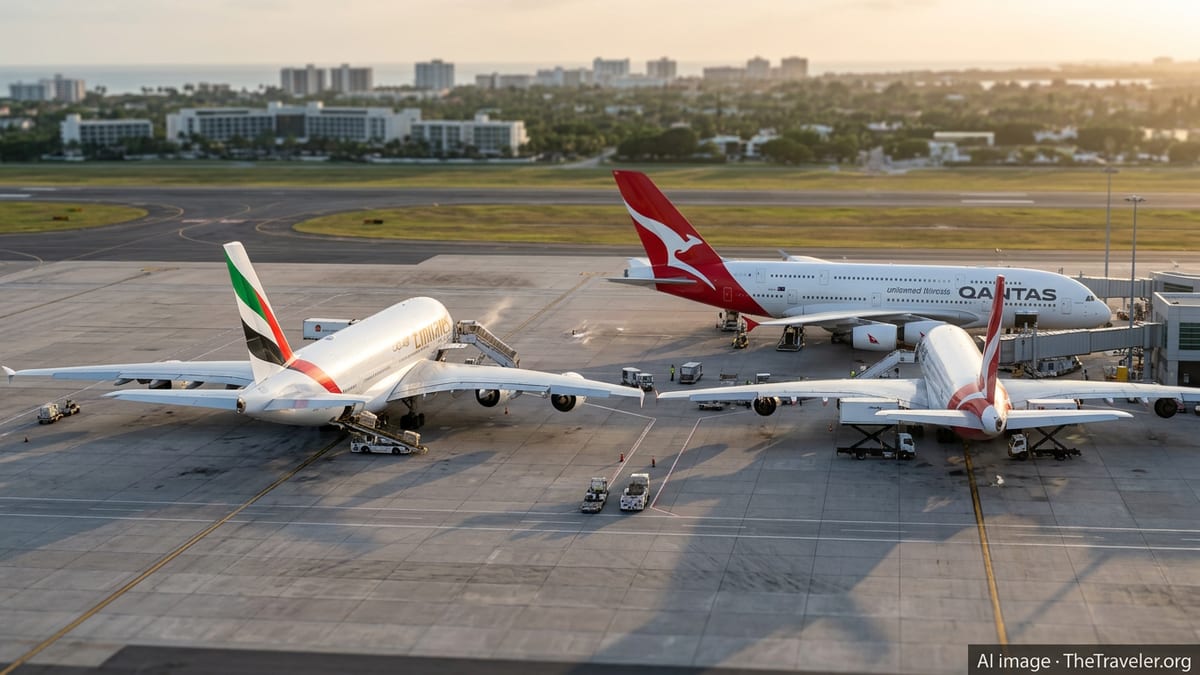
Elite traffic rises as Europe battles chronic disruption
European aviation is heading into another busy summer with structural strain still evident across the network. Industry data shows that traffic growth and limited capacity continue to translate into some of the highest delay levels seen since records began, with weather, staffing constraints and knock‑on congestion all contributing to widespread scheduling volatility.
Reports from consumer claims specialists indicate that disruption is no longer an occasional event but a defining feature of European air travel. Estimates for recent seasons suggest that several percent of all scheduled departures in the EU, European Economic Area and United Kingdom have been affected by delays or cancellations, with peak summer months particularly exposed to bottlenecks and air traffic flow restrictions.
Within that picture, business and private aviation have followed a different trajectory. Network performance reports from the European air traffic manager highlight that business aviation flights have not only recovered to pre‑pandemic levels, but in peak periods have outpaced 2019 traffic. The segment’s resilience, coupled with its ability to reroute quickly via secondary airports and dedicated terminals, is reinforcing its role as a safety valve for diplomatic and luxury travel.
For state visitors, multilateral summits and corporate leaders, that dynamic is accelerating a shift away from already congested hubs and into a lattice of specialist gateways where security, privacy and operational flexibility are prioritized over sheer passenger volume.
Évian’s G7 security bubble turns Lake Geneva into a VIP air corridor
Évian‑les‑Bains, the lakeside resort on the French shore of Lake Geneva, is a case in point. Long known for its mineral water brand and grand hotels, the town periodically becomes a focal point of high‑level diplomacy when major summits are staged along its waterfront. In June 2026, that role is set to intensify as Évian hosts the G7, bringing with it one of the tightest airspace security regimes in the region in recent years.
Public information released by the Swiss federal aviation authorities details extensive temporary restrictions across western Switzerland and adjacent French territory around the summit dates. The measures apply to visual flight rules operations, non‑commercial instrument traffic and uncrewed aviation, effectively carving out a highly controlled security bubble over Lake Geneva and surrounding valleys while allowing tightly managed state and diplomatic movements to continue.
Geneva Airport, which already serves as a premier gateway for private jets bound for international organizations, Alpine resorts and lakeside retreats, is expected to act as the principal hub for Évian’s diplomatic airlift. The airport’s dedicated general aviation terminal and network of premium fixed‑base operators provide segregated facilities, fast‑track security and direct apron access that can be scaled up for visiting heads of state, ministerial teams and accompanying business delegations.
Together with smaller airfields and heliports around the lake, this configuration effectively turns the Franco‑Swiss border zone into a VIP air corridor. While commercial passengers across Europe brace for another summer marked by delays and capacity constraints, the Évian summit is being ring‑fenced by a bespoke airspace regime that protects diplomatic schedules from many of the uncertainties facing regular travelers.
Brussels: from ground‑stop headlines to resilient VIP operations
Brussels has become an emblem of Europe’s aviation volatility over the past year. In June 2026, an unannounced walkout by Belgian air traffic control staff triggered the cancellation of hundreds of flights in and out of the country during a single afternoon, halting operations at Brussels Airport and forcing airlines to rapidly rebook or reroute thousands of passengers. Earlier disruption linked to drone sightings and cyber‑related system outages added to a perception of fragility at one of the continent’s key gateways.
Despite those headline‑grabbing events, Brussels remains a strategic node for diplomatic and high‑end travel. The capital hosts EU institutions, NATO headquarters and numerous international organizations, generating a steady flow of state, military and corporate movements that rely on tailored handling rather than standard terminal check‑in. Airport traffic reports classify these flights within a wider category of private and special operations that, while small in absolute numbers compared with low‑cost carriers, play an outsized role in maintaining connectivity for political and business decision‑makers.
When large‑scale disruption hits scheduled traffic, this segment often adapts by shifting departure times, using alternate routings or diverting to regional airports such as Liège, Ostend or Charleroi. Aviation incident reporting during recent closures at Brussels Airport shows that inbound aircraft, including corporate and charter services, were rerouted across a ring of secondary hubs in Belgium, the Netherlands, Germany and northern France, preserving essential movements even as commercial passengers faced cancellations.
For luxury travelers with access to private charters, that flexibility translates directly into reduced exposure to mass‑market disruption. Instead of being tied to a single slot at a busy hub, itineraries can be re‑timed around airspace constraints, with ground transport filling the final leg into Brussels’ institutional quarter.
Business aviation and diplomatic flights decouple from mass‑market risk
Across Europe, the divergence between commercial and business aviation is becoming more pronounced. While low‑cost and legacy carriers continue to shoulder the bulk of passenger growth and associated disruption risks, business aviation has evolved into a parallel network with its own infrastructure, schedules and contingency options.
Data from network operations reports underlines that in peak months, business jet traffic has exceeded its 2019 benchmark, even as airlines struggle with staffing, aircraft availability and congested air routes. Because these flights typically use smaller airports or segregated terminals, they are less directly exposed to check‑in bottlenecks, baggage handling backlogs or terminal crowding that can cripple large hubs during crises.
Diplomatic and state flights sit at the apex of this hierarchy. They benefit from priority handling in air traffic management, pre‑planned security corridors and, in cases like Évian’s G7 summit, temporary airspace structures explicitly designed around their movements. As a result, their schedules tend to be more resilient to the knock‑on effects of strikes, cyber incidents or system failures that have periodically disrupted commercial operations at airports from Brussels to Berlin and London.
Tourism analysts note that this decoupling has wider implications for high‑end leisure travel. Ultra‑luxury resorts and event organizers increasingly plan around the availability of private air access, choosing destinations where business aviation capacity and regulatory flexibility can support peak‑season arrivals even when regular flights are vulnerable to disruption.
Luxury tourism recalibrates around secure European gateways
The combination of Évian’s summit profile and Brussels’ institutional gravity illustrates how luxury tourism is recalibrating around secure aviation gateways. Lake Geneva’s resort towns, already familiar to diplomatic entourages and global elites, stand to benefit from the visibility generated by the G7 and the infrastructure enhancements that typically accompany such events. High‑end hotels, wellness properties and exclusive venues can leverage streamlined access via private jets, helicopters and chauffeured transfers from Geneva and nearby airfields.
In Brussels, continued investment in premium airport services and regional alternatives provides a different type of resilience. Even when national airspace disruptions ripple across airline timetables, the presence of multiple nearby airports and business aviation facilities helps sustain a flow of high‑spend visitors connected to EU summits, defense meetings and corporate roadshows.
For the wider travel industry, these developments highlight a growing divide between travelers who remain at the mercy of schedule changes and those whose budgets allow them to route around the chaos. At the same time, the concentration of diplomatic and luxury traffic in tightly managed corridors such as Évian–Geneva and the Brussels capital region is generating new opportunities for niche tourism products, from summit‑adjacent retreats to curated political city breaks that rely on robust premium connectivity.
As Europe heads into another busy travel season, the skies over Évian and Brussels underscore a broader trend. While the continent’s mass‑market aviation system grapples with congestion and disruption, an expanding diplomatic and luxury layer is quietly reinforcing its own networks, ensuring that the most time‑sensitive and high‑value journeys continue to move even when much of the system stalls.