


More news on this day
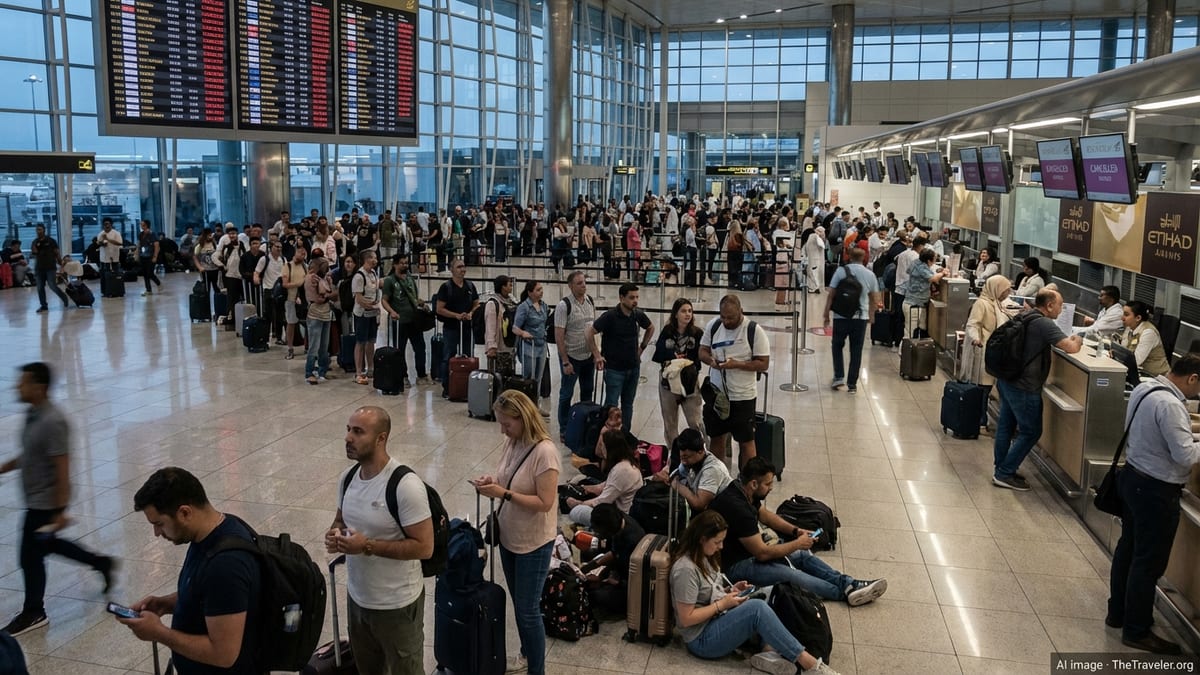
Passengers flying out of the United Arab Emirates today are being advised to build in extra time and closely track their flight status, as Emirates, Etihad Airways, Air Arabia and flydubai continue to adjust schedules in the wake of months of regional disruption and intermittent airspace closures.
Get the latest news straight to your inbox!
Regional situation still shaping UAE flight schedules
Air travel in and out of the UAE has not fully returned to the predictability that characterized the country’s hubs before the regional security crisis that began earlier this year. Travel industry analyses and recent media coverage show that repeated airspace closures and missile and drone incidents across the Gulf since late February have forced airlines to cancel, reroute or consolidate services on short notice.
Dubai International and Abu Dhabi’s Zayed International Airport remain among the busiest hubs in the region, but both have experienced temporary shutdowns and reduced capacity at various points since March. While the airports are operating, airlines are still running a mix of regular and adjusted schedules, with some routes restored and others operating at lower frequencies than before the crisis.
Recent assessments of Middle East aviation trends indicate that carriers based in the UAE have been rebuilding cautiously after large-scale suspensions in March. Capacity from major Gulf airlines remains significantly below 2025 levels, underscoring that the system is still in a recovery phase and vulnerable to further disruption if tensions flare again.
Emirates: mostly operating, but with selective cancellations
Emirates, the largest carrier at Dubai International, is broadly operating its network today, but passengers are being warned that selective cancellations and timing changes remain possible on short notice. Publicly available travel advisories and recent broadcast coverage highlight that Emirates has repeatedly urged travelers to check their booking and live flight status before leaving for the airport, especially on long-haul routes across the wider Middle East.
Earlier this year, Emirates suspended all flights for several days during regional airspace closures, then moved to a pattern of “limited operations” while gradually reopening key routes. Since then, the airline has been rebuilding its schedule, adding back frequencies as airspace availability and crew positioning allow. However, short disruptions at Dubai, whether linked to security events or weather, have shown that the carrier is still making tactical cancellations to manage congestion and crew duty times.
For travelers departing Dubai today, this means that most Emirates flights are expected to operate, but last-minute re-timings, aircraft swaps and isolated cancellations remain a realistic possibility. Passengers with tight onward connections or essential same-day commitments are being encouraged by travel agents to keep alternative options in mind and to monitor notifications from the airline app or booking platform.
Etihad: rebuilt network with ongoing advisory for key routes
Etihad Airways, based at Abu Dhabi’s Zayed International Airport, has taken a similarly cautious approach after operating a sharply reduced schedule in March. Public information from aviation analysts and airline-focused forums indicates that Etihad restored a limited commercial schedule from early March and has since been adding destinations back in phases, focusing on trunk routes to Europe, Asia and the Indian subcontinent.
The airline continues to maintain a broad advisory for guests traveling to or transiting Abu Dhabi, particularly on services that cross or skirt areas of heightened geopolitical risk. Depending on the day’s security picture and airspace restrictions, Etihad may reroute flights along longer paths or adjust departure times in order to avoid sensitive corridors, which can have knock-on effects across the network.
Travel reports from recent weeks suggest that while outright same-day cancellations on Etihad have become less common than at the height of the crisis, irregular operations remain a possibility for certain destinations. Passengers flying today are being encouraged to reconfirm their itinerary, allow ample time for transfer connections, and be prepared for extended flight times on routes that must take longer detours.
Air Arabia and flydubai: low-cost networks still exposed to disruption
Low-cost carriers Air Arabia and flydubai, which both rely heavily on short and medium-haul routes across the Gulf, Middle East, North Africa and South Asia, have also been navigating a period of fluctuating schedules. Earlier stages of the regional crisis saw both airlines cancel or suspend flights to a number of high-risk destinations, while keeping selected corridors open where airspace remained available and demand justified operations.
Recent online timetables and traveler accounts indicate that both carriers are now operating the majority of their planned services from hubs in Sharjah, Dubai and Abu Dhabi, although with some reductions in daily frequency on certain city pairs. Because these airlines serve several destinations close to areas of active tension, they remain particularly sensitive to overnight changes in overflight permissions or security assessments.
Flydubai, which operates from Dubai International’s Terminal 2 and other regional airports, has previously used temporary postponements and day-of-operation delays to manage emerging risks, particularly on flights to parts of the Middle East and South Asia. Air Arabia, based in Sharjah with additional operations in Abu Dhabi and Ras Al Khaimah, has followed a similar pattern, at times consolidating flights or offering rebooking options when routes are affected by airspace changes.
What travelers flying from the UAE today should do
For passengers departing the UAE today, the overall picture is one of substantial recovery compared with the widespread shutdowns seen in early March, but with a continuing need for vigilance. Airlines are attempting to run near-normal schedules where possible, yet the regional backdrop means that flight operations can still be adjusted at short notice in response to airspace, security or congestion issues.
Travel professionals are recommending that passengers check their flight status frequently on the day of travel, including just before leaving for the airport, and to monitor email or app notifications from their carrier or booking site. Building in additional time for check-in, security and potential delays at the gate can reduce the stress of last-minute operational changes, particularly at peak departure banks in Dubai, Abu Dhabi and Sharjah.
Those with same-day connections through UAE hubs are being advised to pay close attention to minimum connecting times and to consider more generous layovers where tickets can still be modified. Flexible or changeable fares, as well as travel insurance that covers delay and cancellation, remain in high demand among travelers transiting the region while conditions stay fluid.