


More news on this day
Passengers traveling through Calgary International Airport are encountering long lines, flight delays and ongoing schedule changes as WestJet works to restore operations following a disruptive flight attendants strike and a weekend of mass cancellations.
Get the latest news straight to your inbox!
Slow Restart After Tentative Labour Deal
WestJet reached a tentative agreement with its flight attendants at the start of the week, clearing the way for the airline to begin rebuilding its schedule after hundreds of cancellations over several days. Publicly available information shows that most of the airline’s fleet is now back in service, but the process of repositioning aircraft and crews is creating knock-on delays, particularly at its main hub in Calgary.
Reports from passengers indicate that flights are departing again from Calgary International Airport, but often behind schedule, with some journeys still being rebooked or combined as WestJet attempts to match capacity with displaced travellers. The airline has described the resumption of flying as a gradual process, and published coverage suggests it may take several days before operations resemble a normal timetable.
The situation follows a period of intense disruption over the recent long weekend, when strike action and pre-emptive cancellations left thousands of travellers across Canada waiting for alternative arrangements. Calgary, as WestJet’s primary hub and main connection point for many domestic and international routes, has become the focal point for the recovery effort.
Industry comparisons with previous airline labour disruptions in Canada suggest that even after a deal is reached, airlines can require close to a week or more to fully restore regular operations. Observers note that the challenge is not only restarting flights but also clearing the backlog of passengers whose original trips were cancelled or delayed.
Long Lines at Check-in and Security
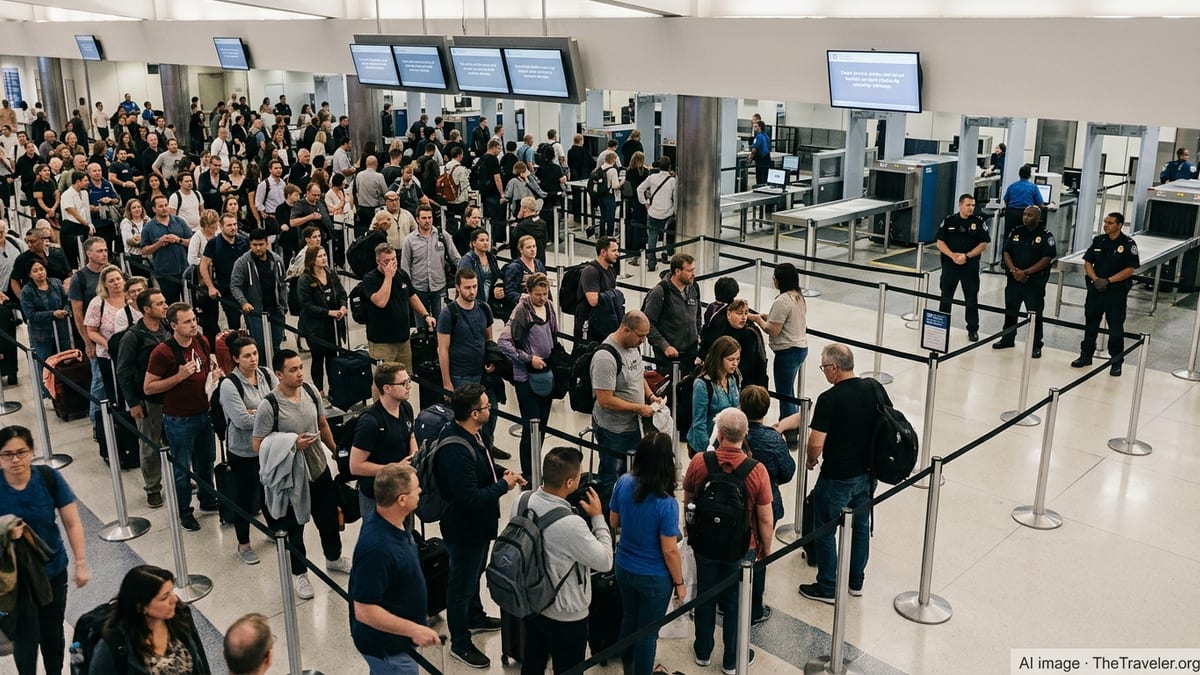
As WestJet rebuilds its schedule, travellers at Calgary International Airport are reporting longer-than-usual lines at check-in counters, baggage drop and security screening. Social media posts and online forums describe departures hall queues stretching well beyond normal peak levels, especially during early morning and late afternoon banked departures, when multiple flights leave in quick succession.
Some passengers say they have arrived at the airport the recommended time in advance only to find wait times that risk cutting into boarding. In response, informal travel advisories circulating online are encouraging WestJet customers in Calgary to allow extra time, particularly those with checked bags or traveling on international routes where earlier cut-off times apply.
Publicly available airport data shows that Calgary International has experienced strong traffic growth over the past year, led in part by increased WestJet capacity on domestic and overseas routes. The current disruption is overlaying that higher baseline of activity, adding pressure on terminal facilities as WestJet concentrates much of its recovery flying through the city.
Aviation analysts point out that even when flight schedules are reduced, irregular operations can still lead to congestion in terminal areas. Rebooked passengers, longer customer service interactions and last-minute gate changes can lengthen processing times, creating visible crowding even if the total number of daily departures is temporarily lower than usual.
Backlog of Stranded and Rebooked Travellers
The return to flying has not immediately resolved travel plans for everyone caught up in the disruption. Accounts shared through passenger-rights forums and travel communities describe individuals and families who have spent extended hours or overnight stays in Calgary while waiting for available seats on outbound flights.
Some travellers report being rebooked multiple times as WestJet adjusts its recovery schedule, with changes affecting both domestic connections and long-haul services to Europe and the United States. In several cases, passengers describe being routed through Calgary on complex multi-stop itineraries as the airline seeks to move people with limited remaining capacity.
Travel rights advocates note that under Canadian passenger protection rules, lengthy delays and cancellations for reasons within an airline’s control can trigger obligations for rebooking and, in some cases, compensation or reimbursement of expenses. However, passengers exchanging information online indicate that reaching customer service by phone or chat has remained difficult, leading many to attempt rebooking at airport counters in Calgary despite the long waits.
The fluctuating situation is also affecting travellers whose original journeys were not scheduled through Calgary but who have been rerouted via the hub in order to complete their trips. This has added to the concentration of disrupted passengers in the terminal, further increasing demand for seats on already busy departures.
Impacts on Calgary’s Role as WestJet Hub
Calgary International Airport serves as WestJet’s central hub and the base for its wide-body operations, including many transatlantic routes. According to aviation industry references, the airline has been shifting more of its long-haul flying and connecting traffic through Calgary in recent years, positioning the airport as its primary global gateway.
The current disruption is underlining both the advantages and vulnerabilities of that hub strategy. Centralizing long-haul and connecting traffic through Calgary can simplify scheduling during normal times, but it also concentrates the effects of operational shocks such as strikes or severe weather. When flights are cancelled or delayed, large numbers of passengers can become stranded at a single location, creating intense pressure on airport services.
Observers note that the recovery now unfolding at Calgary International will be a key test of how quickly WestJet can stabilize operations after a major labour-related interruption. Successful recovery would help reinforce the airline’s hub model and reassure travelers planning future connections through the city, while a protracted period of disruption could prompt some passengers to shift bookings to competitors on key domestic and transborder routes.
Local tourism and business groups are also watching the situation closely, given Calgary’s reliance on smooth air links for convention traffic, resource-sector travel and inbound tourism to the Canadian Rockies. While the disruption is expected to be temporary, continued delays and cancellations could weigh on traveller perceptions during the busy late-summer period.
What Travellers Can Expect in the Coming Days
Publicly available guidance from the airline and airport suggests that conditions at Calgary International should gradually improve as WestJet restores more flights and clears the current backlog of displaced passengers. However, industry experience with similar disruptions indicates that residual delays, schedule changes and occasional cancellations are likely to persist for several days.
Travel commentators recommend that passengers with WestJet bookings in or out of Calgary monitor their flight status frequently, as same-day schedule adjustments remain possible while aircraft and crews are repositioned. Where flexible change policies are in place, some travellers may opt to shift to less busy days or routes to avoid the heaviest congestion.
For those who must travel in the immediate term, aviation experts advise arriving at the airport earlier than usual, particularly for international departures and for travellers checking bags or traveling with families. Paying close attention to gate information and announcements can also help passengers respond quickly to last-minute changes, such as gate swaps or earlier boarding calls on recovery flights.
The coming week is expected to be pivotal in determining how quickly WestJet and Calgary International Airport can return to normal rhythms. As operations stabilize and lines shorten, attention is likely to turn to assessments of how the disruption was handled and what lessons can be applied to future contingency planning at one of Canada’s busiest air hubs.