


More news on this day
The Walt Disney Company is "performing better than its peers" in a challenging economy, its chief executive has told investors, highlighting resilient theme park, cruise and streaming results even as parts of the wider travel and media sectors face slowing demand.
Get the latest news straight to your inbox!
Stronger parks and cruise trends than rival destinations
Recent earnings materials and commentary show Disney’s chief executive drawing a clear contrast between the company’s travel-focused businesses and those of other operators, particularly in Florida and key international markets. Publicly available information indicates that theme park attendance and per-guest spending at Disney’s domestic resorts have remained broadly healthy, helped by a steady pipeline of new attractions and pricing strategies aimed at smoothing crowd levels.
Reports also indicate that management has cited data from Orlando and other tourist hubs to argue that Disney’s flagship parks are holding up better than some competing destinations. While the wider Central Florida tourism market has shown signs of softening, Disney’s Orlando resort has benefited from its integrated offering of hotels, parks, and dining, along with high-profile additions tied to its film and streaming franchises.
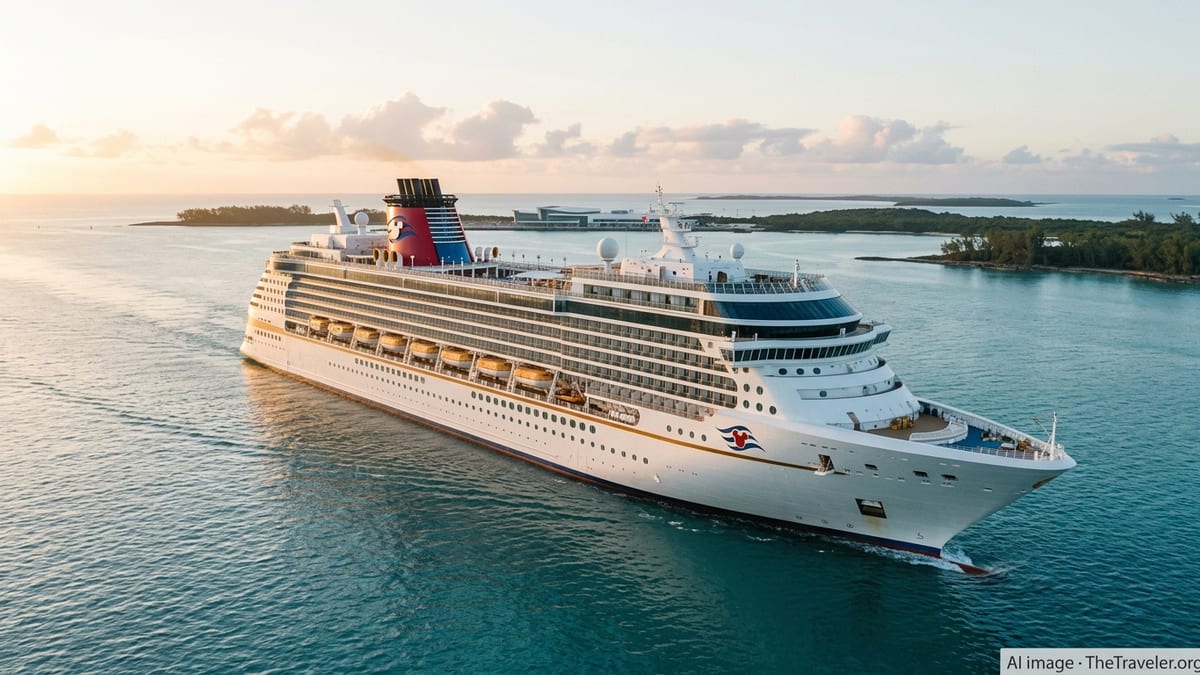
Disney’s cruise line has likewise been described as a bright spot relative to several large cruise peers. Industry coverage shows that the company’s ships have maintained robust occupancy and pricing, supported by a strong family and premium leisure customer base. New vessels and an expanding private-island footprint in the Bahamas and the Caribbean are expected to solidify that position, further differentiating Disney from mass-market cruise competitors.
For travelers, the message is that Disney’s parks and cruises continue to command strong demand, even as some broader travel indicators flag. The company’s leadership has framed this performance as evidence of brand strength and pricing power compared with other destination operators.
Streaming profitability framed as competitive edge
In addition to its in‑person experiences, Disney’s chief executive has argued that the company is outpacing many media peers in the shift to streaming. According to recent investor presentations and earnings call transcripts, Disney’s key direct‑to‑consumer platforms have moved from steep losses toward sustained profitability, aided by price increases, content consolidation and tighter cost controls.
While several rival entertainment and tech companies continue to report volatile streaming results, Disney has emphasized improving margins and disciplined content spending. Management materials highlight that the combination of Disney+, Hulu and ESPN‑branded services gives the company a broader mix of family entertainment, general entertainment and sports than most competitors can match.
This integrated streaming position is being presented as a competitive advantage that supports Disney’s wider travel businesses. Parks and cruises increasingly lean on the same franchises that draw viewers online, from animated hits to major science‑fiction and superhero properties. The chief executive has argued that this “flywheel” between streaming and physical destinations is helping Disney outperform both traditional media groups and pure‑play travel firms.
For consumers planning trips, this strategy is visible in the way new shows and films quickly translate into rides, onboard experiences and limited‑time events. The company’s leadership has suggested that this tight connection between screen and destination is a key reason Disney can claim to be performing better than many peers.
Financial metrics support confidence narrative
Recent quarters have seen Disney beat market expectations on earnings, with publicly available reports pointing to higher‑than‑forecast profits from its parks, experiences and products division as a major driver. While the company’s share price performance has drawn scrutiny over the past several years, the chief executive has repeatedly pointed to revenue growth, margin improvement and cost‑saving targets as evidence that underlying operations are trending ahead of many competitors.
Investor commentary indicates that Disney’s management has highlighted a multiyear effort to cut billions of dollars in expenses across content, operations and corporate functions. Those efforts, combined with record per‑capita spending at parks in certain periods and improving streaming economics, have been presented as proof that Disney is structurally stronger than much of the legacy media and travel sector.
At the same time, external analyses show that peers in both industries are grappling with softer ad markets, uneven international travel demand and higher financing costs. Against that backdrop, Disney’s leadership has stressed that the company is generating more consistent earnings growth and cash flow than many rivals, even if the stock market has not always fully reflected that performance.
For travelers and investors alike, the key takeaway is a narrative built around resilience: that Disney’s combination of parks, cruises, consumer products and streaming content is delivering steadier results than stand‑alone media companies or single‑segment travel operators.
New investments aim to extend lead in global destinations
Looking ahead, Disney is committing significant capital to expand its parks and resort portfolio worldwide, positioning these projects as a way to stay ahead of competitors in the global travel market. Recent comments from the chief executive and senior leaders have referenced a multibillion‑dollar investment program, including new lands, attractions and hotel capacity at existing resorts in North America, Europe and Asia.
Public disclosures also point to plans for growth in emerging tourism regions. Management has cited opportunities to reach new audiences in markets that are currently underserved by major theme park brands, with a focus on technology‑driven attractions and immersive environments built around Disney’s most popular intellectual property.
Industry observers note that such large‑scale investments may give Disney an advantage over regional parks and even some multinational rivals that are taking a more cautious approach to capital spending. By contrast, Disney has framed its expansion as a long‑term bet that high‑quality destination experiences will continue to attract visitors willing to pay premium prices, even through economic cycles.
For the travel sector, these moves suggest that Disney intends not only to preserve its current performance gap over peers, but to widen it. New attractions and destinations are expected to fuel future visitation, cross‑selling opportunities with the cruise line and higher demand for Disney‑branded vacation packages.
Challenges remain despite leadership’s optimistic stance
Despite the chief executive’s assertion that Disney is performing better than its peers, the company still faces a range of challenges that are closely watched by analysts and travelers. Higher ticket prices and changes to reservation and line‑skipping systems have drawn criticism from some guests, raising questions about affordability and value, particularly for families planning once‑in‑a‑lifetime trips.
On the media side, Disney must continue to balance streaming growth with the health of its traditional television networks and theatrical film releases. Publicly discussed plans to adjust financial reporting for streaming services underscore how rapidly the business model is evolving, and how difficult it can be for investors to compare Disney’s performance directly with that of peers.
Competitive pressures are also intensifying. Other global theme park operators are rolling out new rides and immersive lands, while major cruise lines add ships and private destinations that compete for the same leisure travelers. In streaming, new entrants and established players continue to invest heavily in content and technology, challenging Disney to keep its platforms compelling without overspending.
Even so, Disney’s top leadership has maintained that the company’s diversified portfolio and strong brand position it to weather these headwinds better than most. For now, travel and media industry coverage suggests that Disney’s parks and experiences remain among the most in‑demand destinations worldwide, lending support to the chief executive’s claim that the company is, at least for the moment, performing ahead of many of its peers.