


Pigeon Island is one of the easiest independent day trips from the Castries cruise port in Saint Lucia. With 18th century military ruins, sweeping views over Rodney Bay and a pair of calm beaches, it fits naturally into a standard cruise call. The key is understanding your ground transport, timing, and how much you can comfortably do in a single port day.
Get the latest updates straight to your inbox!
Understanding the Route From Castries to Pigeon Island
Most large cruise ships call at Castries, using either Pointe Seraphine or La Place Carenage terminals. From either pier you are roughly 10 to 11 kilometers from Pigeon Island National Landmark at the northern tip of Rodney Bay. The drive runs along the island’s northwest coast through suburban Castries and then past the resort and mall zone at Rodney Bay.
On a clear day with light traffic, the road journey from the cruise port to the entrance of Pigeon Island typically takes 20 to 30 minutes each way by car or taxi. Some tour operators advertise 15 to 20 minutes, which is possible very early in the morning, but cruise days often see more congestion near the port and shopping areas. When two or more ships are in, or if you arrive at local rush hour in the late afternoon, allow closer to 30 or even 35 minutes.
The route itself is straightforward. You will leave the port area, skirt the edge of central Castries, pass Vigie Airport on your left, then continue along the coastal highway through Choc and past resort entrances and shopping plazas before you reach the Rodney Bay and Gros Islet area. From Rodney Bay village, it is another 5 to 10 minutes to the gates of Pigeon Island. Almost all taxi drivers serving the cruise terminals know this route intimately and drive it multiple times a day in season.
Because the road follows the lee, or Caribbean, side of the island rather than the steeper west coast toward the Pitons, the drive is comparatively gentle. There are some curves and hills, but nothing like the hairpin bends further south. Motion‑sensitive travelers usually find this route manageable, especially if they sit up front, crack a window and avoid heavy meals just before leaving the ship.
Taxi Options and Typical Costs
For most cruise passengers, a local taxi is the simplest way to get from Castries to Pigeon Island. Official taxis in Saint Lucia carry light blue license plates starting with the letters TX. At both cruise terminals, you will find a taxi rank just outside the secure port gates where dispatchers match parties with drivers and quote set fares based on government guidelines and local practice.
Recent traveler reports and local taxi guides suggest that a one way taxi fare from Castries cruise port to the Rodney Bay area is commonly in the range of about 25 to 35 US dollars for up to two passengers, sometimes slightly higher if negotiated inside the port gates. Continuing beyond Rodney Bay to Pigeon Island’s entrance adds only a few more minutes of driving, so most drivers will quote a similar or slightly higher rate. In practice, many cruise passengers report paying about 60 to 70 US dollars total for a round trip between the cruise terminal and Pigeon Island, including waiting time of several hours, for up to four people sharing the vehicle.
Fares are usually quoted per car, not per person, at the public taxi stand. However, some drivers inside the immediate port area attempt to price per person on busy days, for example 15 US dollars per person each way. If you want the more economical vehicle-based rate, you can politely clarify that you would like a price for the entire taxi. Some repeat visitors choose to walk a few minutes outside the port zone and flag a street taxi, where prices can be closer to local norms, but first‑timers generally prefer the convenience and oversight of the official taxi rank.
Tipping is not mandatory, but leaving around 10 to 15 percent of the agreed fare for a safe and friendly driver is appreciated. If your driver waits at Pigeon Island and keeps your belongings in the cab while you hike or swim, or detours briefly through Rodney Bay so you can stop at a supermarket or ATM, consider rounding up more generously. Because fuel and vehicle costs on the island are high, aggressive bargaining over a few dollars can be frowned upon; focus instead on agreeing a clear, all‑in round‑trip price before you get in.
Private Tours, Shuttles and Boat Options
Travelers who prefer a more structured outing can book a private tour or beach shuttle from Castries cruise port to Pigeon Island. Several local operators and guides advertise round trip beach or landmark transfers that include pickup at the pier, transport in an air‑conditioned minivan or SUV, flexible return times and sometimes a brief photo stop en route. For example, one beach shuttle service lists a direct service from the cruise terminal to Reduit Beach or Pigeon Island for about 120 US dollars round trip for one to four guests, with the exact price varying by season and group size.
Small-group tours sometimes bundle Castries, Rodney Bay and Pigeon Island in a half‑day circuit. These options typically cost in the region of 50 to 90 US dollars per person and can include commentary on island history, a stop at a viewpoint above Castries harbor and time at one of the Rodney Bay beaches or at Pigeon Island’s fort. For cruisers who like structure and narration but still want a relaxed pace, a three to four hour private Castries and north island tour that ends with free time at Pigeon Island can work well.
You will also see land and sea combo excursions that depart directly from the cruise pier or nearby marinas. A common format is a 3 hour experience where a driver collects you at the port, takes you to Pigeon Island or a nearby lookout, then returns you to Castries by speedboat along the coast, passing Reduit Beach, Rodney Bay Marina and Vigie Beach. These tours tend to be more expensive per person than a simple taxi, often over 100 US dollars per adult, but they add the scenic coastal perspective and a fun boat ride.
For those already staying on the island or tendering into Rodney Bay on smaller ships or yachts, water taxis and private speedboats can also provide access to Pigeon Island. From Rodney Bay Marina, a water taxi to Pigeon Island or nearby beaches is typically priced on a per‑boat basis and may be attractive to families or small groups who want flexibility. However, cruise passengers pressed for time usually find that a standard road taxi from Castries is the most straightforward solution.
Timing, Return Buffers and Port Day Planning
A typical Caribbean cruise call in Castries lasts between 7 and 9 hours, for example arriving around 8:00 a.m. and departing between 4:00 p.m. and 5:00 p.m. Within that window, it is very realistic to visit Pigeon Island independently as long as you build in buffers for traffic, ticket queues and unhurried hiking or swimming.
As a planning baseline, allow 30 minutes each way for the taxi ride, which covers most traffic scenarios. Add 15 minutes at the beginning to disembark, walk through the port area and locate a taxi, and another 15 minutes at the end to pass security and reboard your ship. That means that a bare‑bones there‑and‑back visit, without hiking, beaches or meals, occupies roughly 1.5 to 2 hours door to door.
Most visitors, however, want to explore the military ruins, hike at least one of the hill trails and spend some time on the small beaches at the base of Pigeon Island. For that, plan to spend 3 to 4 hours on site. Combined with transport and port formalities, you are looking at 4.5 to 5.5 hours total. On an 8 hour call, this leaves a comfortable margin to browse the craft market near the cruise terminal, grab a drink, or simply be back on the ship well ahead of departure.
As a rule of thumb, independent travelers should aim to be back at the Castries cruise port at least 60 to 90 minutes before the ship’s all aboard time, especially in high season or if multiple ships are docked. That means leaving Pigeon Island no later than 2:30 p.m. for a 4:30 p.m. departure. If you are traveling with children, have mobility needs, or want to include a lunch stop in Rodney Bay, consider an even earlier return. Pre‑arranging your pickup time and exchanging phone numbers or messaging details with your driver also reduces stress later in the day.
Admission, Hiking and How Long to Spend at Pigeon Island
Pigeon Island is managed as the Pigeon Island National Landmark, a protected historic and natural site. Admission for day visitors is typically charged in Eastern Caribbean dollars, with posted prices converted to US dollars at the gate. As of mid‑2026, most travelers report paying roughly the equivalent of 10 to 15 US dollars per adult and a reduced rate for children, though exact amounts can change and it is wise to bring some small US bills or local currency.
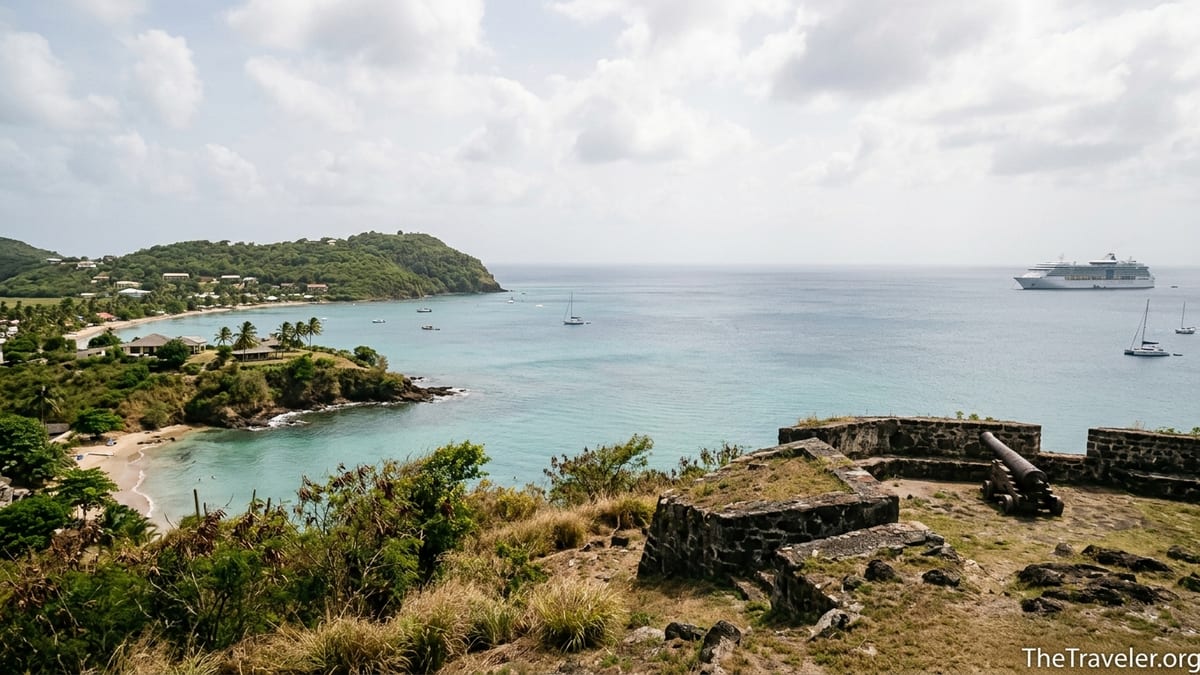
Once inside the park, you will find a visitor center, restrooms and interpretive signs describing the island’s role in 18th century naval battles between the French and British. The two main hikes are up to Fort Rodney and to Signal Peak. Fort Rodney is the more popular and accessible, involving a series of stone steps and a moderately steep but short climb that most reasonably fit adults can cover in 15 to 25 minutes each way. The view from the old cannon placements takes in the curve of Rodney Bay, the Sandals resort peninsula and, on clear days, the outline of Martinique to the north.
The trail to Signal Peak is a bit steeper and rockier, and many people find it windier at the top, but the path is still manageable in standard walking shoes for anyone used to light hiking. Allow around 45 to 60 minutes to walk up, linger and descend safely. If you plan to climb both hills, wander the lower paths among the ruins and stop for photos, count on at least two hours of unhurried exploration. Add another hour or two if you want to combine hiking with beach time, lunch at the onsite restaurant, or a relaxed picnic in one of the grassy areas.
Sun exposure can be intense, especially between late morning and mid‑afternoon, and there is limited natural shade on the upper slopes. Carry water, sunscreen and a hat, and wear closed‑toe shoes rather than flimsy sandals. The trails are generally well marked, but after a rain shower the stone steps and rocks can become slick. If conditions look wet and you are traveling with young children or anyone with balance issues, you might choose to stick to Fort Rodney only and skip the higher peak.
Beaches and Combining Pigeon Island With Rodney Bay
One appeal of Pigeon Island as a cruise excursion is the ability to pair light hiking with easy beach time in a small area. At the base of the island on the Caribbean side, two sheltered coves offer calm water, soft sand and modest facilities. The beach closest to the main entrance often has beach chairs for rent and a casual bar and grill, while the second cove a short walk away tends to be slightly quieter. Because these are within the national landmark, access is covered by your admission fee.
Just a few minutes back down the road from Pigeon Island, Reduit Beach at Rodney Bay is one of the island’s best known sands. This long, curving beach sits in front of several hotels and beach bars and offers chair and umbrella rental, watersports such as jet skis and paddleboards, and a lively, sometimes crowded scene when cruise ships are in. Some travelers choose to spend their entire day at Reduit Beach and skip Pigeon Island altogether, especially those with small children or mobility challenges who prefer flat sand to steps and ruins.
If you want to do both, a common pattern is to start the day at Pigeon Island when the sun is less intense, hike and sightsee for two to three hours, then meet your taxi and ask to be dropped at Reduit Beach or another Rodney Bay beach for a late lunch and swim. You can then either schedule a firm pickup time from the beach or agree to call or message your driver when you are ready to return. Many cruise visitors report paying only a small supplement, for example an extra 10 to 20 US dollars, for a driver to add the Rodney Bay stop on top of the Pigeon Island round trip.
Keep in mind that beach vendors, watersports operators and bars typically accept US dollars, but change may be given in Eastern Caribbean dollars. Credit card acceptance varies by establishment, so carrying some cash in small denominations makes transactions smoother. Also note that on days with rougher seas or after heavy rain, water clarity at both Pigeon Island and Reduit Beach can decrease; if snorkeling is important to you, it is worth checking conditions with your driver or at the park entrance when you arrive.
Independent Visit vs Ship Excursion: What Fits Best?
Whether you should visit Pigeon Island independently or via a ship‑organized excursion depends on your comfort level, mobility, and priorities. For confident travelers who are happy negotiating a taxi fare and watching the clock, going on your own offers flexibility and cost savings. Two couples sharing a taxi and paying their own park admission can often enjoy a half‑day visit for a per‑person total similar to, or less than, the lower end of the cruise line excursion price range.
Ship excursions, on the other hand, bundle transport, admission and sometimes a guided walk or included drink. They also offer the reassurance that the ship will wait or arrange transport if the tour is late because it is an official program. This peace of mind can be valuable on ports with long, twisty drives, but in the case of Castries to Pigeon Island, the proximity and simple route make independent travel relatively low risk as long as you allow a generous buffer and avoid returning at the last minute.
One hybrid approach is to pre‑book a private driver or small‑group tour that specifically caters to cruise passengers and advertises tailored pickup and return times. In many cases, these operators ask for your ship name, docking time and departure time in advance, then design the outing accordingly. A typical example is a three or four hour private north island tour that starts at the pier, visits a Castries viewpoint or short market stop, continues to Pigeon Island for hiking, and then either returns directly to the ship or drops you at Rodney Bay for a bit of beach time before heading back.
For families with young children, seniors or anyone with mobility challenges, an official ship tour or fully pre‑arranged private driver may feel easier than negotiating on the pier. Many vehicles used for private tours have higher ground clearance, good air conditioning and guides accustomed to working with cruise timelines. Whatever option you choose, verify in advance whether park admission is included, how long you will have on site and what time you will be back at the port.
The Takeaway
A visit from Castries cruise port to Pigeon Island fits comfortably into most standard port days, provided you plan conservatively. With a taxi ride of around 20 to 30 minutes each way, admission that is modest by Caribbean standards, and hikes that most reasonably fit travelers can manage in casual clothing and sturdy sandals or walking shoes, the excursion is both accessible and rewarding.
For independent visitors, a realistic outline is to disembark within an hour of docking, take a taxi directly to Pigeon Island, spend about three hours exploring the fort, trails and small beaches, then optionally add a stop at Reduit Beach or Rodney Bay village before returning to the ship at least 60 to 90 minutes ahead of all aboard time. Expect to spend in the region of 60 to 80 US dollars per taxi for a simple round trip including waiting time, plus admission and any food or chair rentals.
Those who prefer structure can opt for a private tour, beach shuttle or ship excursion that packages transport, commentary and schedule management. Prices are higher, but in exchange you gain a guide’s insights and the comfort of predefined timing. Whichever format you choose, Pigeon Island delivers some of the best views in northern Saint Lucia, a tangible sense of the island’s history and an easy taste of beach time without straying far from your cruise ship.
FAQ
Q1. How long does it take to get from Castries cruise port to Pigeon Island?
The drive usually takes 20 to 30 minutes each way, but on busy cruise days or during local rush hour you should allow up to 35 minutes.
Q2. How much does a taxi from Castries to Pigeon Island cost?
Recent visitors commonly report paying about 60 to 70 US dollars total for a round trip taxi including waiting time, for up to four people sharing.
Q3. Is it safe to visit Pigeon Island independently from the cruise port?
Yes, most cruise passengers visit independently without issues. Stick with licensed taxis, agree a clear return time and allow a generous buffer before sailaway.
Q4. Do I need to book a ship excursion to see Pigeon Island?
No, you can easily visit on your own by taxi. Ship excursions add structure and a guide, but are not essential because the site is close and straightforward.
Q5. How much time should I plan to spend at Pigeon Island?
Plan on at least two to three hours to walk the trails, explore the ruins and enjoy the views. Add extra time if you want to swim or have a relaxed meal.
Q6. Are the hikes at Pigeon Island difficult?
The main hike to Fort Rodney is short and moderately steep, suitable for most reasonably fit visitors. The higher peak is steeper but still considered a light hike.
Q7. Can I combine Pigeon Island with a beach stop at Rodney Bay?
Yes, many visitors hike Pigeon Island in the morning and then ask their driver to stop at Reduit Beach or another Rodney Bay beach for lunch and swimming.
Q8. Is there food and drink available at Pigeon Island?
There is usually at least one restaurant or bar operating near the beaches, and vendors sometimes sell snacks, but choices are limited so some visitors bring snacks or water.
Q9. What should I wear and bring for a day at Pigeon Island?
Wear light clothing, sturdy sandals or walking shoes, and a hat. Bring sunscreen, water, some cash in small bills, and a swimsuit and towel if you plan to swim.
Q10. Will taxis be available to take me back to the ship from Pigeon Island?
There are usually taxis in the area, but the most reliable approach is to arrange a round trip with your original driver and agree a firm pickup time in advance.