


More news on this day
Black smoke and flames were reported near Riyadh’s King Khalid International Airport on Saturday, September 19, 2026, as flight-tracking data showed extensive delays and a smaller number of cancellations at one of Saudi Arabia’s busiest air hubs.
Get the latest news straight to your inbox!
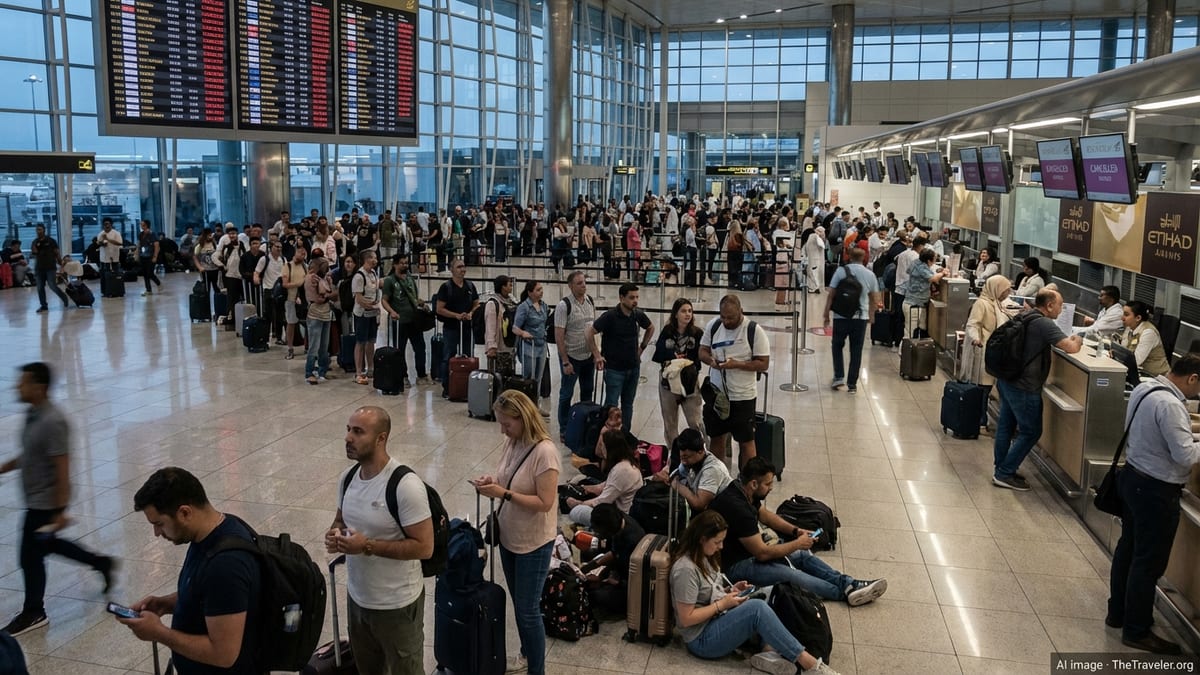
What travelers and residents reported near King Khalid International
Published coverage described a visible plume of black smoke and flames in an area close to Riyadh’s main airport, with some accounts also describing loud booms heard across parts of the capital. The precise cause of the fire was not established in the initial wave of reporting.
Several outlets carried descriptions indicating firefighting activity near what appeared to be a damaged fuel tank bearing the Aramco name. No publicly available information reviewed for this report provided a definitive explanation for how the fire started, or whether airport infrastructure was directly affected.
The smoke reports emerged hours after widely reported emergency alerts in Riyadh that warned of a potential aerial threat, followed later by messages indicating an all-clear. The timing contributed to heightened traveler concern, even as the operational impact at the airport appeared to fluctuate through the day.
Flight cancellations and delays: what the live data showed
Disruption indicators on Flightradar24 showed significant operational strain at Riyadh’s airport on September 19. At one point in the afternoon local time, the platform displayed a high disruption index and an average departure delay of roughly an hour, suggesting broad schedule slippage rather than a localized issue affecting a single carrier.
Flightradar24’s airport status page also showed a large share of departures running behind schedule alongside a smaller share listed as canceled, a pattern consistent with airports attempting to keep aircraft moving while managing constrained capacity and knock-on delays.
Because third-party tracking platforms can update rapidly as airlines adjust, travelers were advised to treat any snapshot as provisional and to re-check their flight status repeatedly. In fast-moving disruptions, re-timing decisions by air traffic control, airlines, and ground operations can cause departure estimates to swing within minutes.
Why this matters for connections across the Gulf and beyond
Riyadh’s King Khalid International Airport is a key node for domestic Saudi routes and for connections across the Gulf, South Asia, and Europe. When departure banks are delayed, outbound flights can miss arrival slots at destination airports and inbound aircraft can arrive late, tightening turnaround times and spreading delays further into the network.
Published coverage also pointed to downstream effects on flights linking Riyadh with other regional hubs, where missed connections can be a bigger practical problem for travelers than a single delay. Passengers connecting through Riyadh may also face rebookings that push travel into the next available departure wave, particularly during peak periods.
For travelers holding separate tickets, disruption at a hub airport can be especially costly, since a delay on the first leg can trigger missed flights on the second itinerary without the same protections that apply to a single through-ticket.
What passengers should do now: status checks, rebooking, and airport timing
Travelers scheduled to fly via Riyadh should check their flight status using their airline’s official channels and the airport’s own flight-status tools, then confirm any terminal and gate information close to departure. Publicly available airport resources include flight-tracking and passenger information services that can help verify the latest departure and arrival boards.
When delays build at a major hub, airlines may issue waivers that allow free rebooking or date changes for eligible tickets. Passengers should look specifically for waiver terms that cover rebooking windows, fare differences, and whether same-day standby is permitted, as these details vary by carrier and fare type.
For those heading to the airport, planning extra time is prudent during irregular operations. Even when a flight is not canceled, check-in lines, baggage acceptance, and security queues can lengthen when multiple delayed flights bunch together, and gate changes can occur as aircraft and crews are reassigned.