


More news on this day
Black smoke and visible flames were reported near King Khalid International Airport in Riyadh on Saturday, September 19, 2026, as airlines and passengers faced widespread delays and cancellations following overnight aerial-threat alerts issued for the Saudi capital and nearby areas amid intensifying regional tensions linked to Yemen’s Houthi movement.
Get the latest news straight to your inbox!
What travelers saw and what is known so far
Images and video circulating on Saturday showed a thick, dark plume rising near the airport complex, with terminal-area structures and nearby roadways visible in the foreground. Separate published coverage also described flames in the same direction, with some reports pointing to an area associated with fuel storage near the airport.
The cause of the smoke and fire was not clearly established in early reporting. Coverage noted that no immediate public explanation was available that directly tied the incident to a specific attack, accident, or technical failure at the airport.
Reports from within Riyadh also described loud booms heard before an all-clear message was circulated later in the morning. The sequence of alerts, booms, and the later appearance of the smoke plume contributed to public speculation, but definitive attribution was not established in widely available reporting at the time.
Flight disruptions at King Khalid International Airport
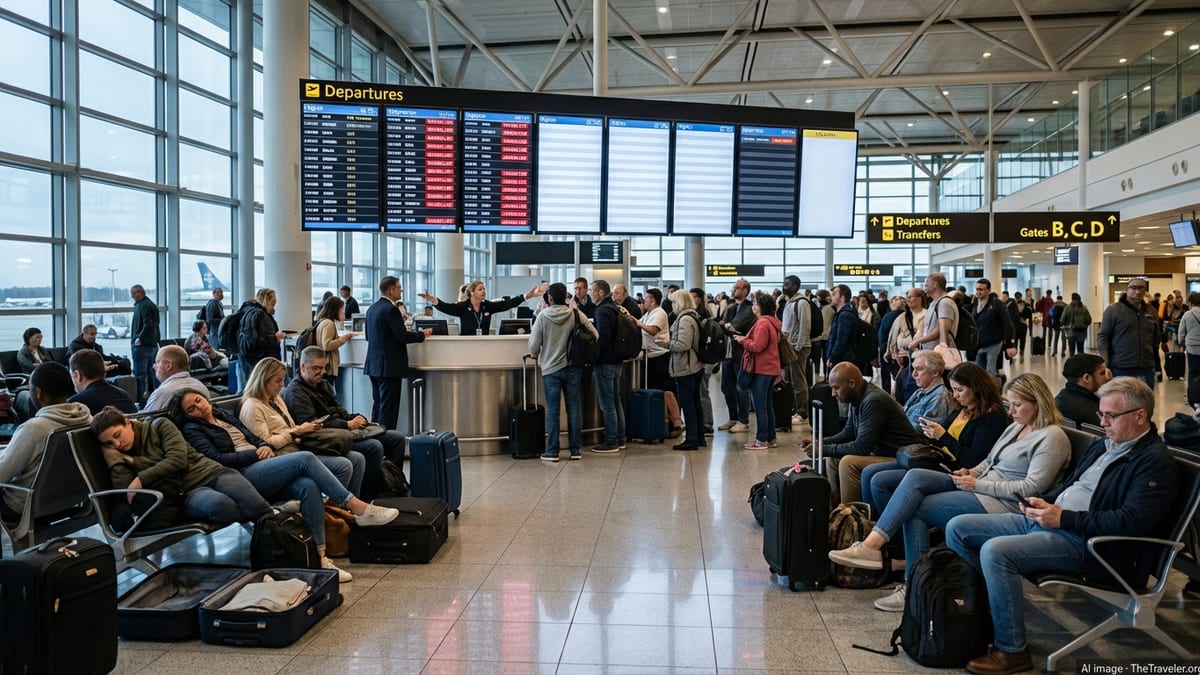
Flight-tracking data on Saturday indicated significant operational disruption at King Khalid International Airport, including long delays and a number of cancellations. Flightradar24’s disruption indicator for Riyadh was shown at its highest level during the period of the reported smoke plume, signaling major problems for departures and arrivals.
For travelers, the immediate effects were most visible in rolling departure delays, aircraft being held on the ground, and rescheduled itineraries. The pattern is consistent with airports entering heightened operational caution when security alerts or airspace concerns arise, even when an incident’s cause has not been publicly clarified.
Because disruptions can cascade through airline networks, passengers connecting onward from Riyadh to other Saudi cities or long-haul destinations often see secondary delays, missed connections, and last-minute aircraft swaps. Travelers with tight same-day onward connections were among those most likely to experience trip interruptions.
Overnight aerial-threat alerts and the wider security backdrop
The smoke reports followed overnight public warnings of potential danger in Riyadh and the nearby city of Al-Kharj. Coverage described the alerts as unusual for the capital in the context of the recent escalation, and later reporting indicated an all-clear message was issued on Saturday morning.
The broader context includes renewed activity involving Yemen’s Iran-aligned Houthi movement, which has previously claimed missile and drone launches toward Saudi targets during earlier phases of the conflict. In mid-July 2026, published coverage described Houthi-claimed strikes on Abha International Airport in southern Saudi Arabia, alongside warnings directed at airlines regarding Saudi airspace.
Separately, recent regional reporting has described additional drone and missile activity affecting critical infrastructure and transportation in and around the Gulf and Red Sea corridors. Even when an airport is not directly hit, the combination of aerial-threat alerts and defensive responses can trigger conservative operational decisions, including temporary holds, reroutes, and spacing of arrivals.
What to do if your Riyadh flight is delayed or canceled
Passengers flying to, from, or through Riyadh on September 19 should check their airline’s app and airport status tools frequently, as rebooking options can change quickly once aircraft rotations and crew duty limits are affected. Travelers should also monitor their reservation for aircraft or schedule changes, which can occur with little notice during disruption events.
When delays extend for several hours or flights are canceled, many airlines prioritize re-accommodating passengers on the next available departures, sometimes via alternative hubs in the region. Published coverage did not establish a single official cause for the smoke plume near the airport, so travelers should expect airlines to remain cautious until operations normalize.
For those already in Riyadh, practical steps include confirming whether checked baggage is being held for rebooking, keeping receipts for meals or hotels if an overnight stay becomes necessary, and reviewing any travel insurance terms related to delay, cancellation, or security-related disruption. Travelers transiting Riyadh should also verify visa and entry requirements if they may need to leave the airport due to long disruptions, as rules can vary by nationality and itinerary.