


More news on this day
Rail passengers were urged not to travel after a serious train collision led to a major incident being declared, triggering widespread disruption, cancellations and mounting concern over rail safety on a key intercity corridor.
Get the latest news straight to your inbox!
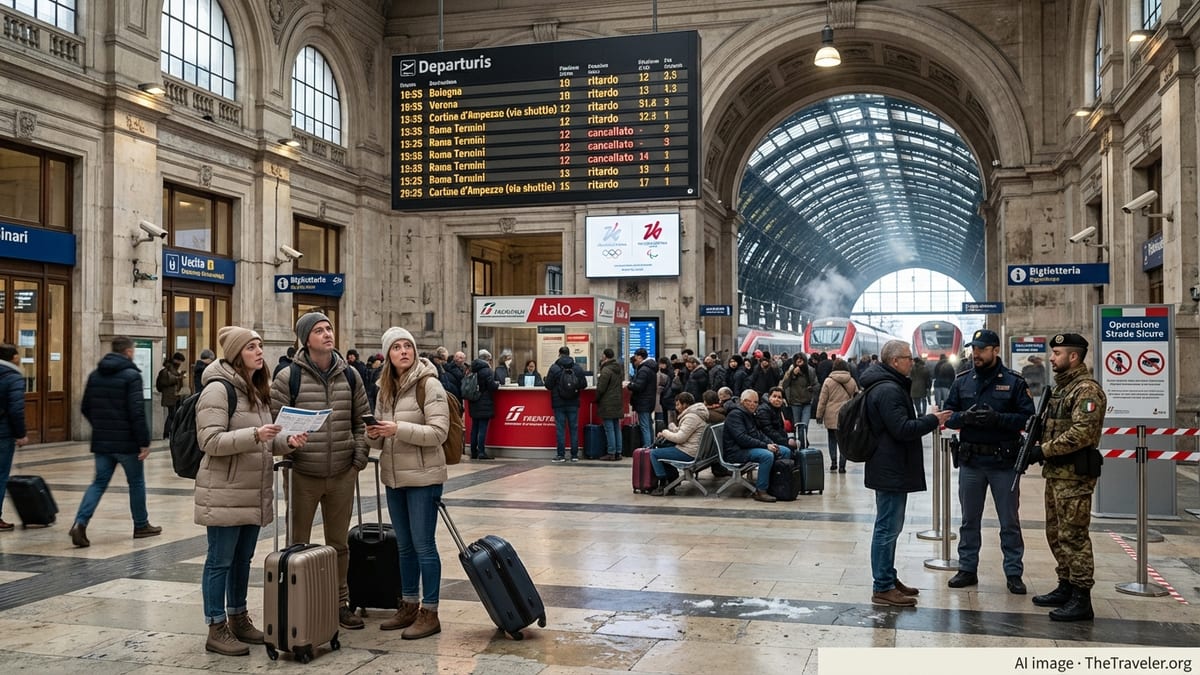
Major incident on busy intercity route
Reports indicate that two trains collided on a main line near Bedford, a critical section of the network linking London with major cities in the Midlands and northern England. Early information from rail operators and local media suggests one East Midlands Railway service had halted because of an issue linked to an onboard safety system before being struck by another train on the same route.
The collision prompted emergency services to respond in large numbers and the rail industry to declare a major incident, a formal designation used when significant coordination between agencies is required. Rail services between London St Pancras, Leicester, Nottingham, Sheffield and intermediate stations were immediately suspended or severely curtailed as incident teams assessed the damage to trains and infrastructure.
According to published coverage, the full extent of injuries is still being established, with early reporting suggesting a number of casualties but no confirmed fatalities at the time of writing. Passengers described scenes of confusion as power was reportedly cut on parts of the line and staff worked to move people to safety.
The focus of rail managers and investigators now centers on understanding how a stopped train came to be struck, and whether any failure in signaling, train protection technology or operating procedures contributed to the collision.
‘Do not travel’ warning leaves passengers stranded
In the hours following the crash, East Midlands Railway issued the strongest possible message to customers, advising: “Do not travel this evening” on affected routes. Similar warnings appeared on journey planners and station departure boards, reflecting the severe constraints on line capacity and the need to keep the area clear for emergency and recovery operations.
Such do not travel advisories are relatively rare on Britain’s railways and are generally reserved for major operating incidents, extreme weather or infrastructure failures that make it impossible to run anything close to a normal service. Industry documents and previous disruption events show that operators move to this level only when they cannot reliably offer alternative routes, replacement buses or onward connections.
The wording carries practical implications for ticket holders. Published guidance from passenger groups notes that when a do not travel warning is in place, train companies often relax refund rules, encourage passengers to delay journeys and may not always be able to arrange accommodation or onward transport for everyone affected. Social media posts and early passenger accounts from the Bedford corridor on Friday evening pointed to crowded concourses, long queues at ticket offices and confusion about how to rebook or claim refunds.
Several operators using London St Pancras adjusted their schedules, with some trains terminating short of the incident area and others cancelled outright. Passengers reported being routed via alternative main lines where possible, adding hours to journey times and significantly increasing crowding on remaining services.
Safety systems and investigation focus
Initial coverage of the crash has highlighted the role of the Automatic Warning System and associated train protection technology, which are designed to reduce the risk of signals being passed at danger. According to technical descriptions published by rail infrastructure bodies, these systems can automatically apply a train’s brakes or prevent further movement when certain faults or unsafe conditions are detected.
In this case, reports suggest the leading train came to a standstill after an apparent issue with a safety system, prompting questions over what information signallers and drivers had about its position and status. Rail accident specialists are expected to examine whether communication protocols were followed, how quickly other trains were stopped and whether any additional safeguards could have prevented the following service from approaching at speed.
Historical analysis of previous major incidents in the United Kingdom shows that investigators typically look at a combination of factors, including technical reliability, human factors such as workload and situational awareness, and broader operational pressures on busy parts of the network. The Bedford corridor carries a mix of intercity, regional and commuter trains, increasing complexity during the peaks and leaving limited room for error when services are tightly timed.
While it is too early for firm conclusions, publicly available information indicates that both rolling stock and track will undergo detailed examination. Event recorders and signalling data logs are expected to play a central role in reconstructing the sequence of events leading up to the collision.
Network disruption expected to continue
The collision has immediate and wide-ranging consequences for passengers, freight operators and the broader timetable. With at least one track believed to be blocked and damage reported to overhead power equipment, rail planners are working on a series of contingency timetables for the coming days.
Experience from earlier major incidents suggests that even after the line physically reopens, a period of reduced capacity often persists while engineers complete inspections, temporary speed restrictions are imposed and train fleets are repositioned. This can result in rolling cancellations, altered stopping patterns and reduced frequencies that ripple across multiple regions.
Journey planners on Friday evening showed significant delays and cancellations on services connecting London with cities in the East Midlands and South Yorkshire. Passengers seeking to travel over the weekend have been advised, through operator websites and travel news outlets, to check their journeys immediately before departure and consider alternative routes where feasible.
Hotels near major interchange stations, including London and key hubs on diversionary routes, may experience increased demand as travelers rearrange plans. Travel insurance policies vary in their treatment of such disruption, and consumer advocates frequently recommend that passengers retain all receipts and booking confirmations when seeking compensation or refunds after large-scale rail incidents.
Renewed scrutiny of rail resilience and communication
The Bedford crash and subsequent do not travel warning are likely to intensify debate over the resilience of the rail network and the clarity of passenger information during fast-moving events. Previous disruption episodes, such as severe weather and infrastructure failures, have prompted reviews into when and how the strongest warnings are issued to the public.
Research published by transport think tanks has noted that the phrase do not travel can be interpreted by passengers in different ways, from an absolute prohibition to a strong recommendation, particularly when some trains are still running. This can create uncertainty for those who must travel for work, medical appointments or family emergencies, and can lead to crowded conditions on the limited services that remain in operation.
Commentary from passenger watchdogs typically emphasizes the importance of consistent messaging, clear explanations of entitlements to refunds or rebooking, and better coordination between train operators that share key corridors. The events following the Bedford crash are likely to be examined against these benchmarks, including the timing of alerts, the accuracy of online journey planners and the support provided at staffed stations.
As investigators begin their work and repairs progress, rail users on one of the country’s busiest axes face days of uncertainty. The incident has once again underlined how a single failure on a constrained network can rapidly escalate into a national travel story, with thousands of journeys disrupted and fresh questions raised about safety, capacity and communication in an already stretched rail system.